The same area does not always mean the same water bill
When choosing an apartment in Mersin, buyers often only ask for an estimated monthly maintenance fee. But monthly expenses include more than just the management company fee. Water and sewerage, waste disposal fees, electricity in common areas, and the specifics of the specific address are also important.
In 2026, the issue became particularly noticeable for homes in former rural settlements and suburban neighborhoods of the province. The Mersin Municipality announced that the previous transitional tariff benefits ended on January 1, 2026. The city council then designated 441 neighborhoods as rural, while 365 retained their status as central. This does not mean that all properties in the same direction will have the same invoice, but rather that the address status and applicable tariff category must be verified separately.
For someone looking to buy an apartment in Mersin for permanent residence, this is a good reason to look beyond the promise of "low utility costs" and instead at the actual documents for the chosen home.
What does the MESKİ receipt consist of?
MESKİ is the municipal water and sanitation authority for Mersin. It publishes current tariffs and terms of service. However, the final bill amount depends on more than just the amount of water a household uses.
The bill may reflect charges for water consumption, sewerage services, and the approved 2026 waste management tariff. The municipality specifically stated that the waste payment is collected through MESKİ bills. Therefore, comparing only the cost per cubic meter of water is insufficient: two seemingly similar bills may have different charges.
Another factor is consumption history. An apartment used only for a few weeks during the summer doesn't provide a realistic representation of the expenses of a family living there year-round. A property with constant air conditioning, a large number of residents, or frequent guest-hosting will have a different consumption profile, even if it's in the same building.
Why can't you guess a neighborhood's status from a map?
The terms "suburban," "summer cottage," "seaside," or "outside the center" are not tariff categories. In Mersin, neighborhoods have administrative status, and decisions regarding rural neighborhoods are made in accordance with established procedures. In February 2026, the city council confirmed this status for 441 neighborhoods in 13 districts of the province.
The takeaway for buyers is simple: don't transfer the electricity bill from a neighboring building to the apartment you're considering. Even nearby addresses may be in different areas, have different types of subscribers, or have different registered meters. It's especially important to compare properties in the Erdemli, Silifke, Tarsus, Toroslar, Çamlıyayli directions, and in areas where urban and rural developments are adjacent.
This doesn't mean that an apartment in a central neighborhood is necessarily more expensive to maintain, while a property in a rural area is cheaper. The final cost is influenced by family composition, the technical condition of the plumbing, the age of the meter, the seasonality of the residence, the building's shared systems, and the management company's decisions.
What documents should I ask the owner for before the transaction?
Verifying utility bills doesn't require complex legal analysis. It's best to do this before paying the deposit, when you can easily compare the documents with the address and the condition of the apartment.
- Ask for at least two or three recent MESKİ receipts, and for a seasonal apartment, bills for the summer and winter periods.
- Check the subscriber number, address, and apartment number on the receipt with the details of the property you are inspecting.
- Find out if there is any outstanding water debt and how it will be paid before the apartment is handed over.
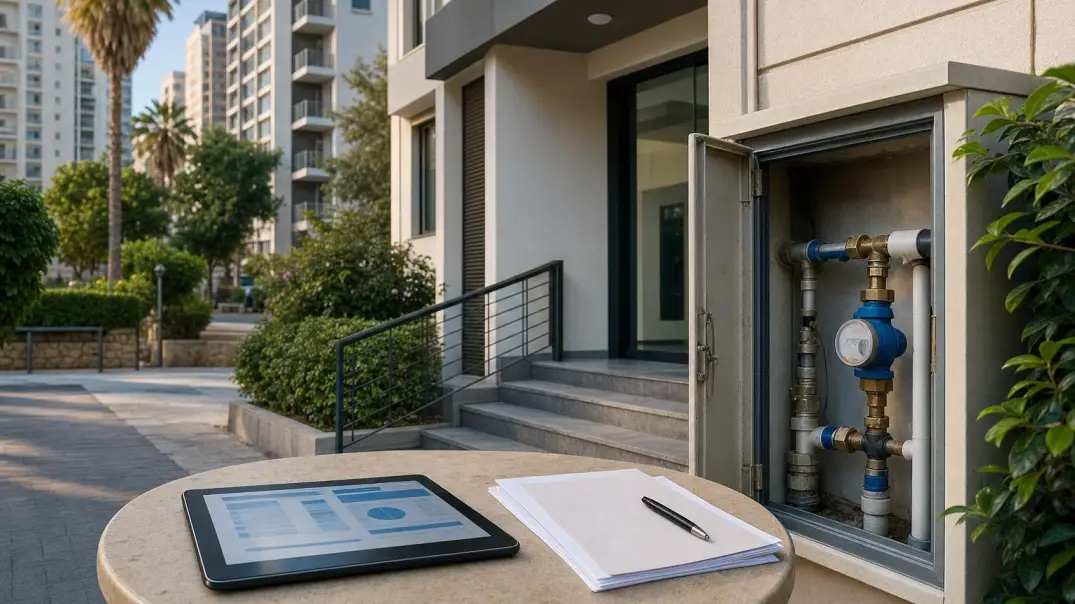
- Ask to see the meter, its current readings and signs of leaks near connections, bathrooms and balconies.
- Ask whether the receipt includes charges for household waste and what other regular payments are not included in the aidat.
- If the apartment is located outside of a dense central development, check the applicable tariff category using the exact address, not the advertised description of the area.
Aidat and utility bills are different expense items
Aidat is a fee for the maintenance of a building or apartment complex. It may include cleaning, security, an elevator, a swimming pool, a garden, a generator, and maintenance and lighting of common areas. Its amount is determined by the building's management rules and does not replace individual water bills.
In homes with a swimming pool, large grounds, and year-round staff, the aidat can sometimes be a more significant part of the budget than a regular water bill. In a small city residence, the situation can be the opposite. Therefore, it's more accurate to compare not just one indicator, but a complete monthly scenario: the aidat, personal bills, potential repair fees, and expenses when the apartment is vacant.
How to use this test when choosing a district
Utility bills shouldn't be the only criteria when choosing a property in Mersin. It's more important to evaluate a neighborhood based on daily logistics, the state of utilities, proximity to shops, healthcare, the sea, employment, and the typical lifestyle. However, expense records help reveal the real side of a property that's not revealed by the view or layout.
A practical approach is to compare two or three suitable properties using the same criteria: address, address, most recent MESKİ bills, meter status, building age, presence of common areas, and the previous owners' actual residence status. Then, the choice between Mezitli, Yenişehir, Tece, Erdemli, or another location will be based not on average promises, but on the specifics of the apartment itself.
INCOME MERSIN specialists can help you develop a list of questions to ask the owner and compare neighborhoods and housing options based on your lifestyle. This allows you to understand not only the apartment price but also the organizational costs after the purchase.
Sources and date of verification of information
Information verified on August 8, 2026, based on official publications by Mersin Büyükşehir Belediyesi. Sources used for verification: End of transitional exceptions on January 1, 2026, and the need to determine the status of rural microdistricts for the application of preferential tariffs.