The historic center of Tarsus is more than just a walking route
Tarsus is often thought of as a day trip from Mersin, with its old streets, religious monuments, archaeology, and markets. But for someone considering living in Mersin or buying a home in Tarsus, the historic center is also important in a more practical sense. It reveals how the everyday urban environment functions: whether it's walkable, where noise levels are, whether there's enough shade, and how housing, retail, cars, and tourist traffic interact.
On June 11, 2026, the Tarsus Municipality announced an on-site survey of historic and public spaces within the historic preservation plan. The areas of the site associated with the Prophet Daniel, Ulu Cami, Kırkkaşık Bedesteni, the historic shopping center, Democracy Square, and St. Paul's Square were included in the survey. The municipality separately considered pedestrian and vehicle safety, accessibility, preservation of the historic fabric, seating arrangements outside establishments, façades, canopies, and space utilization.
This doesn't mean that all the aforementioned areas have already been reconstructed or that specific solutions have been approved. However, the inspection itself is useful as a benchmark: it's these details that determine whether a historic quarter will be convenient for everyday life, not just beautiful in photographs.
What in the historical environment of Tarsus really affects comfort
Tarsus's city center boasts a higher density of functions than Mersin's new residential areas. Here, small shops, cafes, religious sites, old buildings, municipal spaces, and tourist attractions can all be within a short walk. For some, this is an advantage: they can organize their day without the need for constant commuting. For others, it's a source of compromise, primarily regarding parking, quiet, and evening activities.
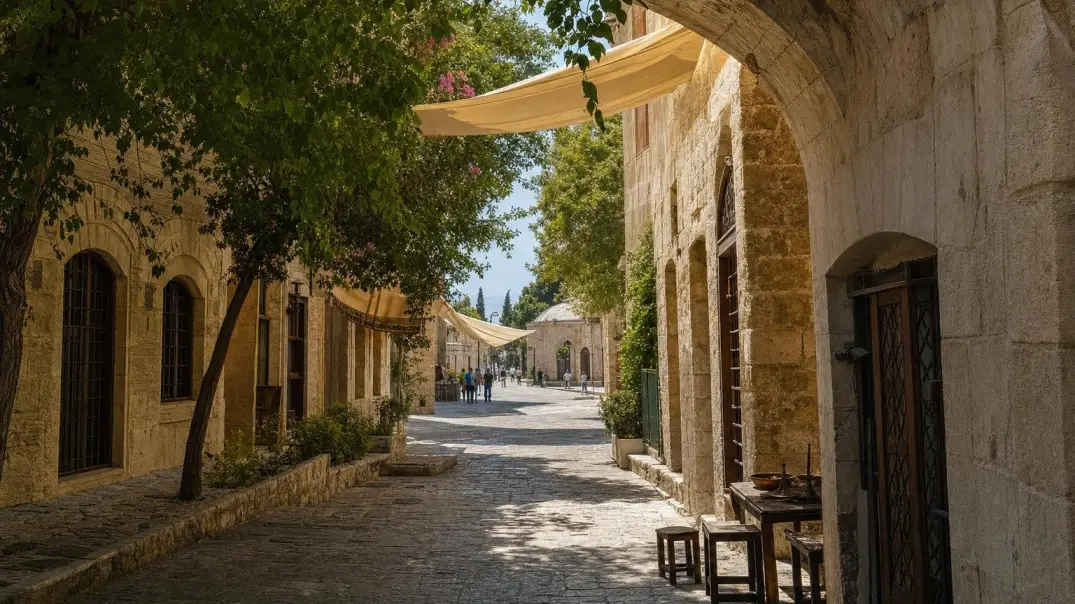
In Mersin's hot climate, not only street width but also its actual use is particularly important. An open square without trees or shade may be of little use during the day, while a short street with awnings, storefronts, and active ground floors becomes convenient for daily activities. Therefore, municipal attention to façades and shade systems is not an afterthought, but an integral part of the quality of the urban environment.
Another issue is the separation of pedestrian and vehicular traffic. Historic neighborhoods were rarely designed for today's growing number of vehicles. Even if a property is located close to the center of Tarsus, this doesn't guarantee convenient drop-off at the entrance, a quiet courtyard, or free parking. In Mersin and Tarsus, it's helpful to evaluate not the address on a map, but the route from home to the store, bus stop, pharmacy, and familiar everyday spots.
Kırkkaşık Bedesteni as a landmark of the historical trading center
The Kırkkaşık Bedesteni is one of the clear landmarks of old Tarsus. According to the Turkish Ministry of Culture and Tourism, the building was constructed in 1579; at various times, it served as an imaret and a madrasah, and later as a covered market. Its historical function explains the character of its surroundings well: it is not an isolated monument, but rather part of the city's commercial and pedestrian life.
For future residents of Tarsus, this means they can expect a mixed environment near the historic sites. During the day, there may be more visitors and business activity, while at certain times, there may be more noise and parking difficulties. In exchange, the area offers the opportunity to explore the city on foot and experience the vibrant urban rhythm rather than the resort atmosphere.
The historic center isn't necessarily suitable for every property buyer in Mersin. A family with small children, a person with limited mobility, or someone who uses a car daily might feel more comfortable in a modern neighborhood with a more predictable infrastructure. But for buyers who value atmosphere, short walks, and access to city services, Tarsus can be a smart alternative to Mersin's coastal neighborhoods.
How to find accommodation near Tarsus's old town center
A historic district inspection should be tied to a specific street and building. One block may be quiet and residential, while the next one may be busy with shopping or busy on weekends. Don't draw conclusions based on a single daytime walk or the distance to a landmark.
- Walk the route from your home to your nearest daily hubs in the morning, afternoon, and evening: shade, noise, and traffic levels vary at different times.
- Check where the car actually stops for unloading luggage, taxis, or trips with elderly relatives; proximity to the center does not equate to convenient access.
- Consider the ground floors nearby: cafes, small shops, and workshops enliven the street, but can change the acoustic load and parking conditions.
- Check if there is a continuous, safe route to the store, pharmacy, and bus stop without awkward crossings, high curbs, and chaotic parking.
- If the building is located in a historic development zone, check the specific address to determine what work is permitted, the condition of utilities, and the need for approvals for repairs.
Why this topic is useful for those who choose Mersin for a long life
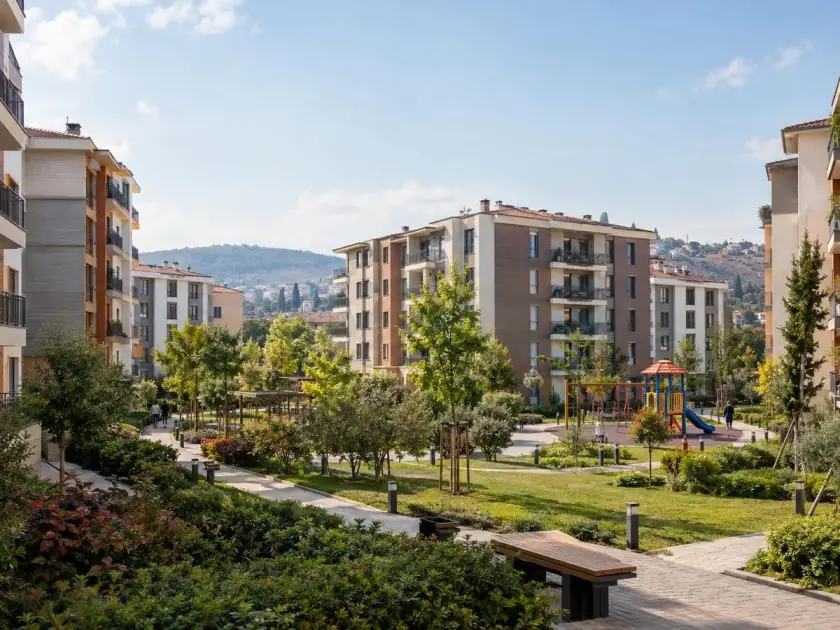
Mersin isn't just the coastline of Mezitli, Yenişehir, Tece , or Erdemli. Tarsus offers a different experience: life in a larger district of Mersin province with a deep historical layer, a more distinct urban center, and short daily commutes. It doesn't replace coastal locations, but it expands the options for those who value an urban environment over proximity to the beach.
A municipal survey of the historic center demonstrates the correct logic for choosing: consider not only the building's façade and the apartment's square footage, but also the layout of the surrounding space. Pedestrian safety, accessibility, canopies, ground-floor functionality, and the layout of the square all impact life just as much as the view from the window.
If you're choosing an apartment or house in Tarsus or comparing it with areas in central Mersin, INCOME MERSIN specialists will help you create a comprehensive list of criteria tailored to your lifestyle: walking distance, infrastructure, building condition, daily commutes, and specific address features.
Sources and date of verification of information
Information verified on August 11, 2026, based on official publications at tarsus.bel.tr and mersin.ktb.gov.tr. Sources used for verification: Municipal survey of historical and public spaces in Tarsus, including pedestrian and vehicle safety, accessibility, facades, canopies, and space utilization.