For the second time this month, I attended an event where Kazakhs were told about the perks of owning property abroad. The previous event focused on countries in Old and New Europe, while this time it was Turkey. It was appropriately titled: "The Mechanism of Buying Real Estate in Turkey by Kazakh Citizens. Analysis of Buyer Activity from Kazakhstan and the CIS in the Turkish Real Estate Market in 2012." Everything about these meetings is compelling – from the fact that you'll be taken for free to choose your future property to the idea that owning property in the most picturesque places on the planet won't cost you more than a Khrushchev-era apartment in the outskirts of Almaty, will be larger in square footage, and will be equipped with all the necessary infrastructure. Besides, I left yesterday to find it raining outside, rivers flowing down Furmanova Street, and cars honking, like, "Come on, hurry up and swim across." I was so drawn to go and choose a cozy little nest on the Mediterranean, where the swimming season lasts nine months, or at least to catch a glimpse of these new apartments with a view of orange groves from the bedroom and swimming pools for residents in the courtyard. And I also wanted to figure out why in my home country, supposedly so rich, I, an honestly working person with a higher education
education, I can’t even afford to buy a one-room apartment in a panel house built in 1980 with a view of the smog.
Any whim for our money.
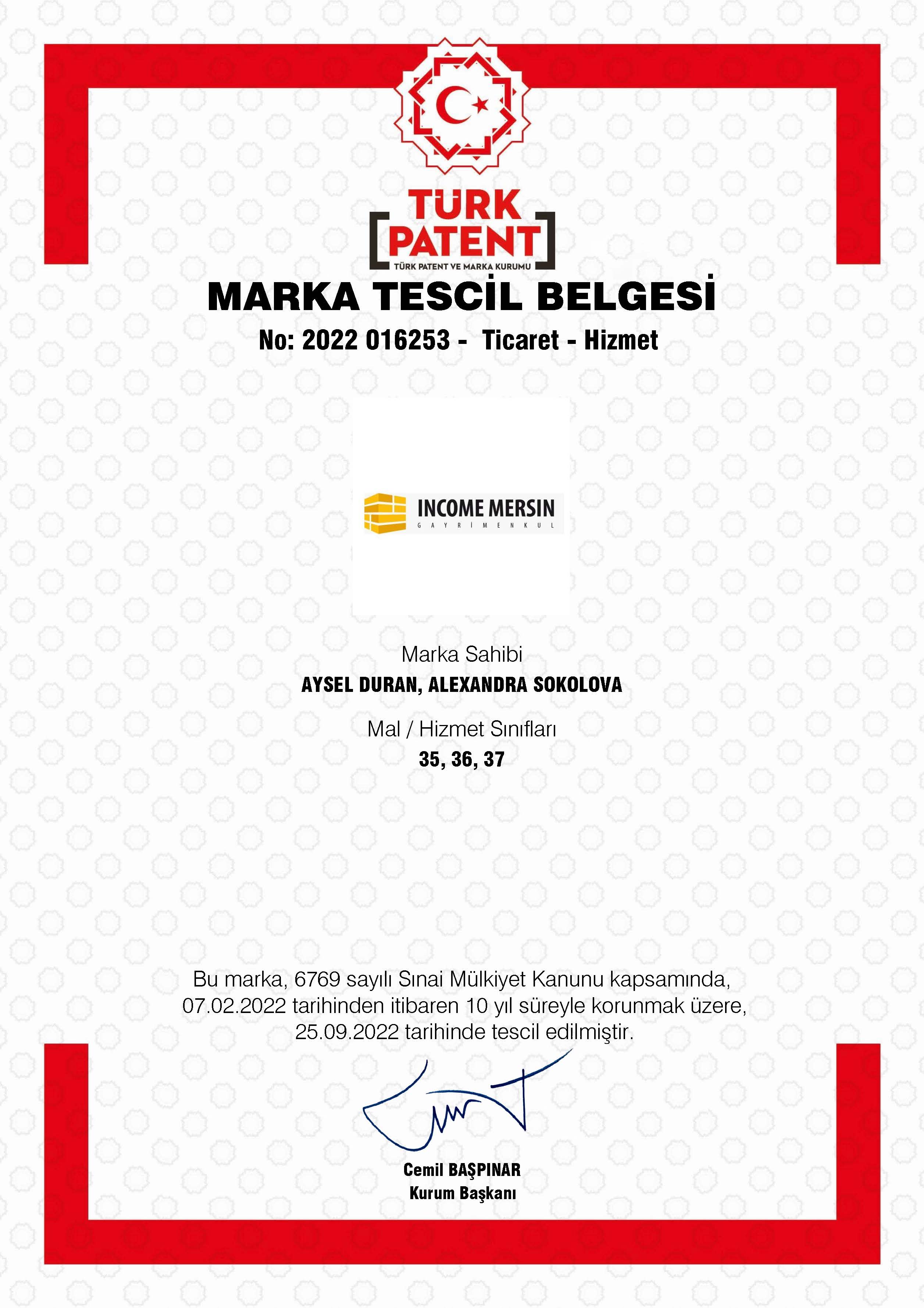
Let's start with the fact that at a press conference, Alexandra Sokolova, a representative of the construction company Sinan Insaat, part of the investment construction holding Sinan Invest, expressed hope that Kazakhstanis will be among the top five real estate investors in Turkey as early as 2013. There are several prerequisites for this. "We share a common mentality, religion, and Turkic language group. Economic and political relations between our countries have developed favorably," Alexandra stated. Furthermore, in August 2012, a law came into effect in Turkey abolishing the principle of reciprocity for real estate purchases by foreigners. Previously, only legal entities jointly with a Turkish citizen could purchase properties.
Apartments can now be registered to individuals, which entitles all first-degree family members (parents, children, spouses) to residency, as well as the right to work and run a business. Thus, Kazakhstan, along with Kyrgyzstan and Belarus, is now among the 129 countries eligible to purchase Turkish real estate without restrictions.
On April 4 of this year, the Turkish National Assembly approved the latest version of the new Law on Foreigners and International Protection. As part of Turkey's accession to the European Union in 2014, conditions for citizens holding residence permits and real estate in Turkey are being improved. Residence permits are now granted for one year to all first-degree family members and are renewable. Property owners can reside in the country year-round. After eight years of holding a residence permit, Turkish citizenship can be obtained. According to the analytical service of the Sinan Invest holding company, since
Since the 2012 law's adoption, citizens of Kazakhstan have already purchased 57 properties in the Republic of Turkey. Overall, investors from 183 countries purchased 2,578 Turkish properties last year, totaling 1,162,000 square meters.
The largest number of apartments and houses are owned by German citizens – 561 Germans own 775 properties (789,000 sq. m). The top three buyers also include
residents of the UK (365 properties) and Russia. Citizens of the Russian Federation (and Ukraine) have been allowed to purchase real estate in the name of an individual since 2008, and by the end of 2012, the number of properties grew
The Sians already own 416 properties.
As in the best houses of London…
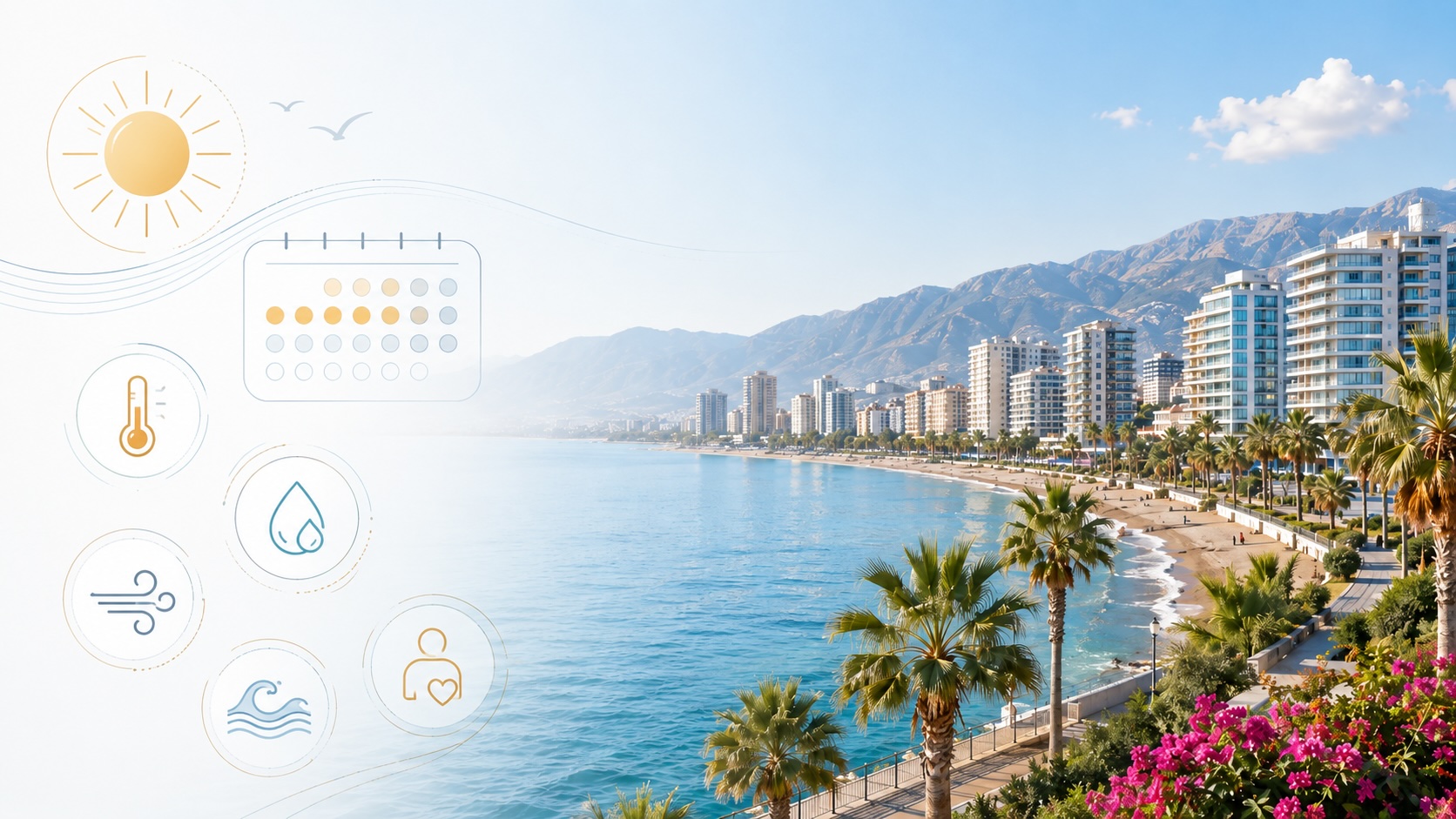
Of the 57 properties purchased by Kazakhs, 15 are located in the Mersin region. A representative of Sinan Insaat confirmed that they are the largest developer in the region and are building apartments on the Mediterranean coastline with its own sandy beaches. Mersin, a new region for Kazakh citizens both for residence and investment, is located in southeastern Turkey, opposite the island of Cyprus (80 km by sea) and surrounded by the Taurus Mountains. It is famous for its
Beaches, fertile gardens, a ski resort, and historical monuments, which, because Mersin is the only earthquake-free area in Turkey, have been preserved from the Roman, Ottoman, and Byzantine Empires. Mersin also boasts Turkey's first skyscraper. It is the most Europeanized city, with many Belgians, Dutch, and Germans living here year-round. The resort season, when you can swim in the sea, lasts nine months from March to November, but even in winter, temperatures never drop below 15°C.
While I don't intend to advertise real estate in Mersin, I can't help but mention that the residential complexes offered to Kazakhstanis have all the necessary infrastructure for both seasonal vacations and permanent residences: water parks, swimming pools, hammams, saunas, playgrounds and sports fields, parking, shops, restaurants, beauty salons, pharmacies, etc. The grounds are fenced and guarded. All complexes have 7 km of private beaches and are connected to a club system with free use of the infrastructure. And now the most interesting part
The price of apartments in these buildings is €600 per square meter for buildings still under construction, and from €850 per square meter for completed buildings with furniture and appliances (washing machines, dishwashers, televisions, etc.). There is no surcharge for the number of floors or views. Apartments range from 75 to 195 square meters. According to a representative of the developer, an 85-meter apartment under construction will cost €55,250, while a 110-meter apartment with finishing, furniture, appliances, curtains, pillows, and even a made bed—move in and live—will cost €93,500. And to add insult to injury, all the apartment terraces overlook the sea, while the bedroom windows face the courtyard, overlooking orange groves and mountains.
Back to the sheep
Now let's compare our reality. Let's take the average euro exchange rate of 197 tenge and an unfurnished, finished apartment in Mersin by the sea for 55,250 euros (or 10,884,000 tenge). Converting the price to dollars at a rate of 151 gives us 78,146 USD. Let's open a popular website selling apartments in Kazakhstan. What can we buy for this amount? A one-bedroom apartment in Almaty in a good area on Zharokova-Mynbaeva, 36 square meters with a combined bathroom. In a brick building built in 1987. Or a two-room apartment on Gagarina-Timiryazeva, 44 square meters, on the top, fourth floor of a panel building built in 1962. For those who prefer more space, we can offer a three-bedroom apartment, but in a residential area of Karaganda. For 77,000 euros, 63 square meters. True, the housing is mortgaged. Astana has 102 offers in our price range. Mostly one- and two-bedroom apartments in residential complexes built between 2009 and 2013, ranging in size from 39 to 54 square meters. Can you see the difference? According to Alikhan Smailov, Chairman of the Statistics Agency of the Republic of Kazakhstan, who recently presented the first-quarter report, "the housing market is stable: prices for new housing in March compared to December, that is, for the first three months of this year, increased by 1.4%." "Across Kazakhstan, the selling price of one square meter of new housing in March was 175,000 tenge (965 euros), including 217,000 tenge (1,101 euros) in Astana, 245,000 tenge (1,244 euros) in Almaty, 161,000 in Aktau, 209,000 in Atyrau, and 203,000 in Shymkent," the head of the Statistics Agency clarified. But that's not all. In Turkey
The management company promises to provide care for the apartment during the owner's absence, can rent it out, and is financially responsible for the owner's property and assets. And what about us? Now about utility bills.
According to Turkish representatives, living in their complex will cost between 380 and 500 euros per year (74,860-98,500 tenge). This amount includes the cost of using the infrastructure of all complexes - beaches, sun loungers, umbrellas, water parks, swimming pools, hammams. Transfers from and to the airport, no matter how many times a year you fly. Electricity and gas are paid additionally. Water is free. They have their own artesian wells that supply the complexes, and there is no concept of water meters. Meanwhile, just for visiting the pool in Almaty per month (12 times), one person will have to fork out at least 15,000 tenge (180,000 per year). About the fact that residential
I haven't heard of any complexes in Kazakhstan equipped with saunas and the like. Utility bills for a one-room apartment (43 sq. m.) in winter cost an Almaty resident 65,000 rubles for the five months of the heating season. The numbers speak for themselves... and not
in favor of the Motherland. Laws against fears Yes, there are fears that today in Turkey there is one law and privileges for foreigners, but tomorrow, when you have already invested money, everything may change
Change like in Cyprus, and you'll be left without a home and without investments. But Alexandra Sokolova explained why such a scenario is unlikely:
– Turkey uses a title deed system for property registration, and when locals are told that property rights are contestable and can be lost, they don't understand. Land is owned when you buy an apartment; the TAPU (title deed and residence permit) specifies the land under the building, which is yours—a condominium. Ownership is indisputable. This is enshrined in EU law, which Turkey plans to join in 2014; no one has the right to claim it. This means that neither previous owners, nor spouses, relatives, nor even intelligence officers (as recently happened with the Amansaulyk Foundation in Almaty) can encroach on the apartment you purchased. Family permission is also not required for
sell apartments. Moreover, Türkiye is not a double taxation country
You can choose the country in which you pay property taxes. "In Turkey, they are minimal – 0.027% of the cadastral value (50-70% of the commercial price) – 50-100 euros per year," said Ms. Sokolova. Mersin is also a free economic zone, which is why many foreigners conduct their businesses there, as they are exempt from taxes other than 18% VAT. Kazakhs are wary of purchasing unfinished property. Having learned the hard way from shared construction, citizens are trying to play it safe. "In Turkey, there is no such thing as shared construction. It's not common to build with borrowed money. We build on our own land, with our own money, without contractors. In Turkey, on the contrary, there has been a 10% increase in property values since 2010, and in our region, 20%," explained Alexandra Sokolova.
The holding company where she works has its own construction companies, a cement plant, a furniture factory, a transport company, that is, it does without subcontractors,
This reduces the cost of the work and eliminates corruption. In Kazakhstan, the cost of kickbacks is built into the price of any product, be it wine or an apartment. "In Kazakhstan, when preparing documents, a ton of paperwork is filled out—a preliminary agreement, a shared participation agreement, a letter of intent—all to avoid entering into a purchase and sale agreement. In Turkey, a purchase and sale agreement for the property is signed immediately, and all projects are insured by a state insurance company. If something happens to the developer, a tender is announced, and another company completes the buildings. You are guaranteed to receive the property," says Ms. Sokolova. "Our buildings are not yet finished, but you can obtain a TAPU for them. Specifically, the complex being developed by Sinan Insaat will have 15 floors; only three are ready so far, but all the apartments have already been sold." An installment plan of up to 3 years is available “with a slight increase in price.” “But since prices in the region are constantly rising – every 3-5 months a square meter goes up by 50 euros – you will still end up in the black,” promised the company representative, citing Cyprus in the 1990s, Bulgaria, and Montenegro as examples
Croatia, where prices started at 300 euros per square meter and are now approaching 2,000 euros.
The rich and the poor
Returning to the 57 Kazakhstanis who already own property on Turkey's Mediterranean coast, the company representative, of course, couldn't name them, but citing market analysts, stated that they are residents of Almaty, Shymkent, and Astana (in that order) and are engaged in business. The apartments were purchased for their children and parents. Alexandra herself owns an apartment in Mersin and says that "a family of three spends 300-500 euros per month on accommodation, including meals at restaurants. The average salary is around 400 euros, depending on the industry and the employee's capabilities.".
As an investment, many purchase two or three apartments at a time and rent them out, with rents ranging from €80 to €160 per night during the nine-month high season in this region, and €600 to €1,200 per month during the off-season. Therefore, the payback period is 4-7 years. Turkey is not only a vacation destination, but also an investment destination, according to Ms
Sokolova, is becoming an increasingly popular country. - The outflow of investors is coming from Bulgaria-
Russia, because they abolished residence permits for CIS citizens. At the same time, Turkey introduced visa-free entry. Some owners are selling their property in Spain because of the long flight and visa requirements. Everyone is choosing convenience and proximity
Culture, affordable services, food, and other amenities. People understand that fresh air, fresh seafood, and affordable housing are important for parents and children, a representative of a Turkish developer listed the advantages. And it became completely unclear why Turkey can provide all this to foreign citizens, while their home country cannot. Neither more or less affordable housing, even if smaller, nor infrastructure, nor reasonable utility rates... Incidentally, in the Happy Planet Index—a composite indicator that measures countries' achievements in terms of their ability to provide their residents with a happy life—Kazakhstan (119th place) lags significantly behind Turkey, which is in 44th place. The purpose of this study, as a reminder, is to demonstrate the relative effectiveness with which countries use economic growth and natural resources to provide their citizens with a happy life. The British authors of the ranking emphasize that in countries where the emphasis is on the development of production, and with it, economic growth, people, as a rule, do not become happier, since the economic theories adhered to by the authorities of these countries have nothing to do with the lives of real citizens.