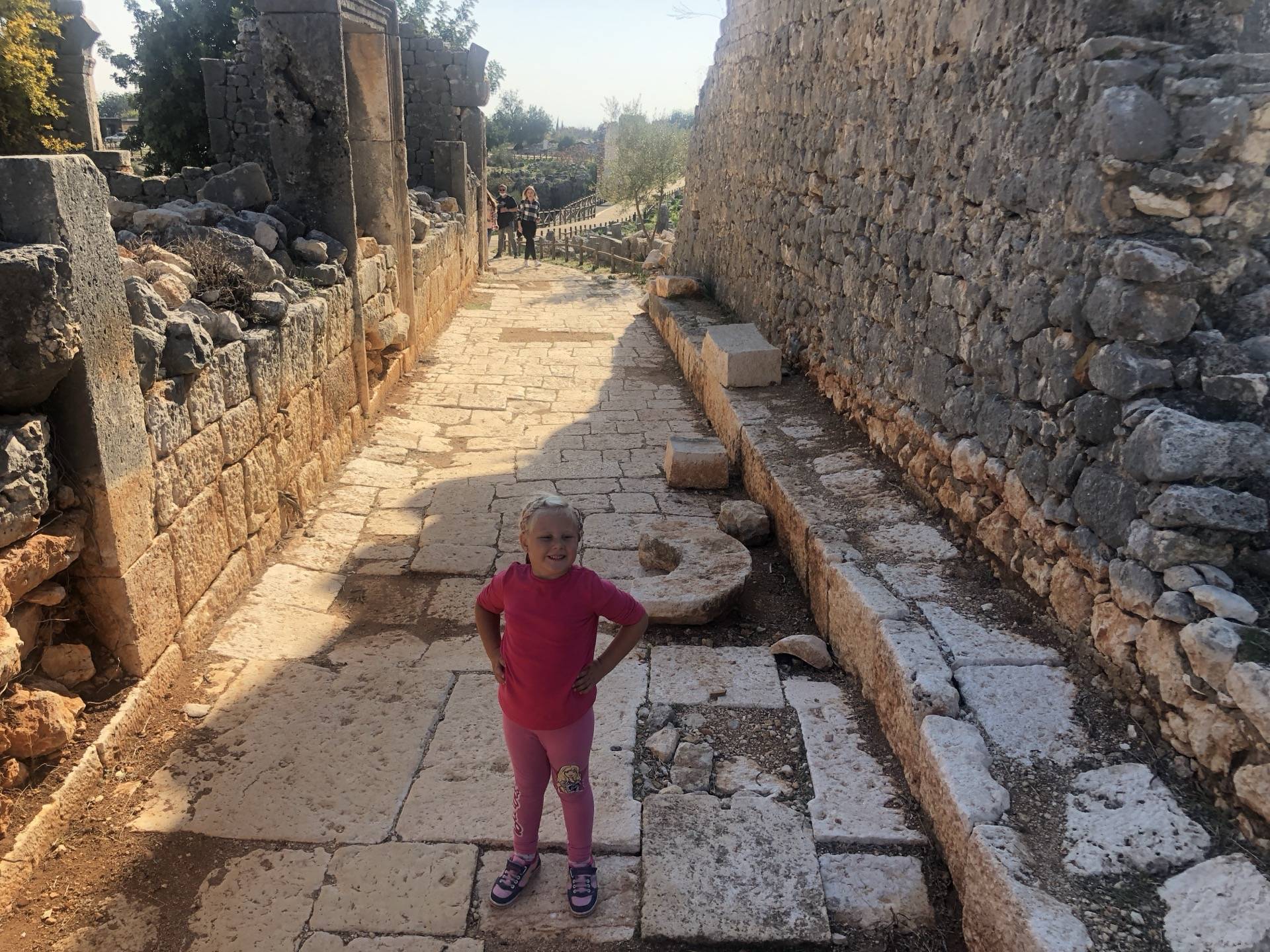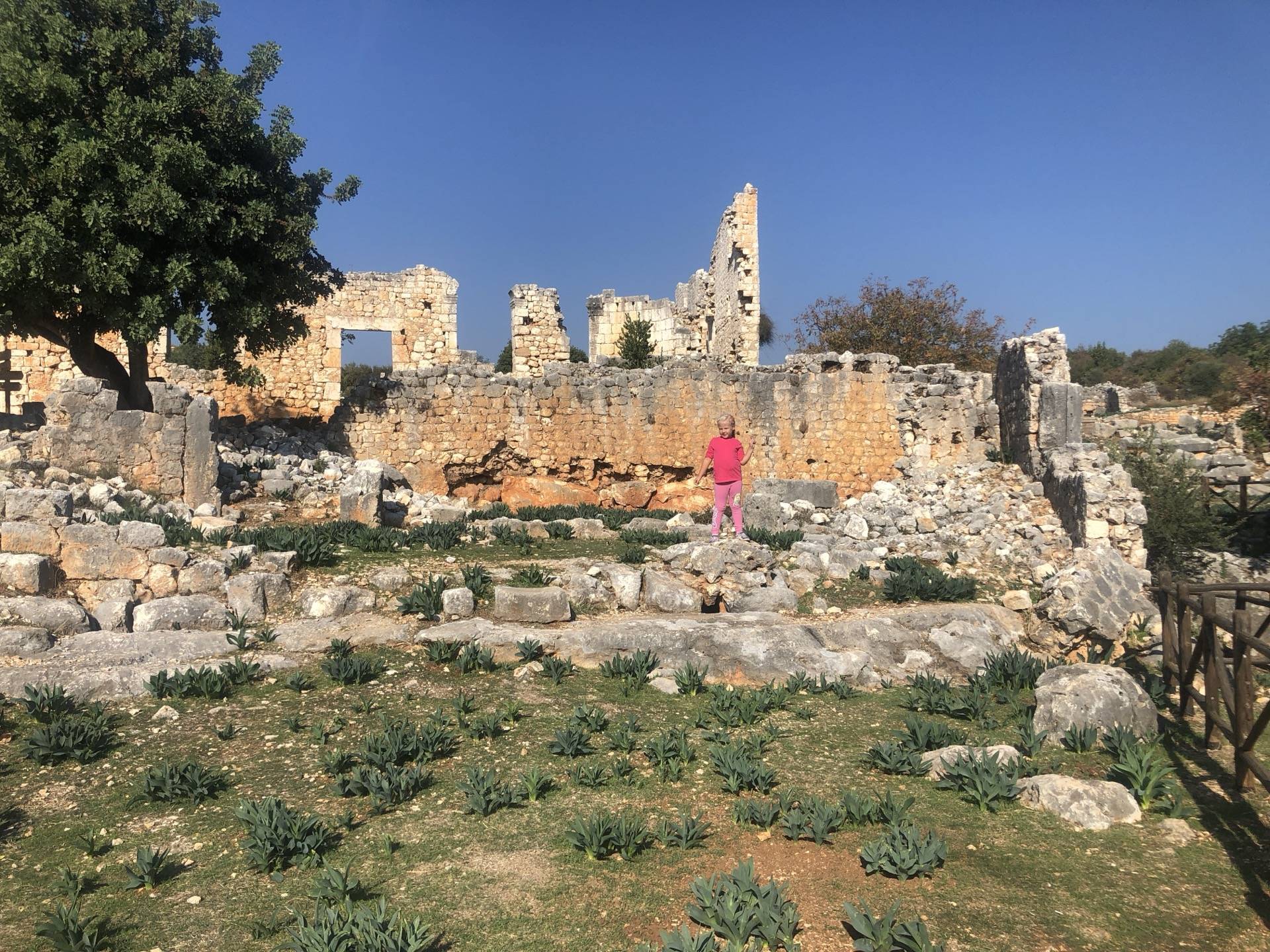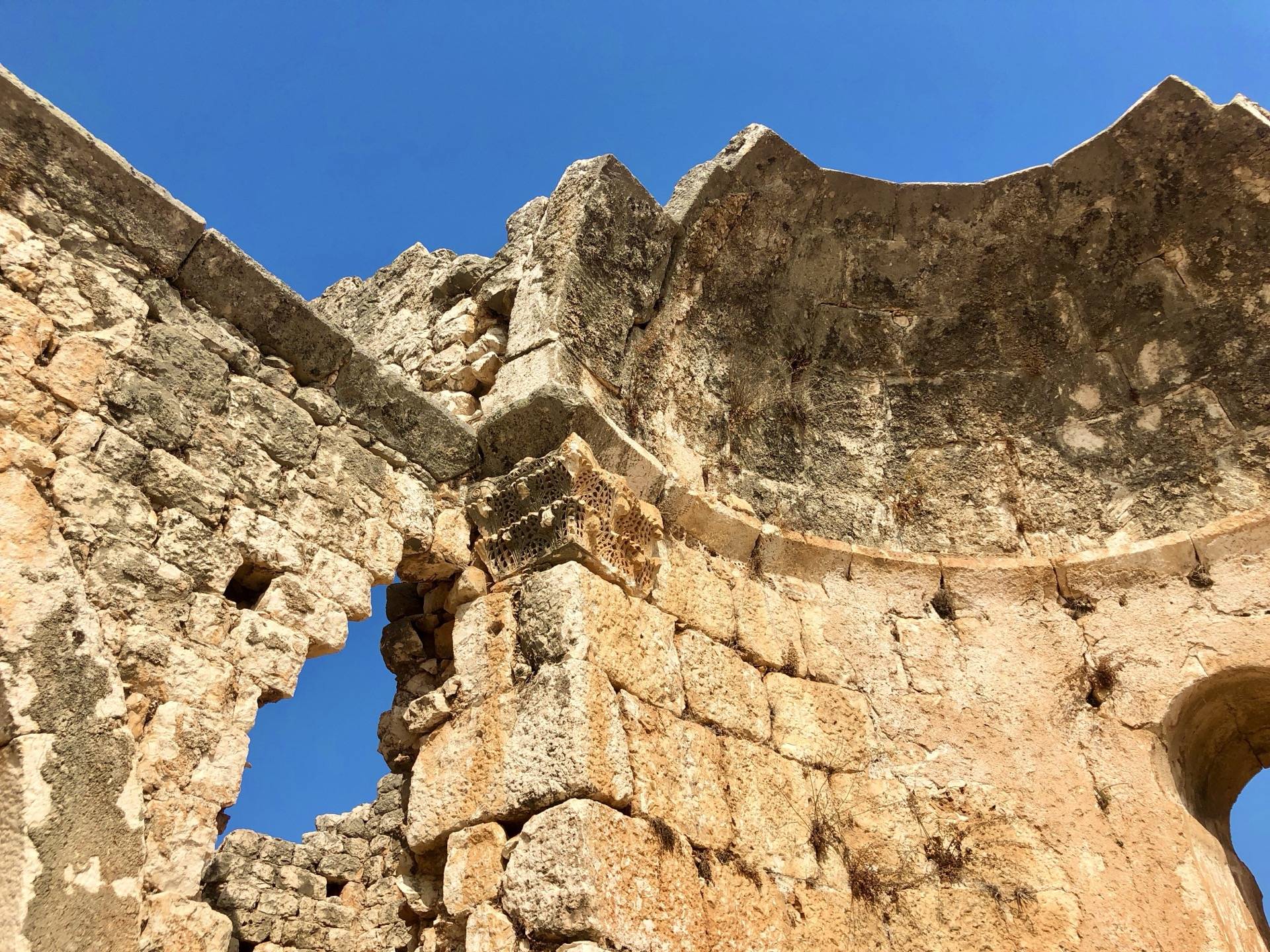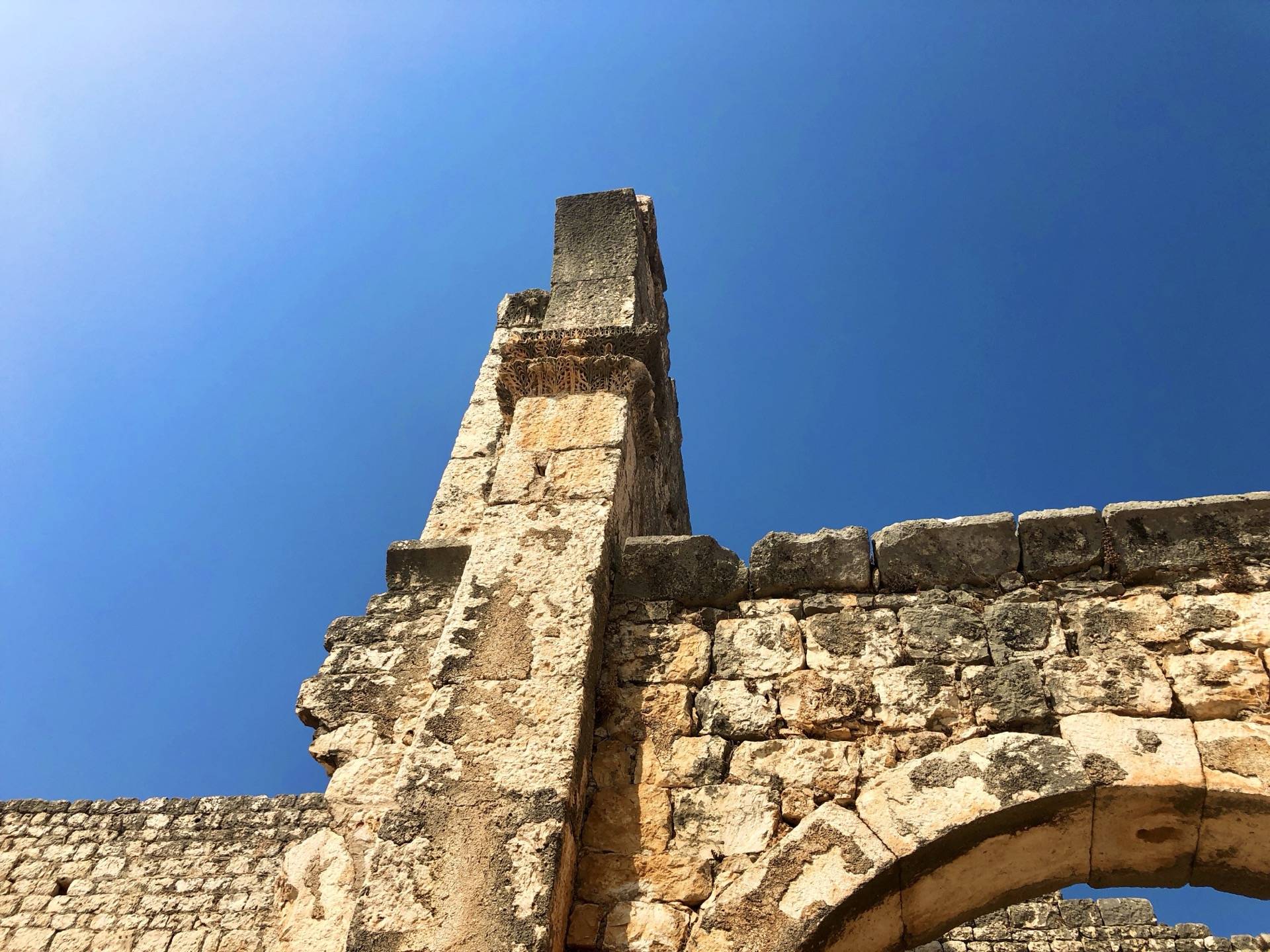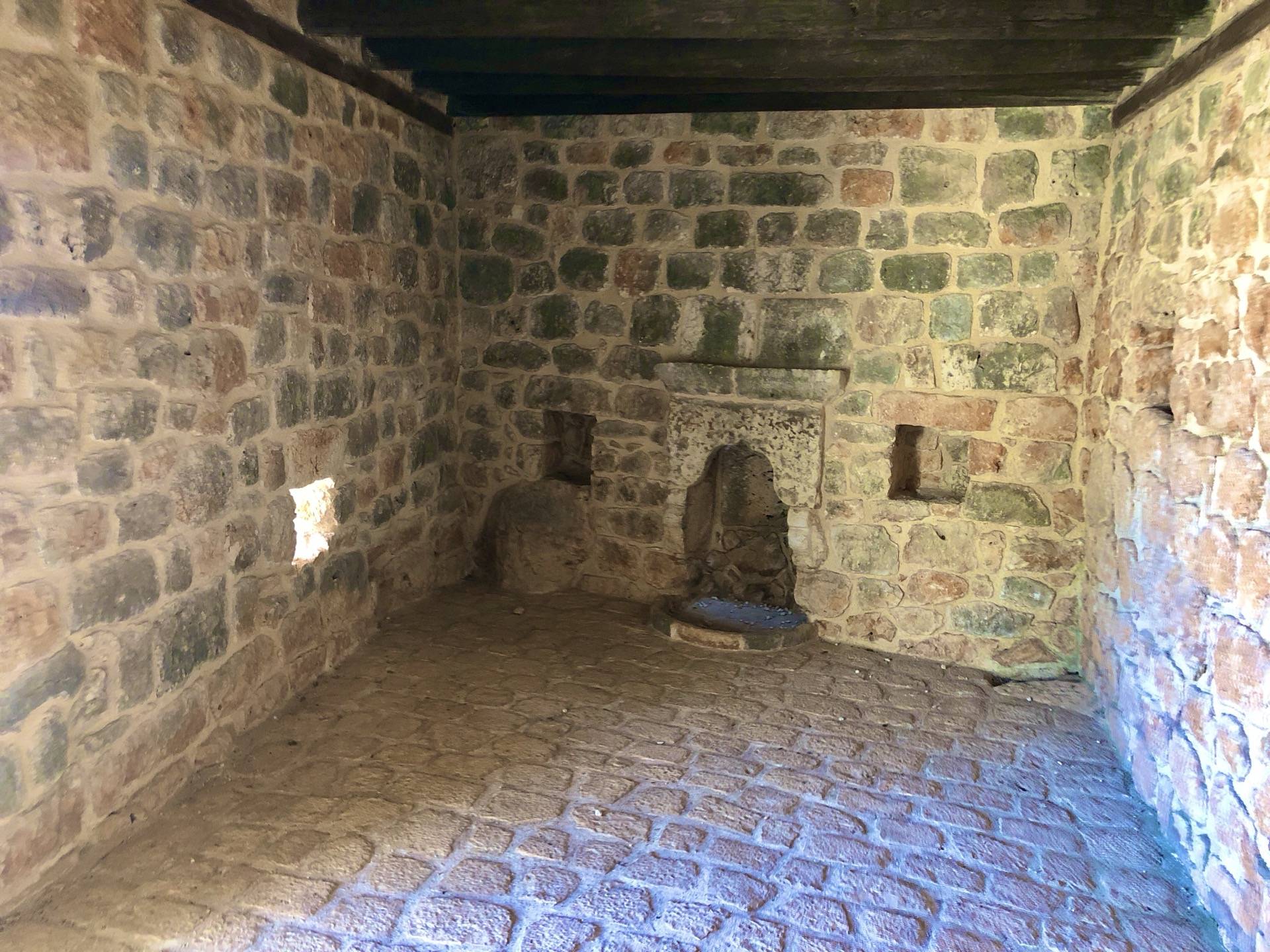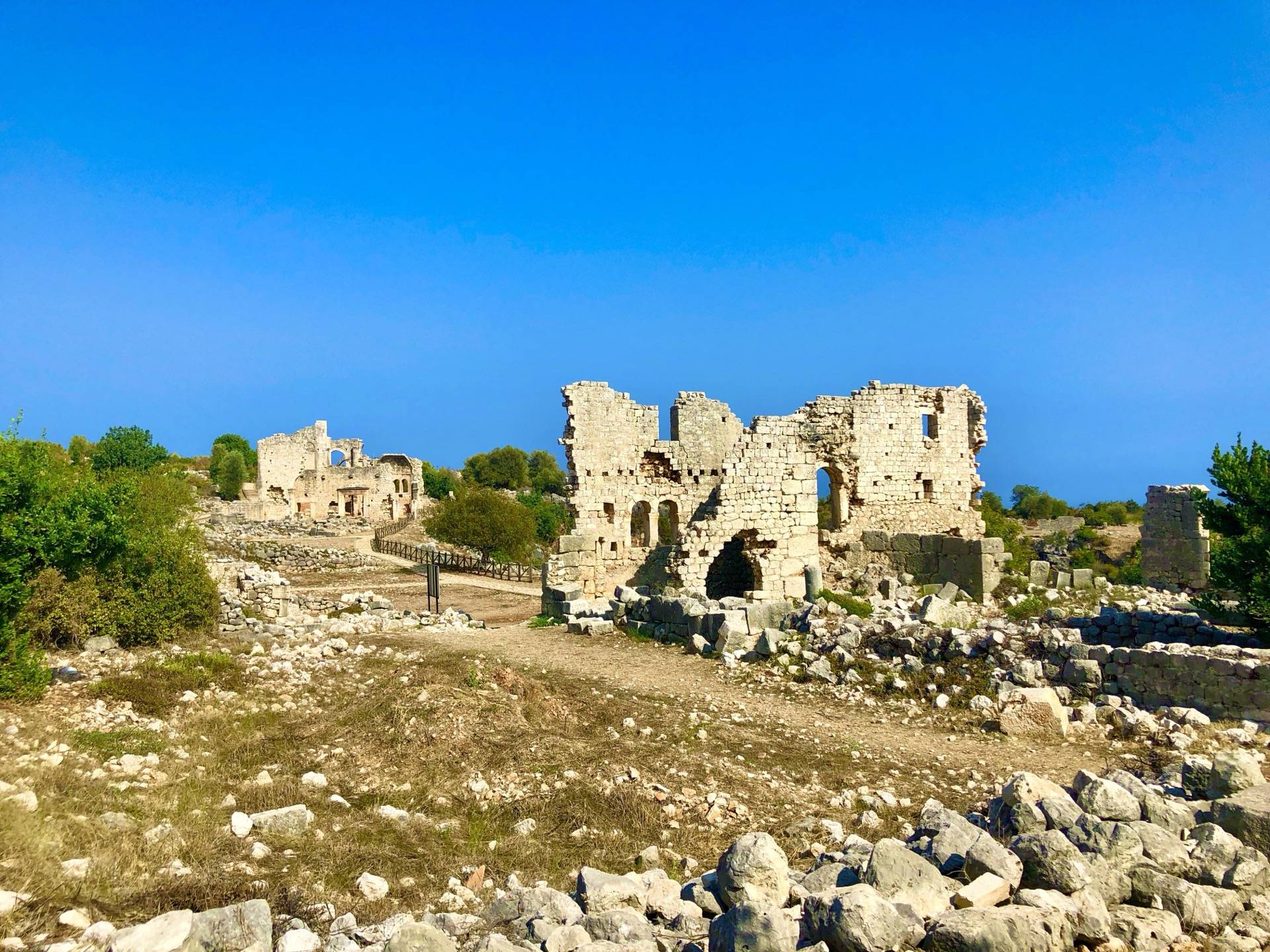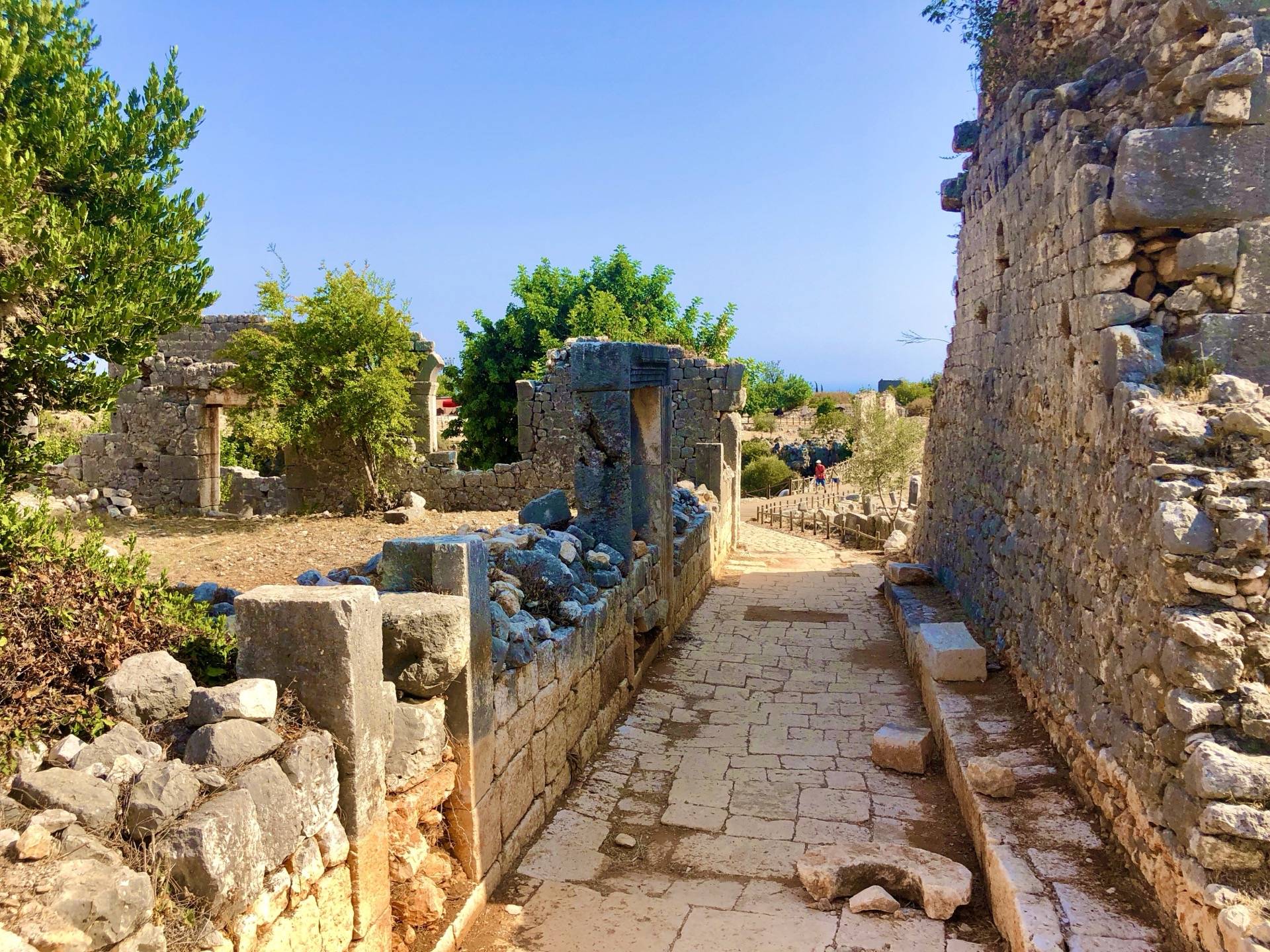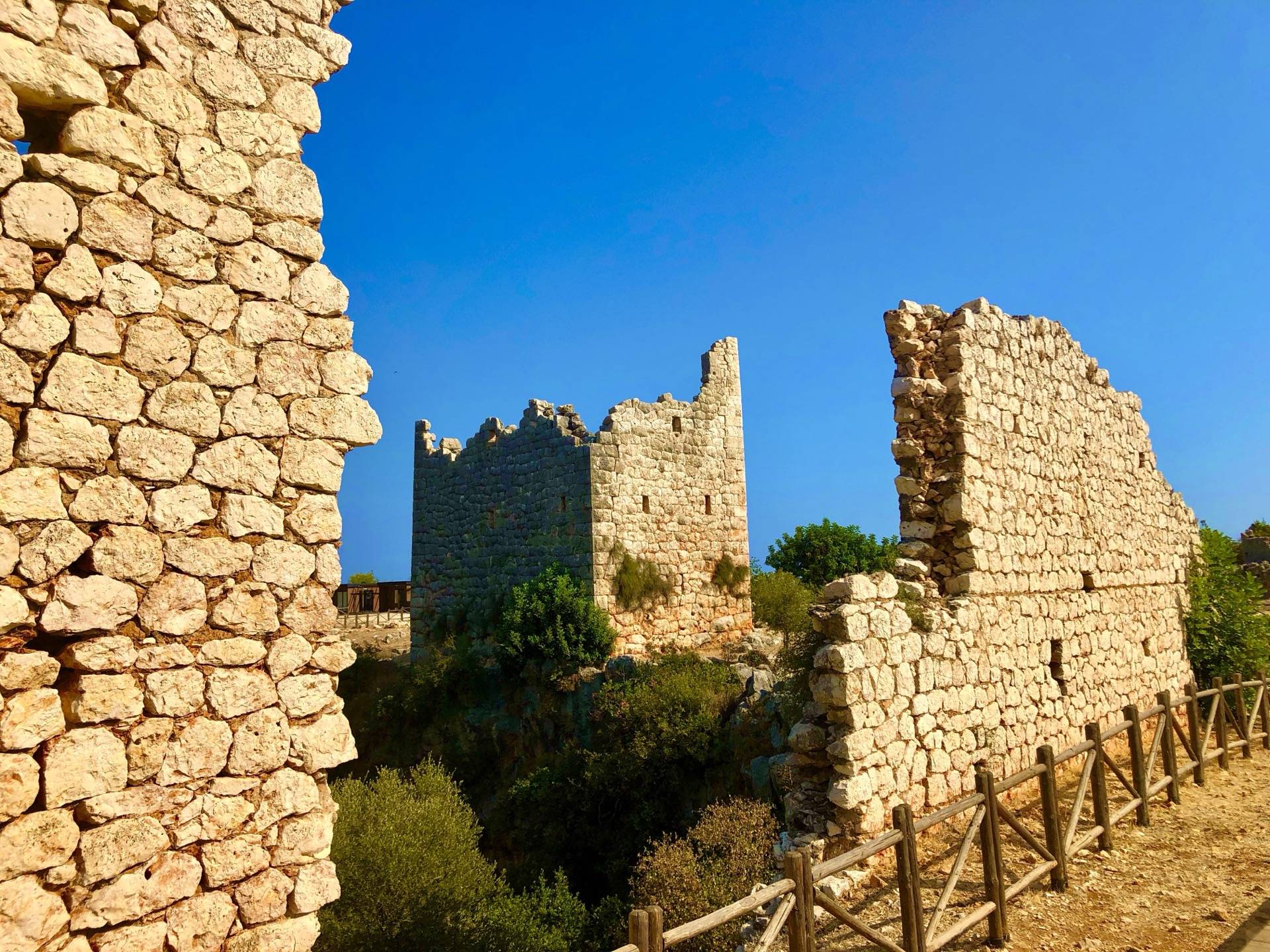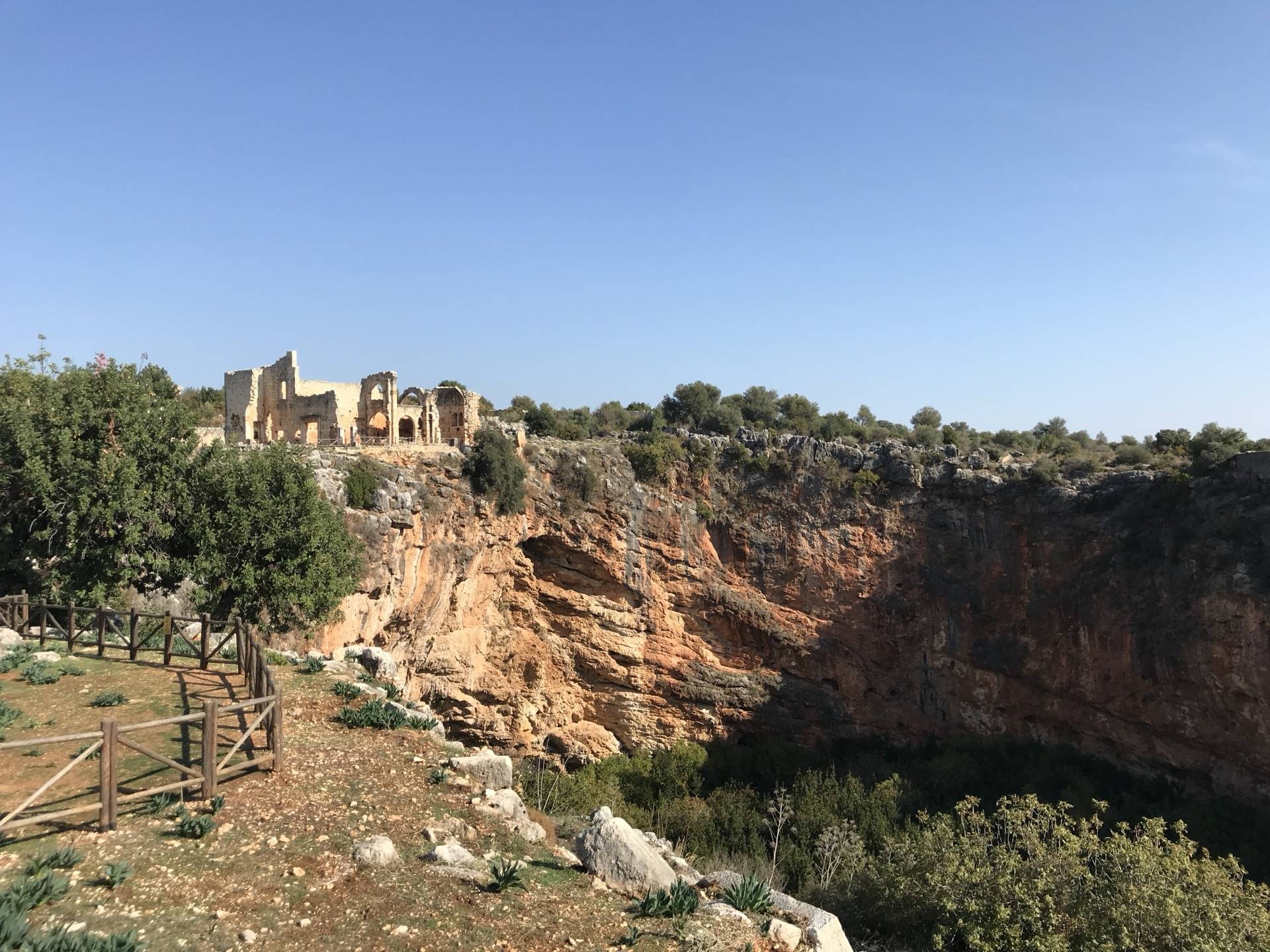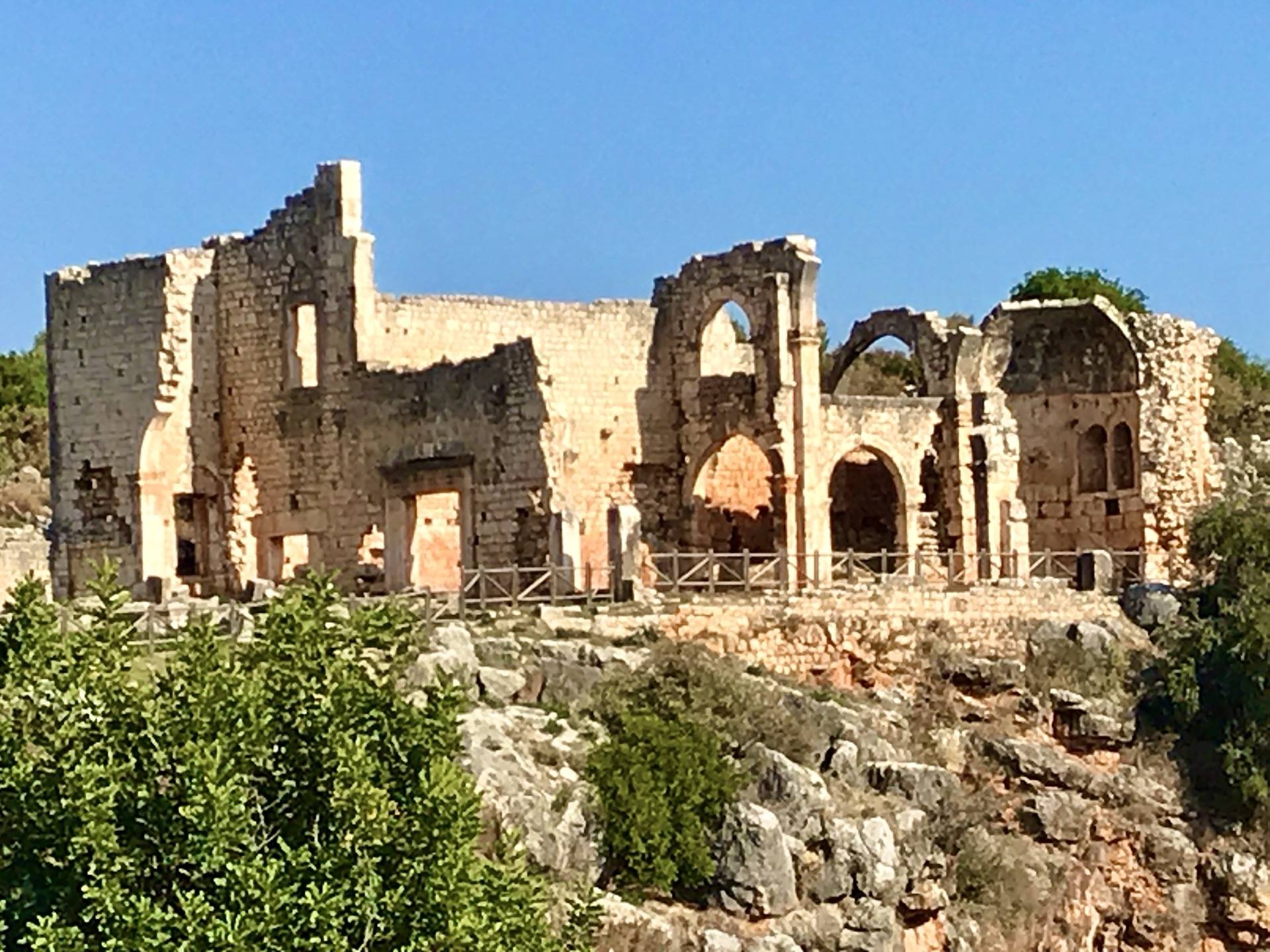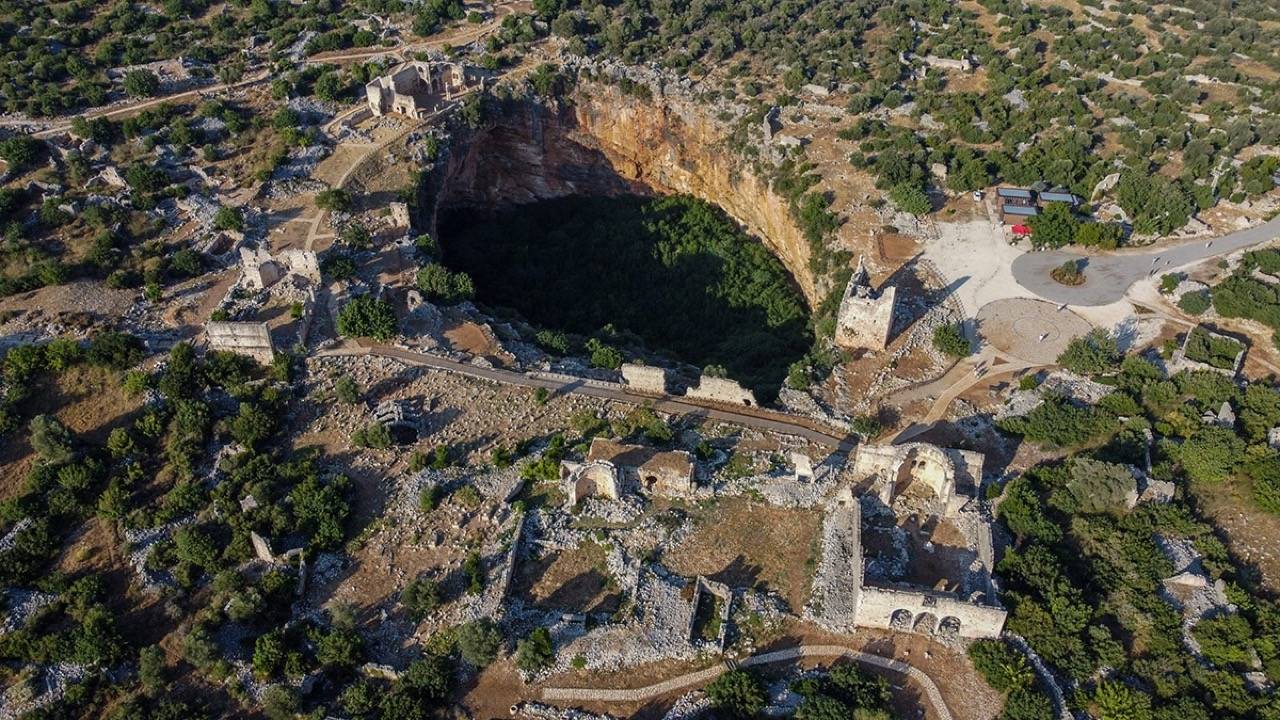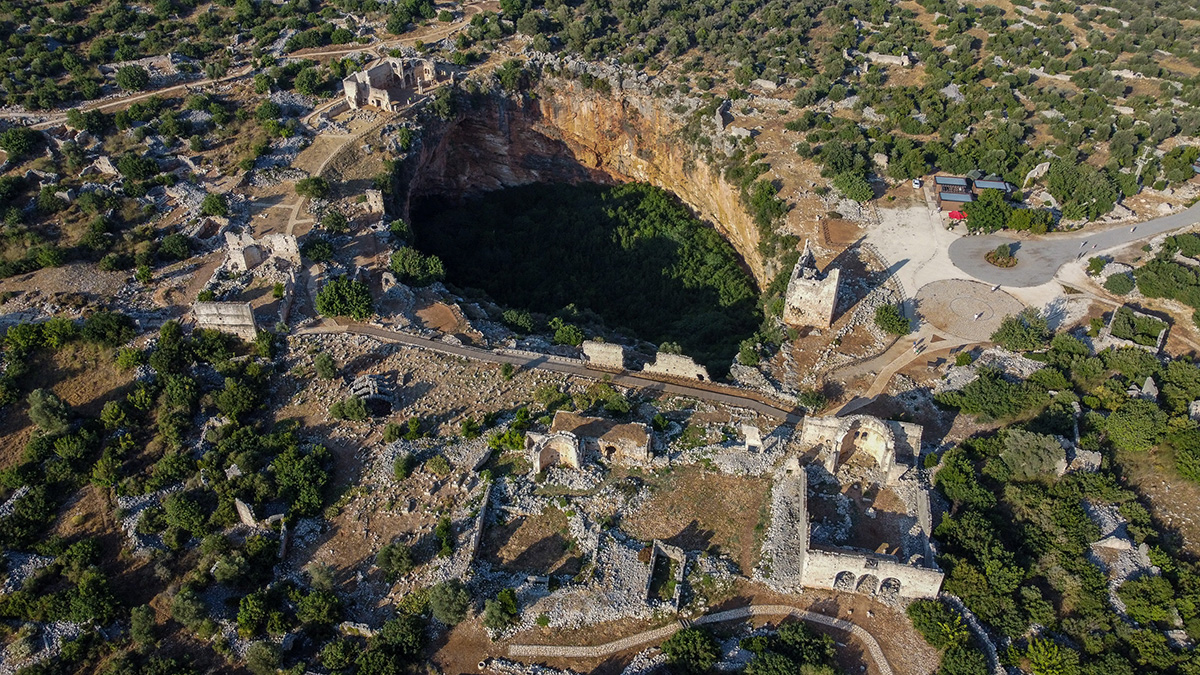
On the edge of a deep karst sinkhole, as if perched on the very edge of the abyss, is the ancient city of Kanlıdivane, in the Erdemli district, the village of Ayaş, between the cities of Silifke and Mersin.
Kanlydivane, ancient Kanitelis, is today completely abandoned, although in the 19th century it was inhabited by Yoruks, a Turkmen tribe, who called this place 'Kanydeli'. Various fossils of marine life, especially shells and starfish, suggest that this place was connected to the sea.
This place, in addition to its rich history, impresses with its unique geographical location. The city itself seems to be part of a grandiose natural amphitheater formed by a karst funnel.
The ruins of this place have been preserved for 2000 years, and some of them date back to the 2nd-3rd century BC.
Kanlıdivane was not always called that, this name dates back to the Roman and Byzantine empires. Previously, this place was called Kanitellis.
Both names can be translated as 'red' or 'bloody' and 'hole' or 'madness'. The funnel has a red hue of rocks, also, according to beliefs, criminals were thrown here, so the failure is considered 'bloody'.
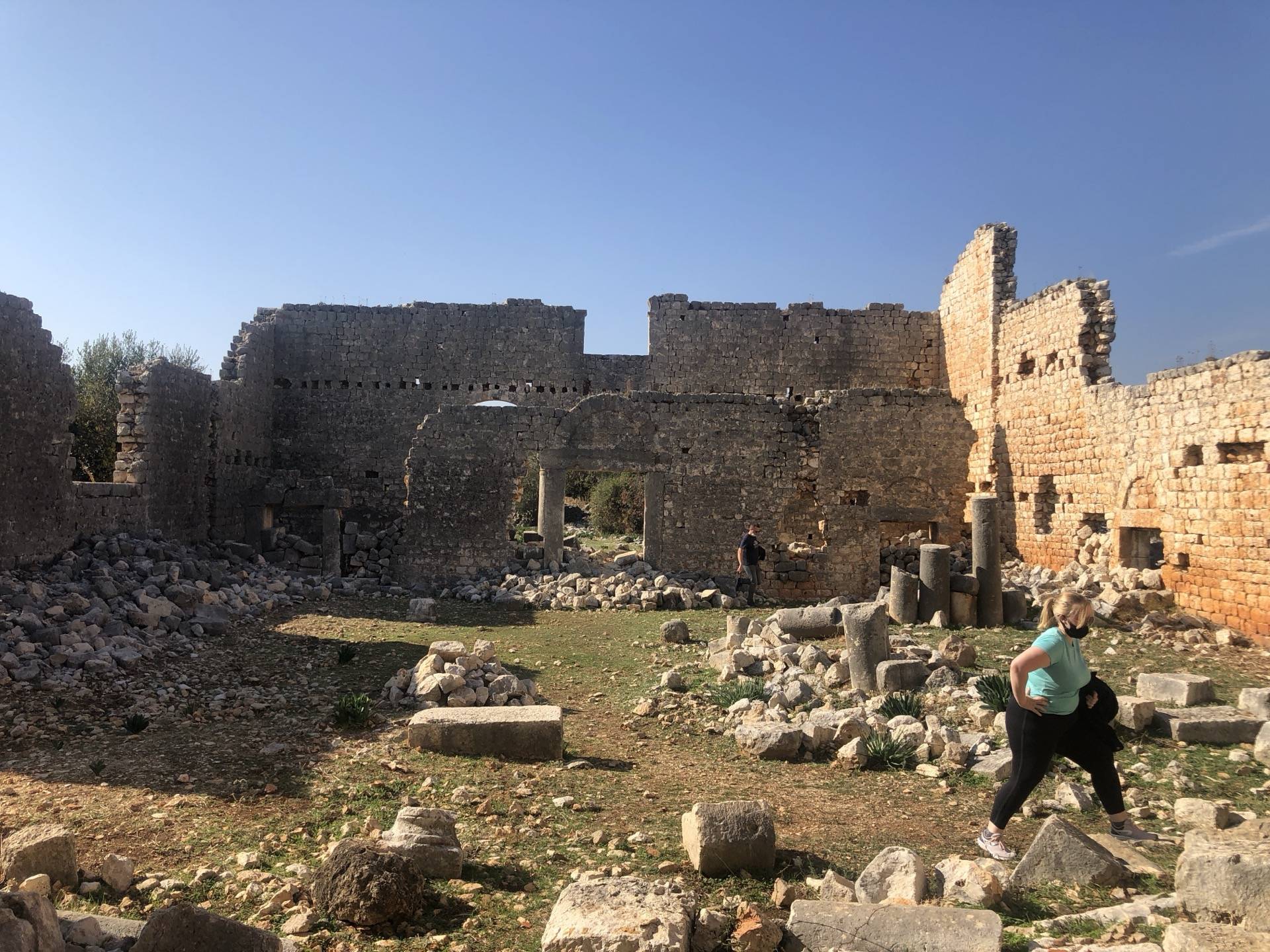
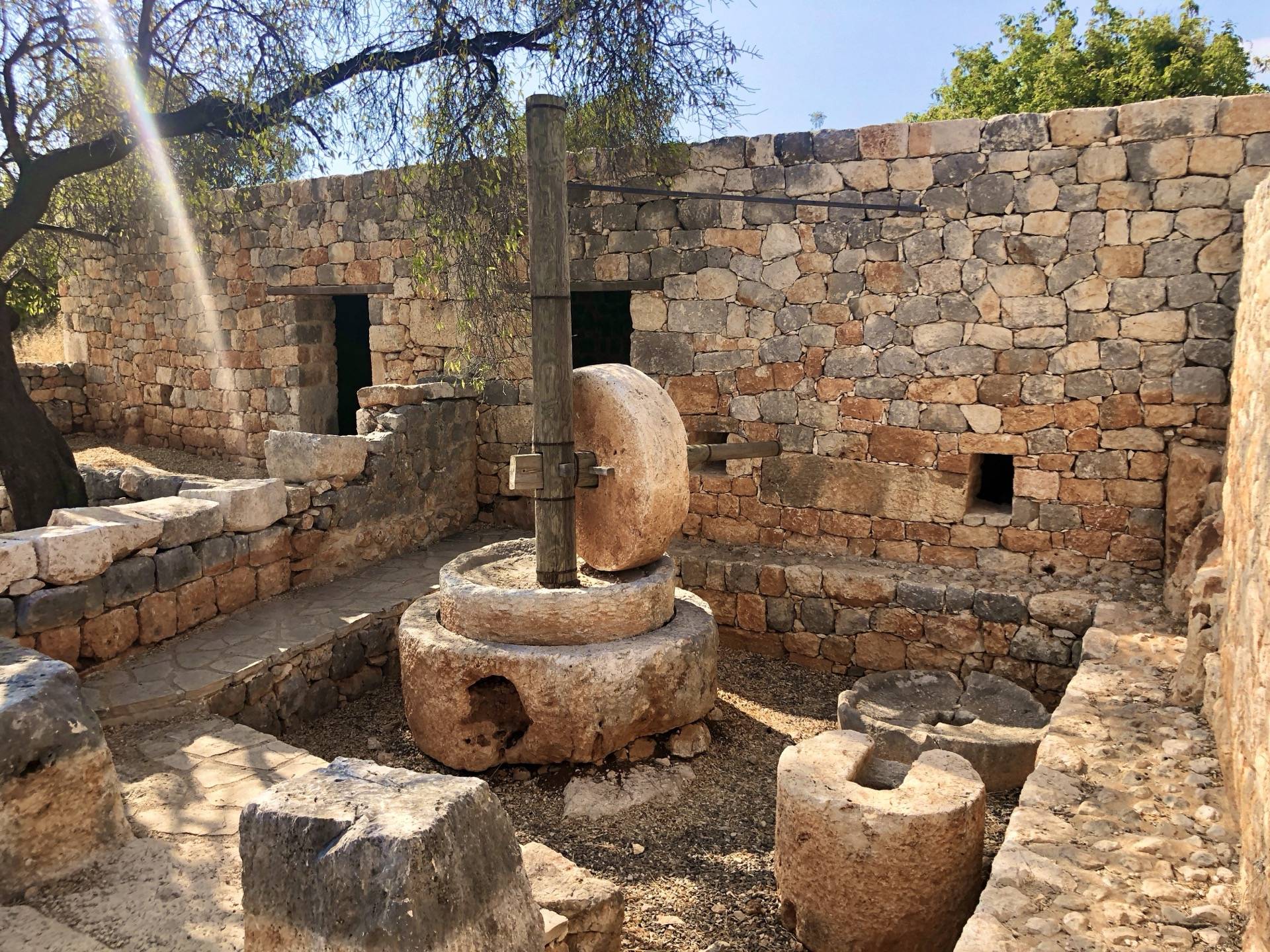
On the territory of the old city, the ruins of a 2nd-century BC tower, olive workshops where olive oil was extracted, four churches, and a basilica have been preserved.
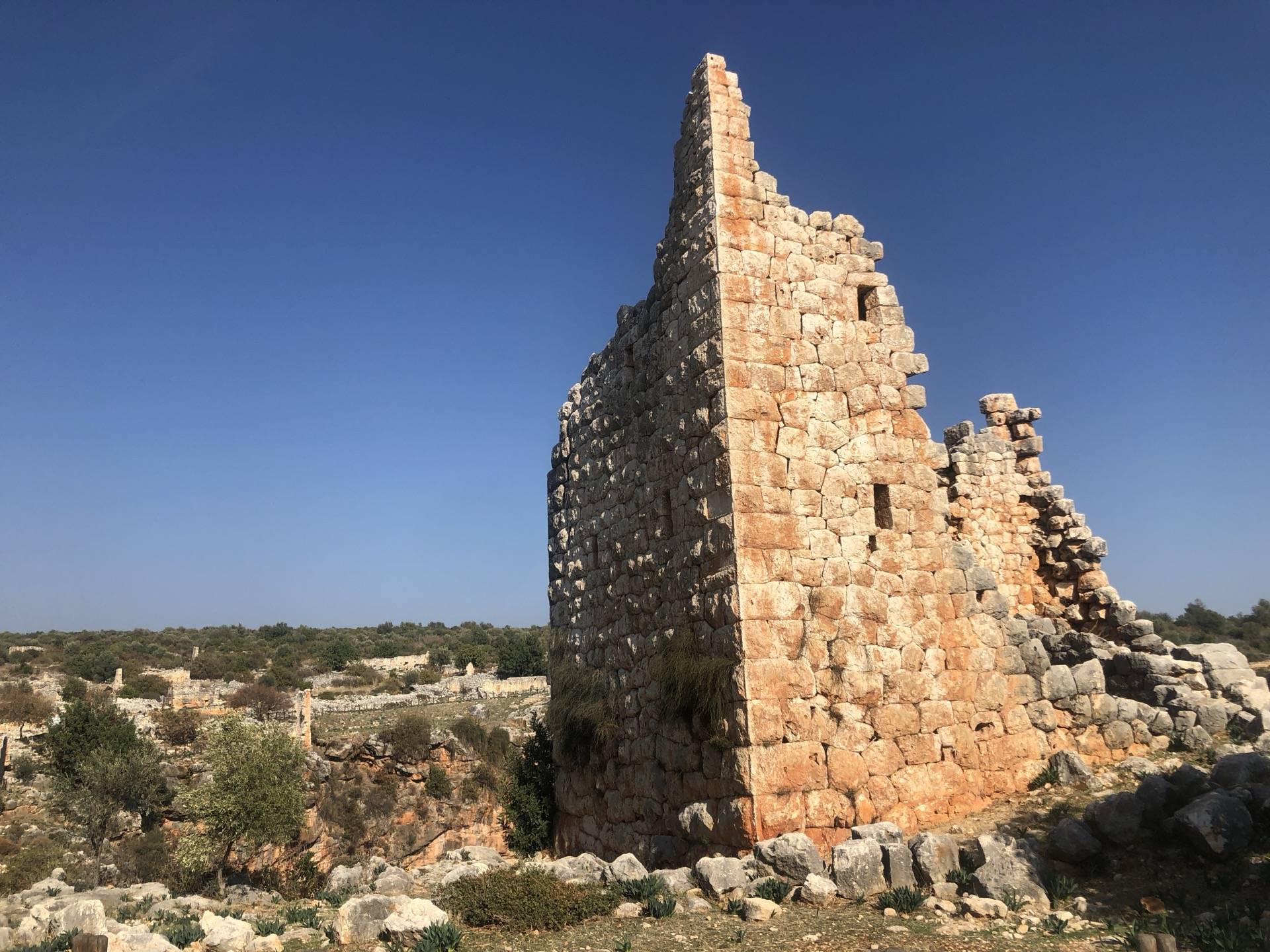
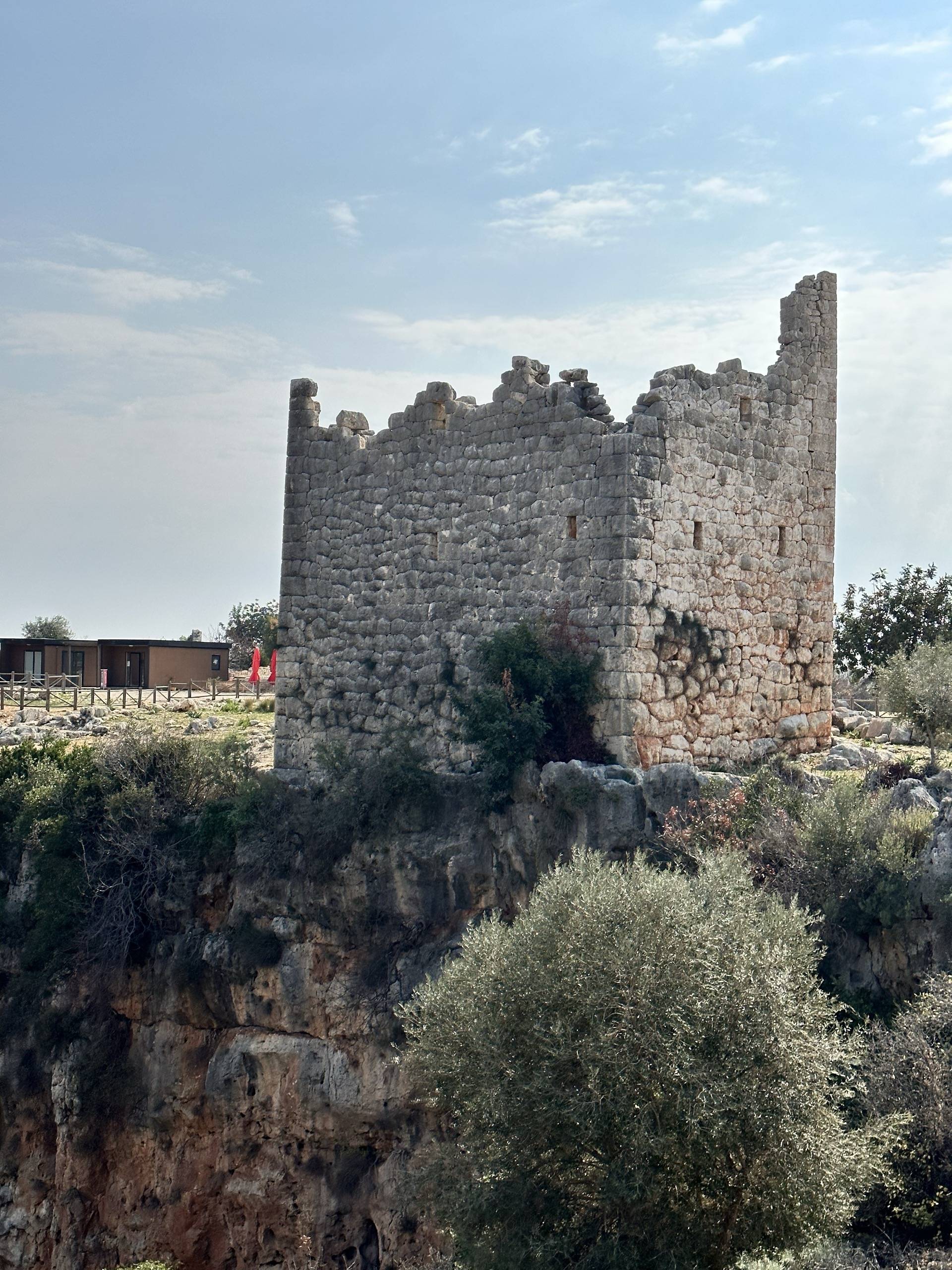
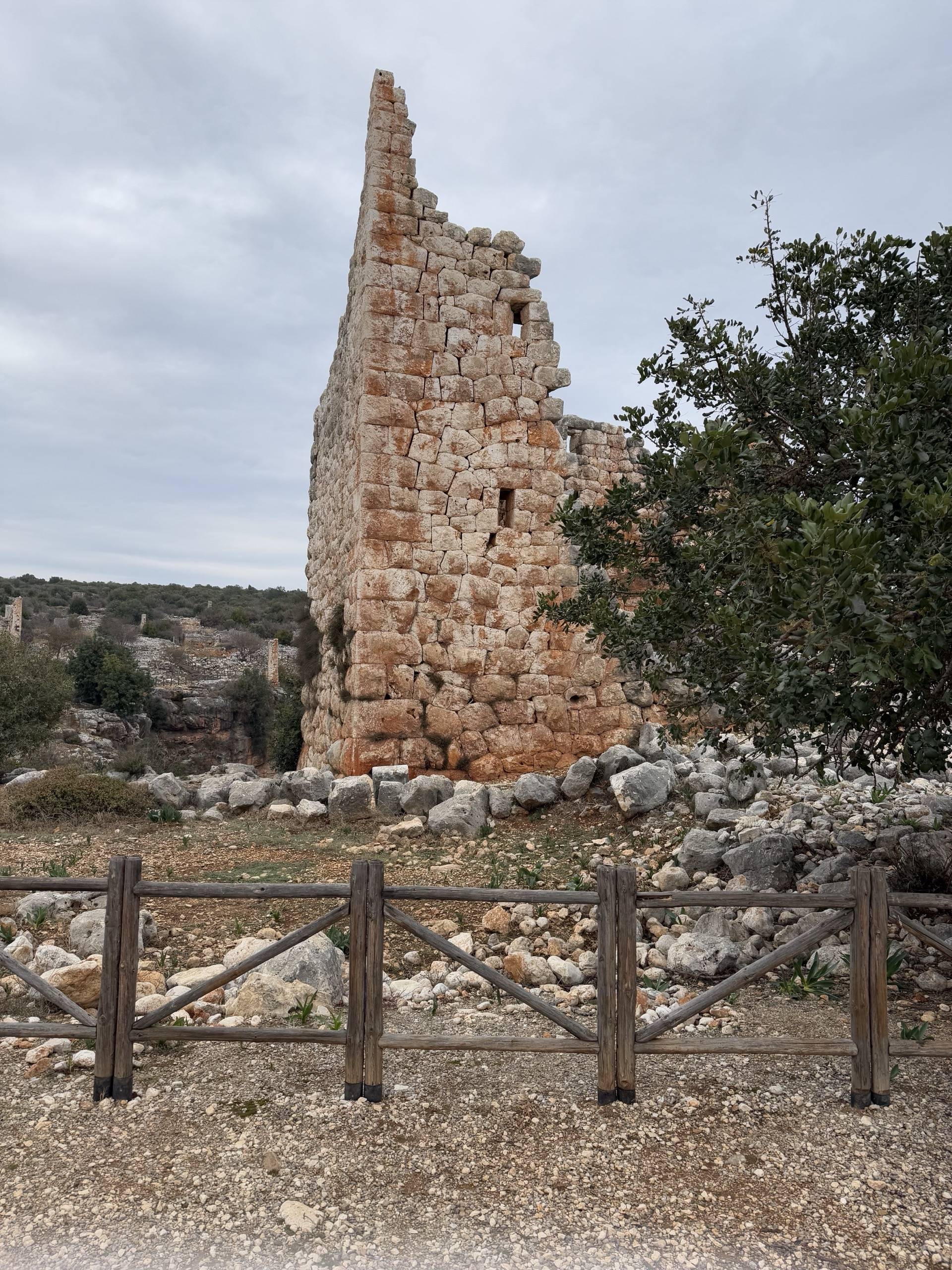
The Hellenistic tower is the first building at the entrance to Kanlidivane.


The Hellenistic tower measuring 17 meters by 15 by 9 stands on the southern edge of the sacred abyss. This partially ruined structure is built entirely of polygonal masonry and was used as a dwelling until the early Byzantine period. Three-storeyed, it has a small narrow arched door installed in the eastern wall. There are no windows on the first floor, while the upper two floors, which were divided into three rooms, have small openings. Two inscriptions on the seventh and ninth corner blocks (counting from the bottom) on the southwestern corner of the tower indicate that it was dedicated to Zeus Olbios on behalf of the Olbian priest-king Teucer, son of Tarhiar, around 200 BC.
- The tenth cornerstone is carved with a triskeles (three legs). This same sign appears on coins as the emblem of the Olvian kingdom.
Holy Chasm or Bloody Canyon
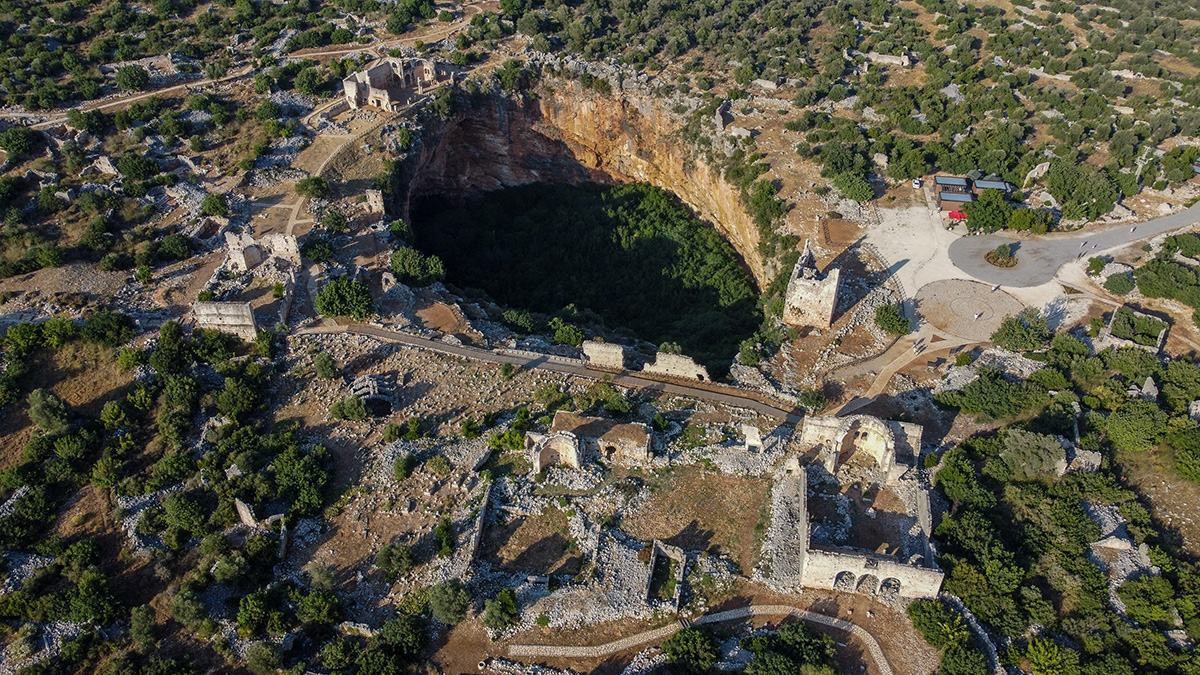
A huge natural depression (90 meters by 70 by 60 meters), known as the holy chasm, was considered sacred in ancient times and was dedicated to the cult of Zeus Olvia. The rock walls are steep, but there were two entrances, one cut into the rock under the Hellenistic tower on the south side, and the other - a tunnel leading under the Church of Papilos on the northern edge of the depression.
Inside the abyss, two bas-reliefs are carved.
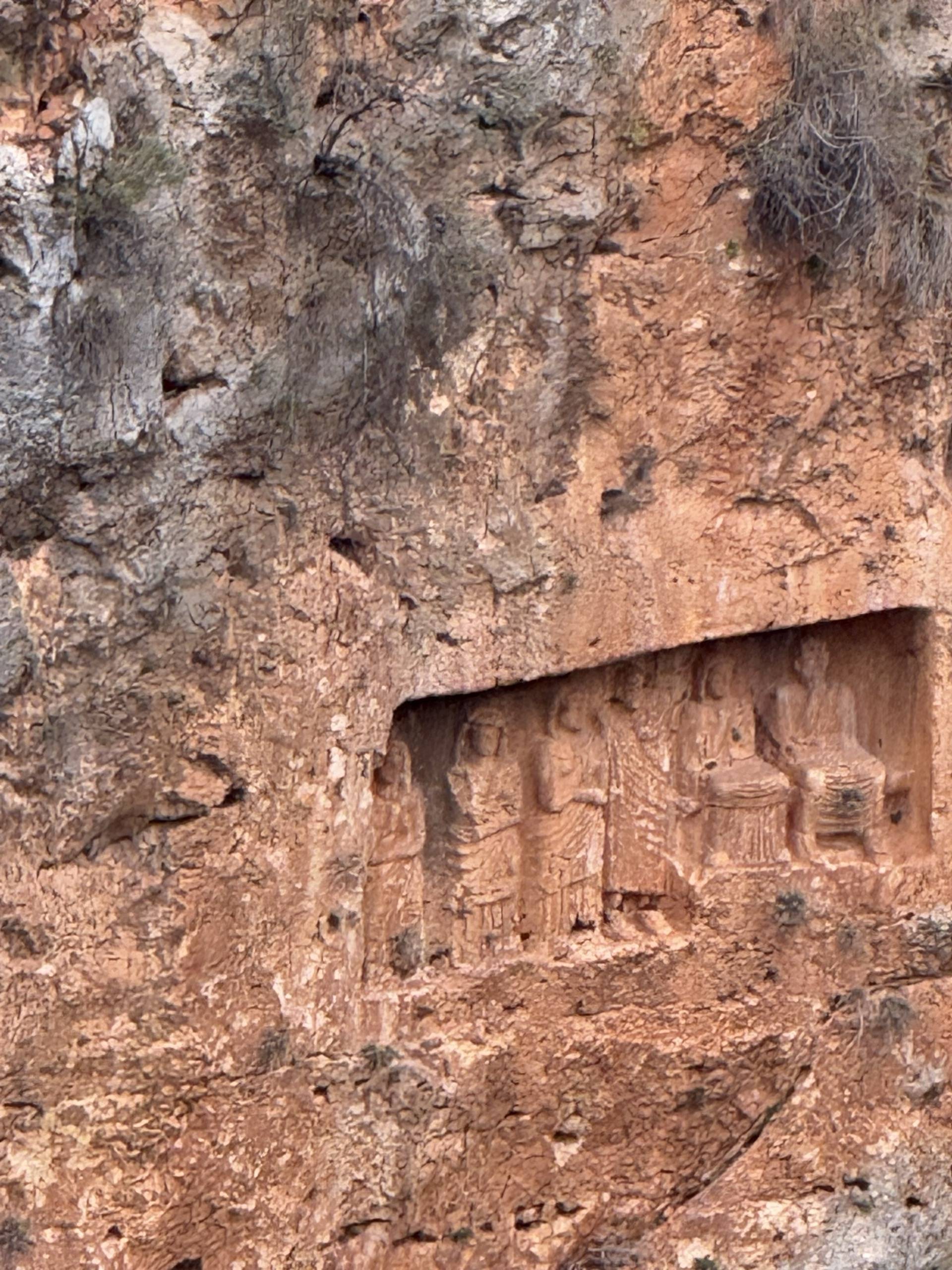
Rocky relief - Relief of the Armaronxas family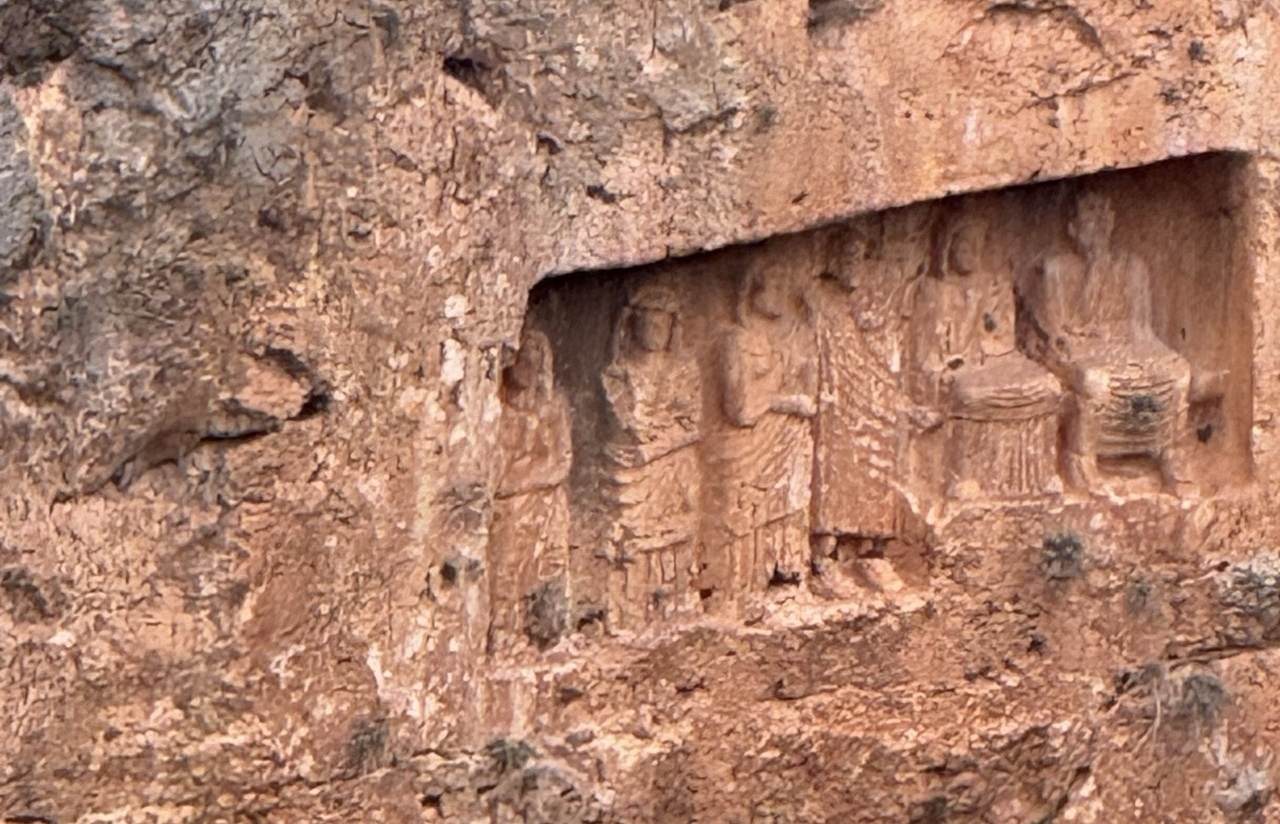 Best observed from the center of the western side of the depression, the relief is carved on the surface of the northern rock in a niche measuring 4 meters by 2 meters. Barbaric in style and rough in execution, its heavily blurred five-line inscription in the right corner contains the name of the Armaronxas family. It depicts a family of six: father and mother sitting above four children (a son and three daughters), dressed in togas and covered with veils.
The relief is dated to the 1st century BC. And even today, the method of executing this relief on a sheer rock, high above the abyss, is astonishing.
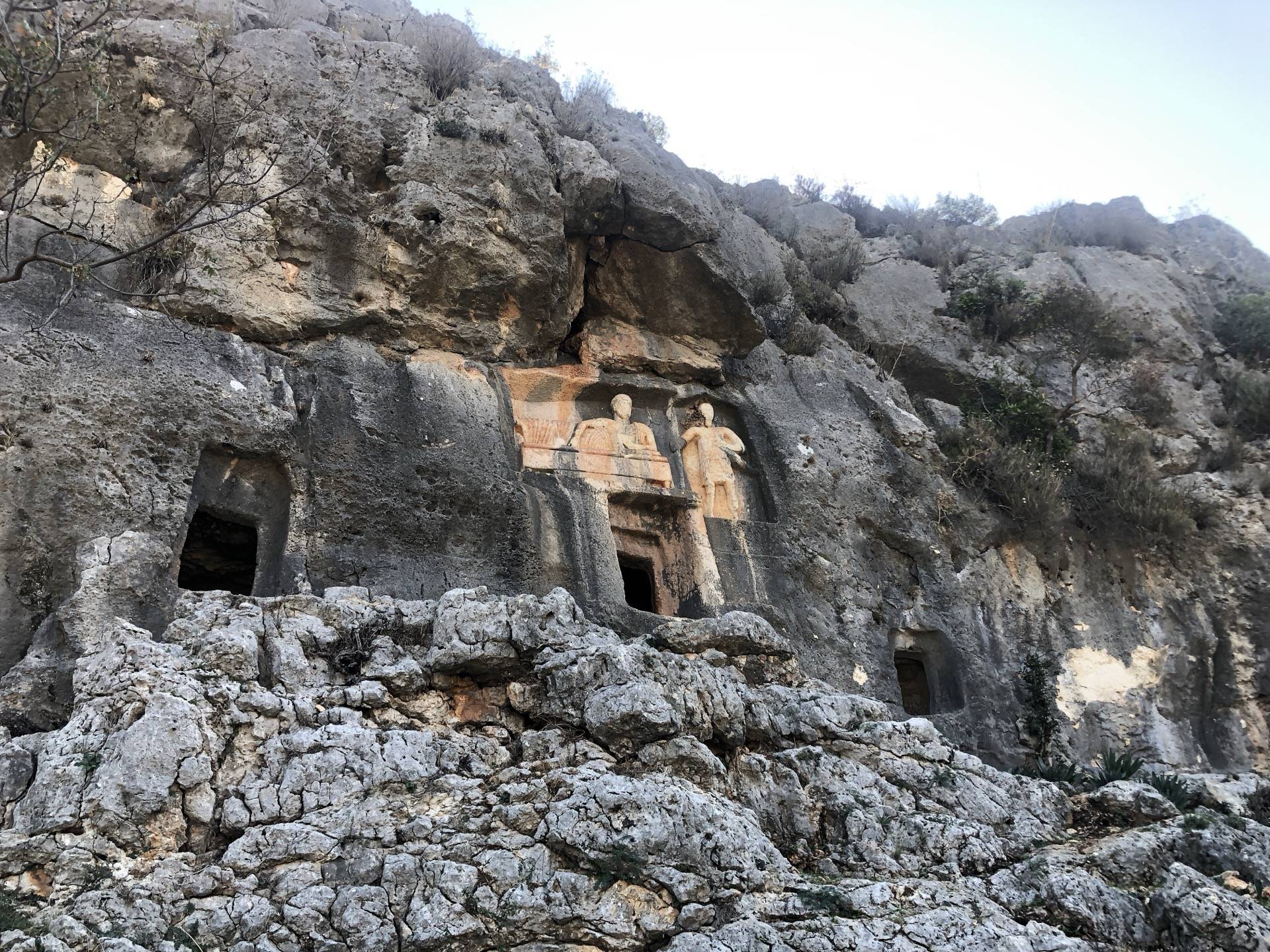
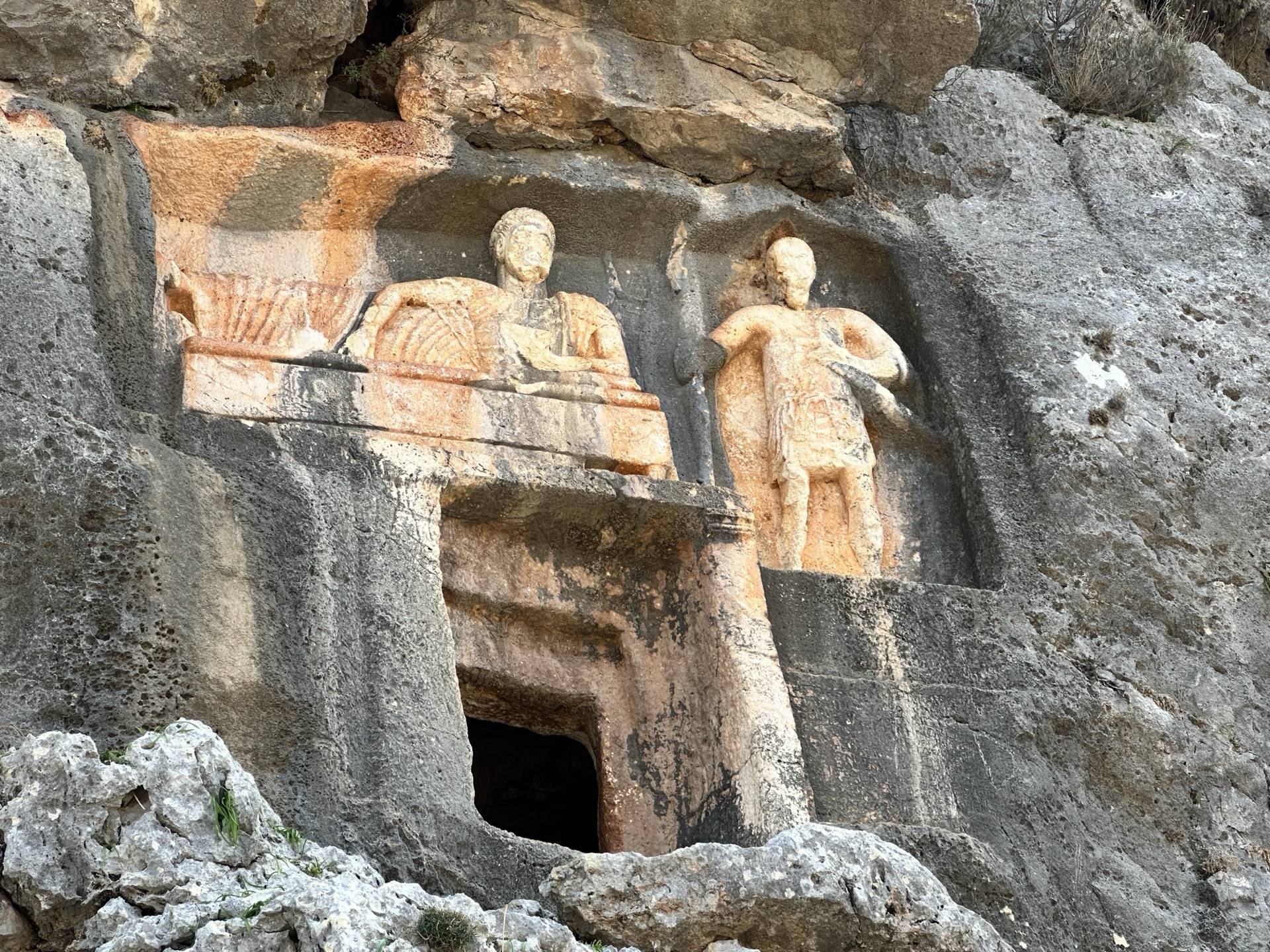
The Warrior Relief is a less noticeable relief, so don't rush when visiting Kanlidivane. It holds many secrets. 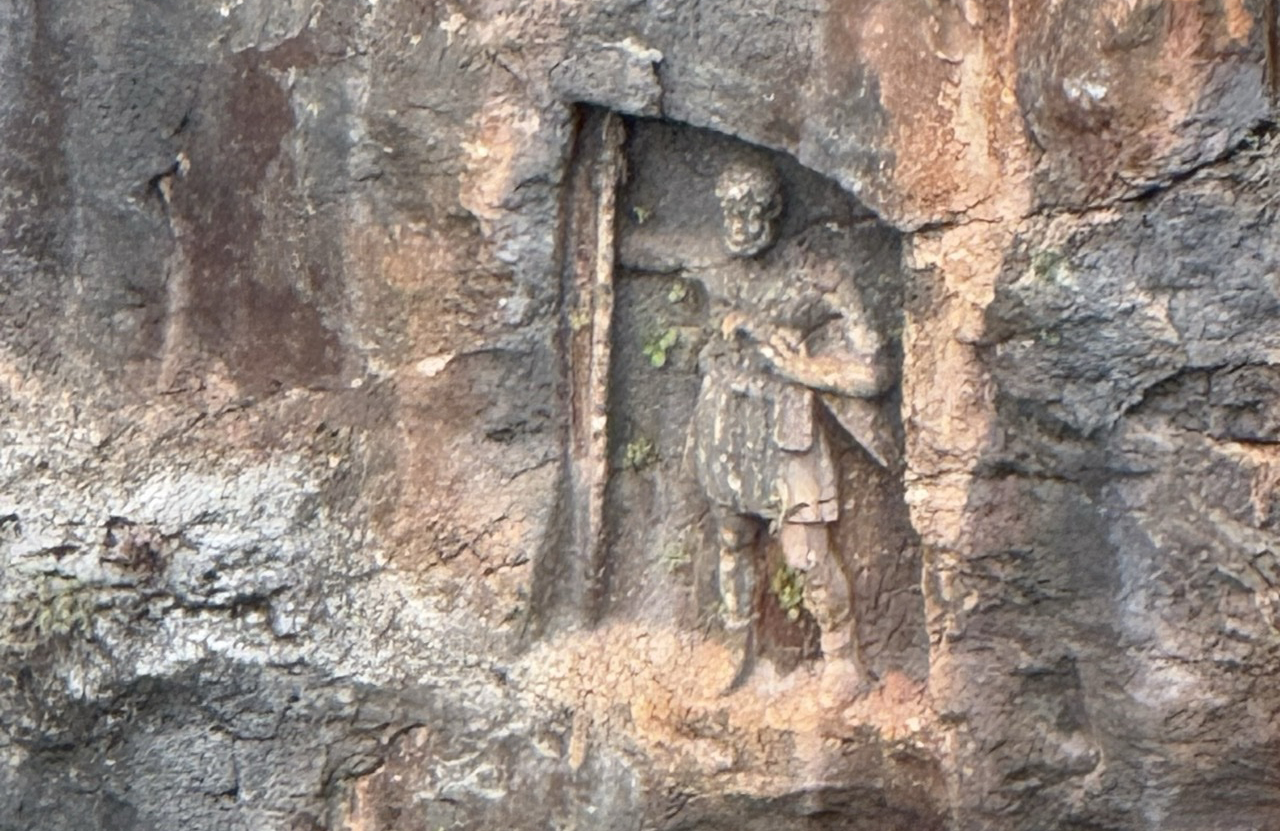 The early Roman relief of the warrior shows a standing figure and is carved lower on the northwestern rock. The inscription, in which the warrior is named Trogomos, is almost erased.
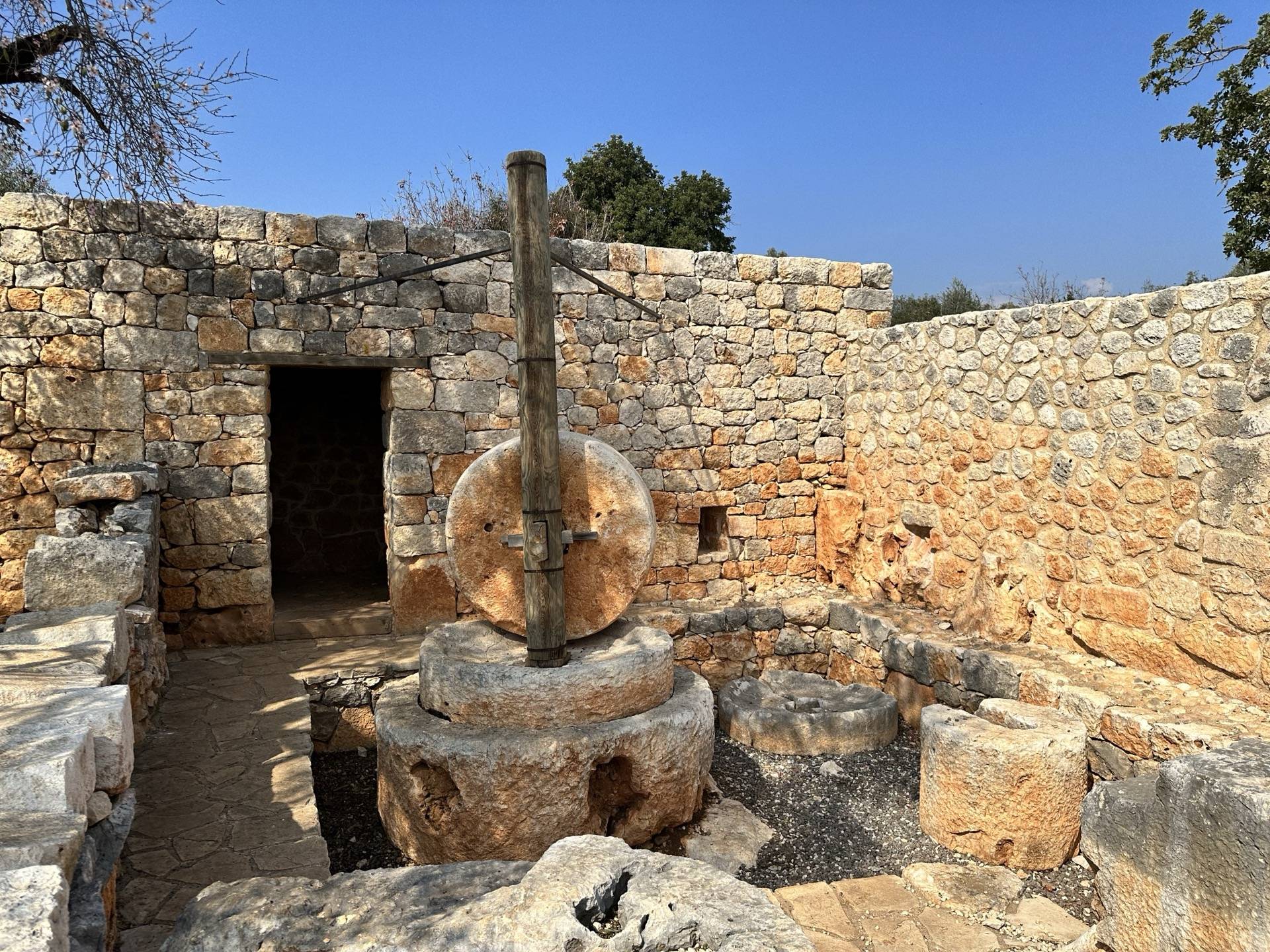
- Olive oil workshops are located on the western and northern parts of the sinkhole.
Olive oil workshops.
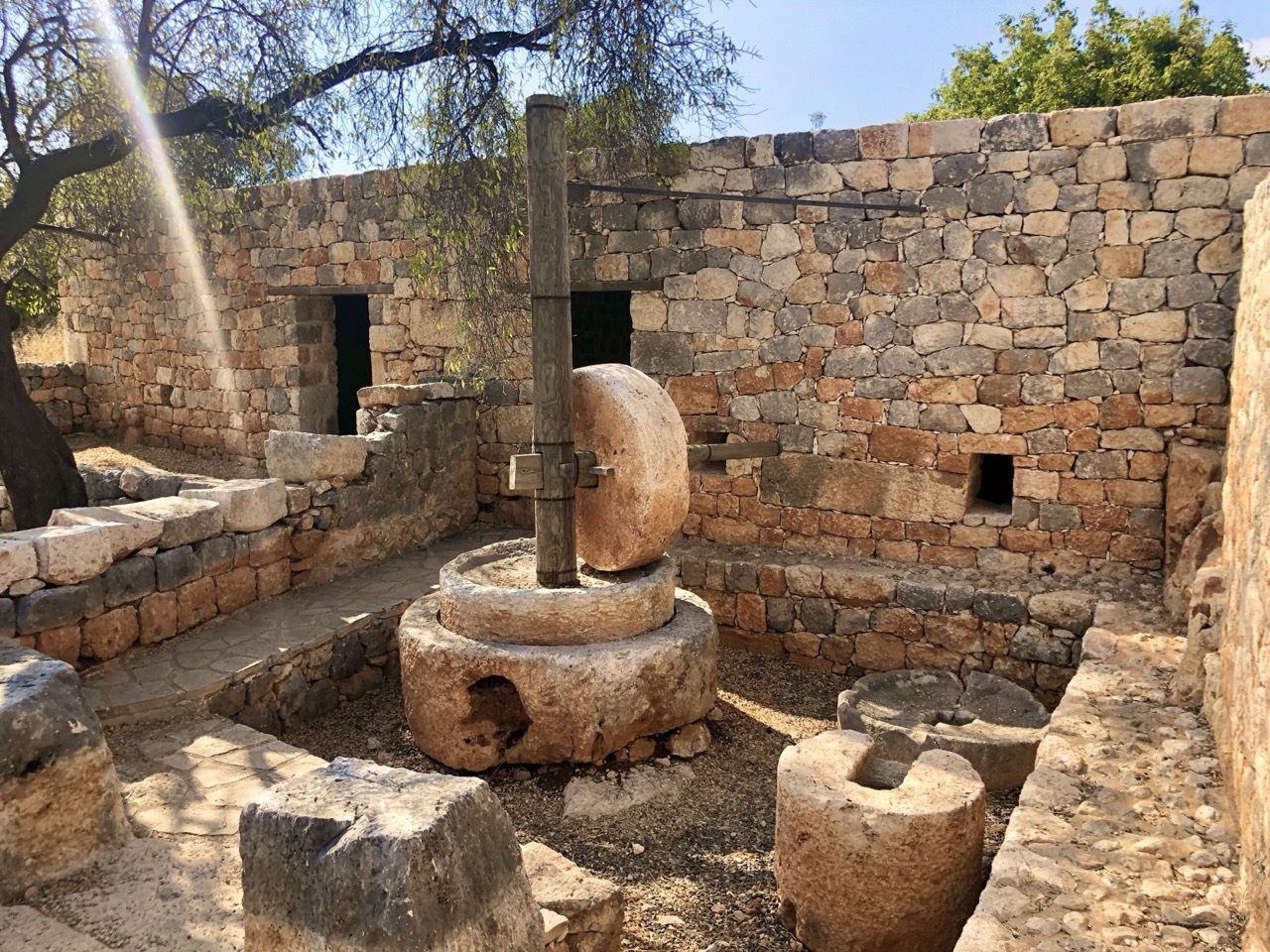
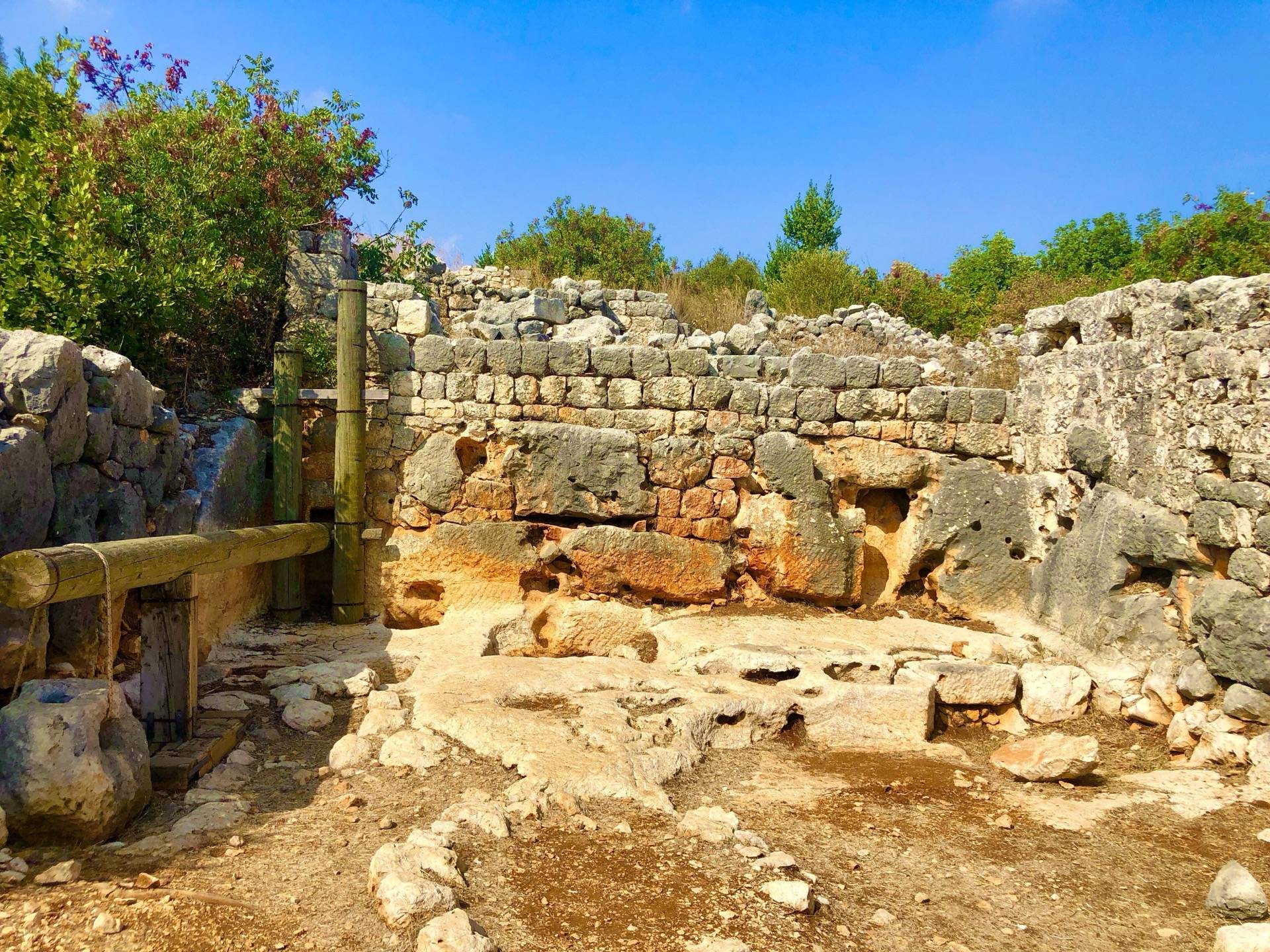
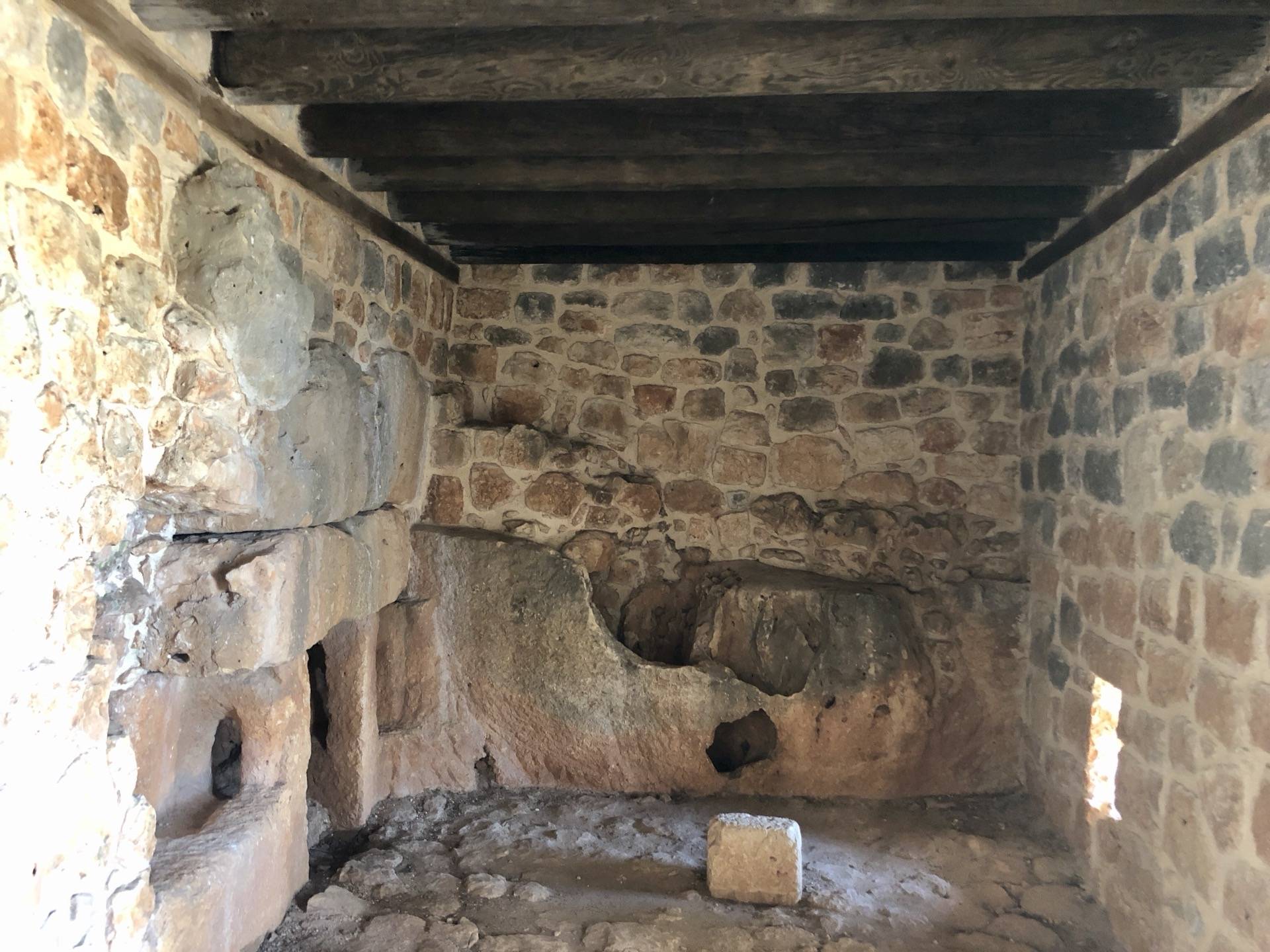
It has a square plan with dimensions of 7 meters by 6 meters. The northern wall of the building is located on a rock. In the northern wall, there are two niches for pressing, carved into the rock, on which wooden beams are placed. This shows that the two pressing mechanisms work together in one workshop. Therefore, it is called the 'twin workshops'. In the upper parts of the stone walls, there are traces of holes indicating the use of wooden beams for the construction of the roof. This shows that the workshop has been preserved to the level of the roof in some sections.
There are press frames for each mechanism on the floor. The collecting vat and channels, located in front of the press frames, are carved into the rocky ground. They were used to collect the liquid squeezed from the crushed seeds. A bell-shaped weight and a crushing platform were found on the territory of the workshop.
Churches of Kanitellis or basilicas of Kanlıdivane.
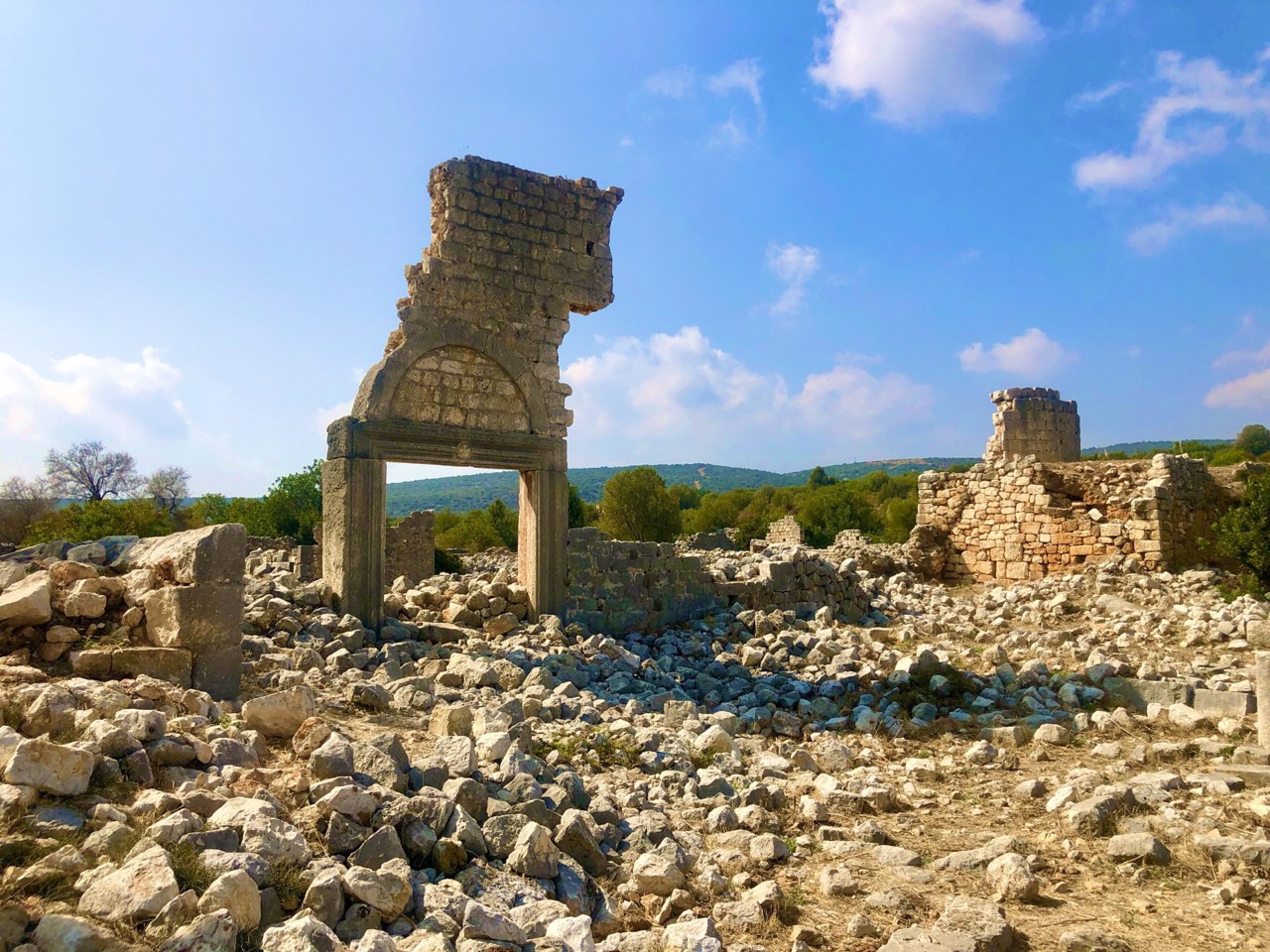
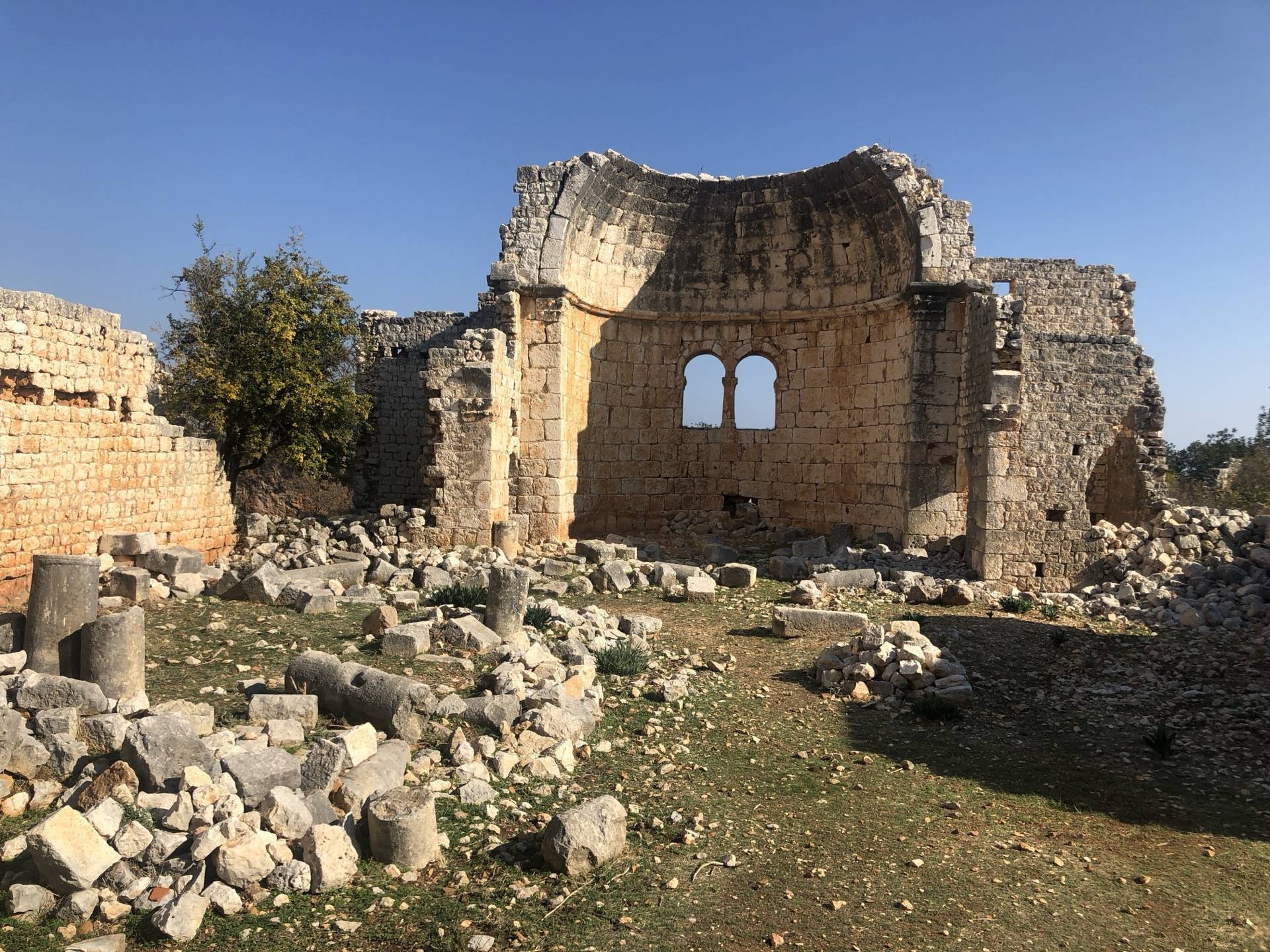
In Kanitellis, four early Byzantine basilicas and one chapel have been preserved. They date back to the end of the 5th and the beginning of the 6th century, when the city reached its peak of development. The well-preserved remains of the basilicas at the precipice indicate that Kanitellis developed during the Late Antiquity period. Little is known about the decoration of these basilicas. In all cases, the main roofs consisted of wood and tiles. There is also a group of churches with courtyards. The narthex was a common feature of the Kanitellis basilicas. Each narthex had an upper floor, which was preserved to a height sufficient to provide this information. The upper floors provided communication between the galleries above the aisles. Staircases were usually located at the northern end of the narthex or were attached to it. The sanctuaries have similar features on their main doors: the frames are made of stone in a monolith, the lintels bear a Byzantine cross in the center, and the columns are decorated with capitals carved in the Corinthian order.
- The first basilica, which stands to the west of the Hellenistic tower, on the path leading to the tomb-temple of Aba, has three naves, two of which collapsed. The outer walls are well preserved. The main door at the western end, leading to the narthex, has three arches 2.8 meters wide, supported by two columns with Corinthian capitals. A cross is carved on the main door. The second door on the left opens into a three-nave basilica, measuring 25.2 meters by 18.3 meters. The remaining internal partitions connecting the aisles with the apse nave collapsed.
- The second basilica is located north of the first. All that remains is its apse and several ruined walls. Its plan shows some irregularities, suggesting it may have been a monastery.
- The third basilica stands to the northeast of the second sanctuary on the ancient paved road leading to the necropolis. Its dimensions are 28.3 meters by 16.6 meters. Its outer walls are well preserved, but the walls of its apse nave, two aisles and narthex collapsed.
- The fourth basilica is the latest in date and the most richly decorated. It is known as the Church of Papilos and is located on the northern edge of the holy ravine. Although its southern walls have completely collapsed, the rest of the basilica is in a good state of preservation. Its apse, pierced by double arched windows separated by a small column, was previously decorated with a fresco depicting the four evangelists. There are two inscriptions on the lintel of the main door. The lower one tells us that the sanctuary was built as a votive of Papilos. The upper one contains template phrases from the New Testament: 'This is the door leading to God. People who enter are saved. My God, help me'.
NECROPOLIS

In addition to the sarcophagi lying on both sides of the road leading to the excavation site, the cemeteries are concentrated in two main areas and indicate a significant population of the city.
Northern Necropolis
In the northern necropolis, there are two temple tombs standing among the sarcophagi. The most beautiful of the sarcophagi is the one with Medusa, which stands on the right side of the new road leading to the village of Çanakçı. Its box is decorated on three sides. On the front side, three bull heads are depicted, alternating with two human busts, which adorn the space above the garlands. On the lateral sides, the same motifs are carved, but with lion heads above the garlands. The head of Medusa, a symbol of power, is depicted on each triangular surface of the prismatic lid, which is now, unfortunately, broken in two and lies on the ground.
Medusa
In Greek-Roman mythology, Medusa was the only mortal of the three Gorgons and was described as a terrible monster with snakes instead of hair. Anyone who looked at her turned to stone.
There are many legends trying to explain her origin. According to some, Medusa was a beautiful girl who was very proud of her hair. To punish Medusa, Athena, the goddess of wisdom and victory, turned her hair into a mass of snakes.
According to other sources, Athena punished Medusa by giving her a terrible appearance for sleeping with Poseidon, the god of the sea.
The death of Medusa also became the subject of many legends. The most famous of them brings to the scene the hero Perseus, who, with the help of Athena, cuts off Medusa's head, while, of course, being extremely careful not to look at Medusa for fear of turning to stone, and using his polished shield as a mirror.
Athena's shield, decorated with the head of Medusa, symbolizes her ability to put opponents to flight.
In ancient times, people of high rank, such as emperors, commanders, and the like, usually decorated their shields and armor, as well as their tombs, with the image of Medusa's head.
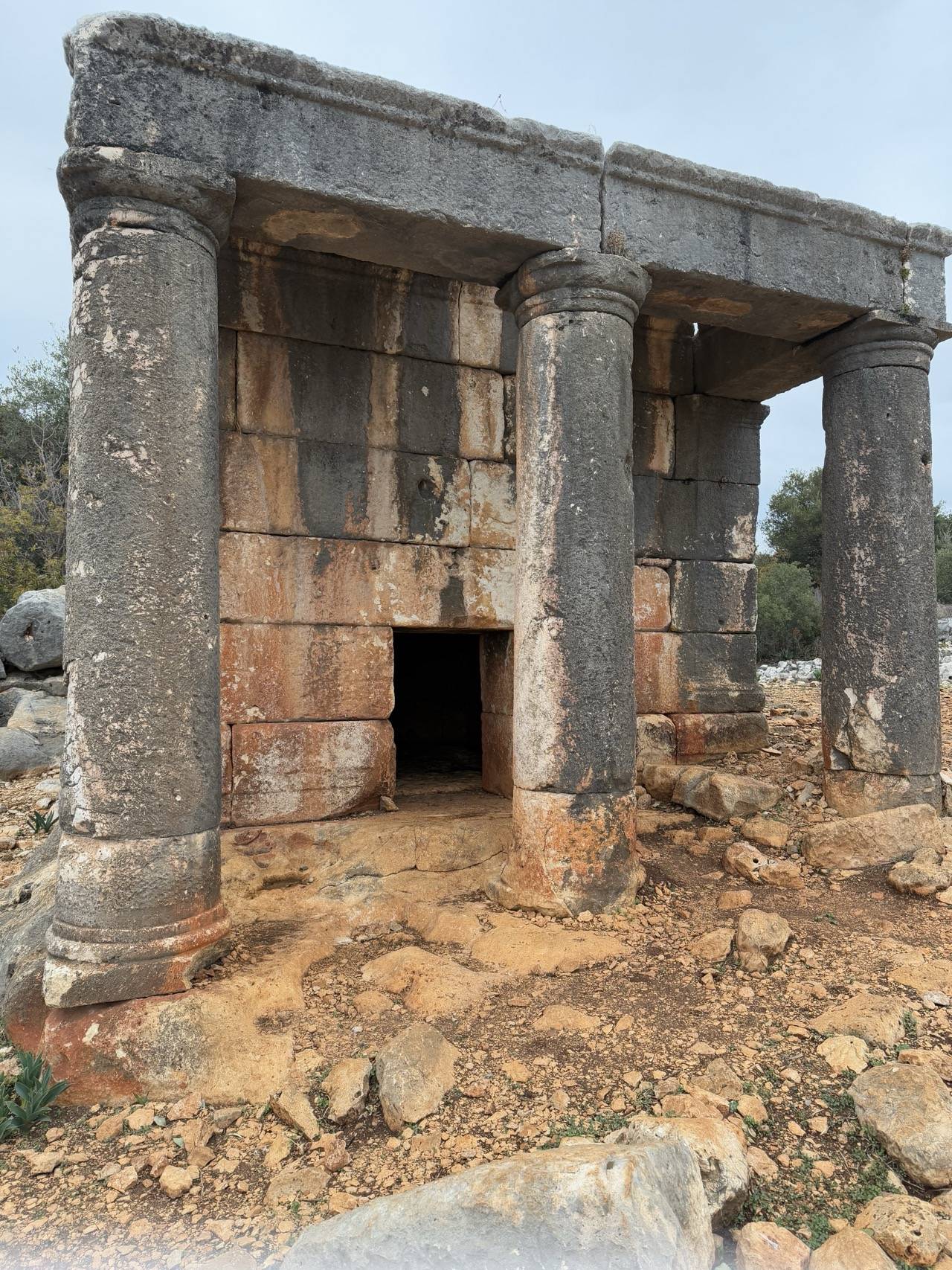
Three-columned tomb
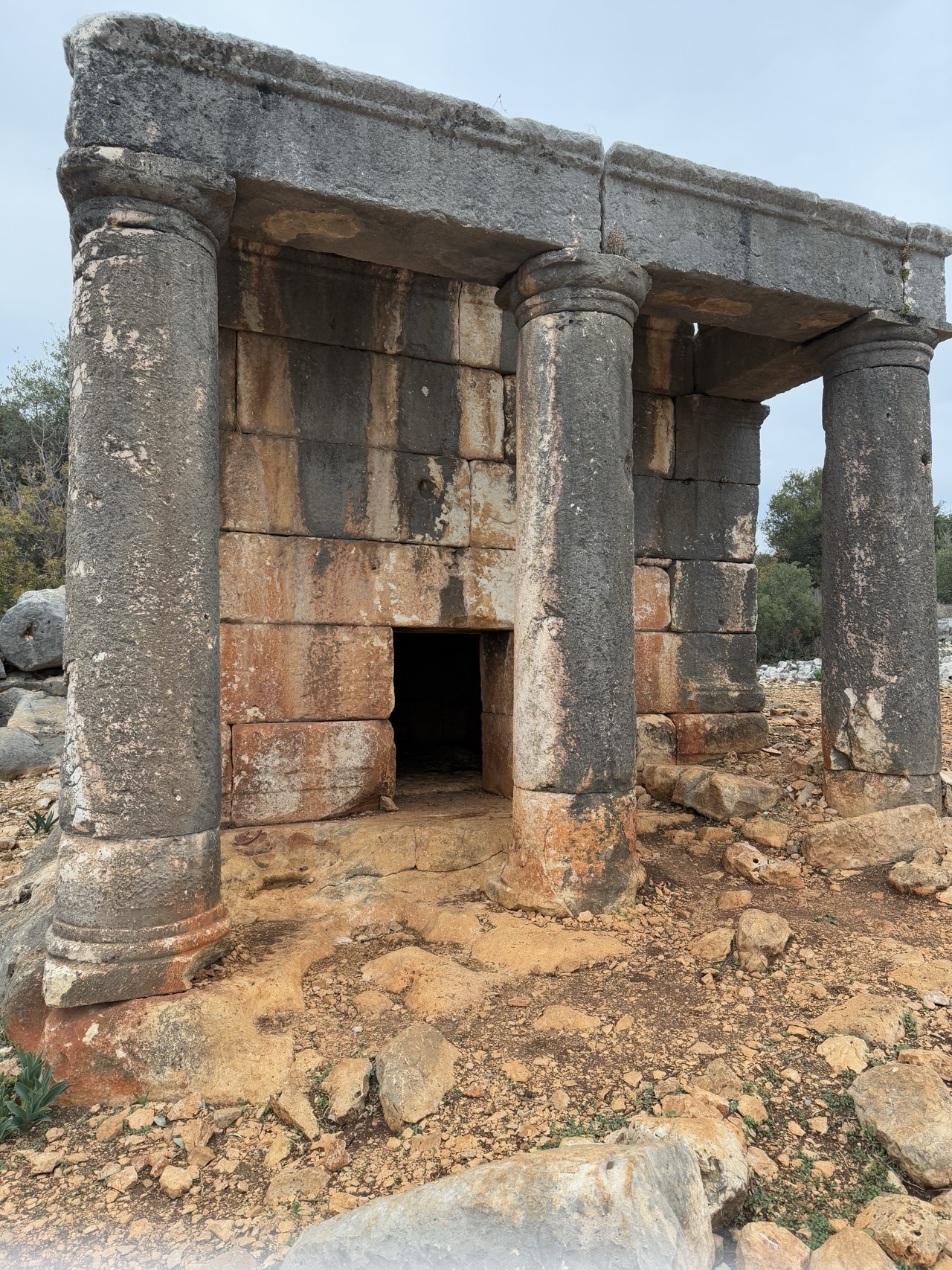
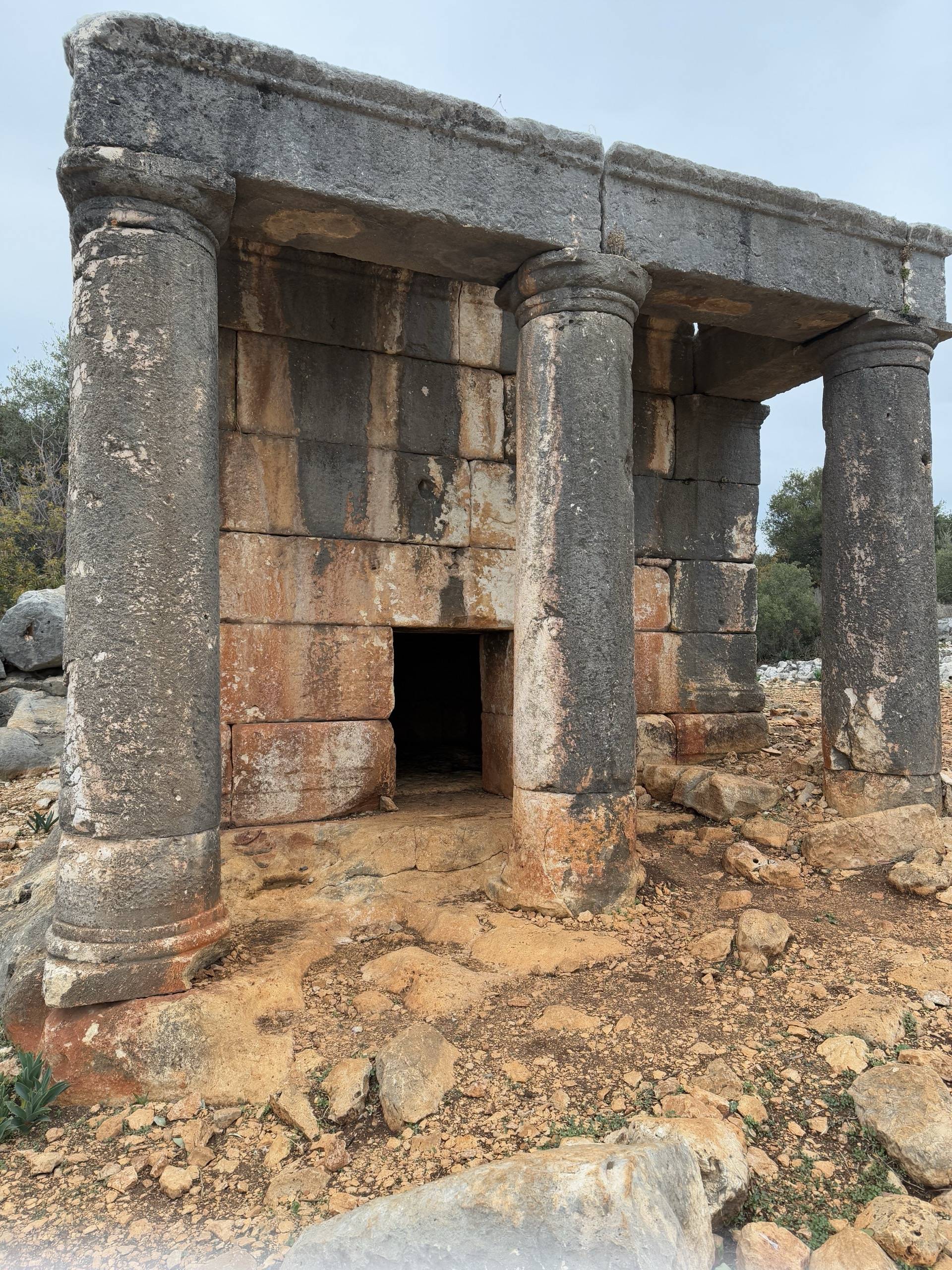
The tomb with three columns is located approximately 100 meters east of the temple-tomb of Aba and measures 5.7 meters in length, 4.1 meters in width, and 4 meters in height. This unusual structure has a peristyle of three columns 3 meters high, unlike the four columns common in this region. The burial chamber is empty and paved with stone blocks. It is assumed that the temple-tomb dates back to the 3rd or 4th century AD.
- A rock-cut wine or oil press adjoins the tomb.
- Another similar temple tomb is located to the right of the entrance to the territory.
Cisterns
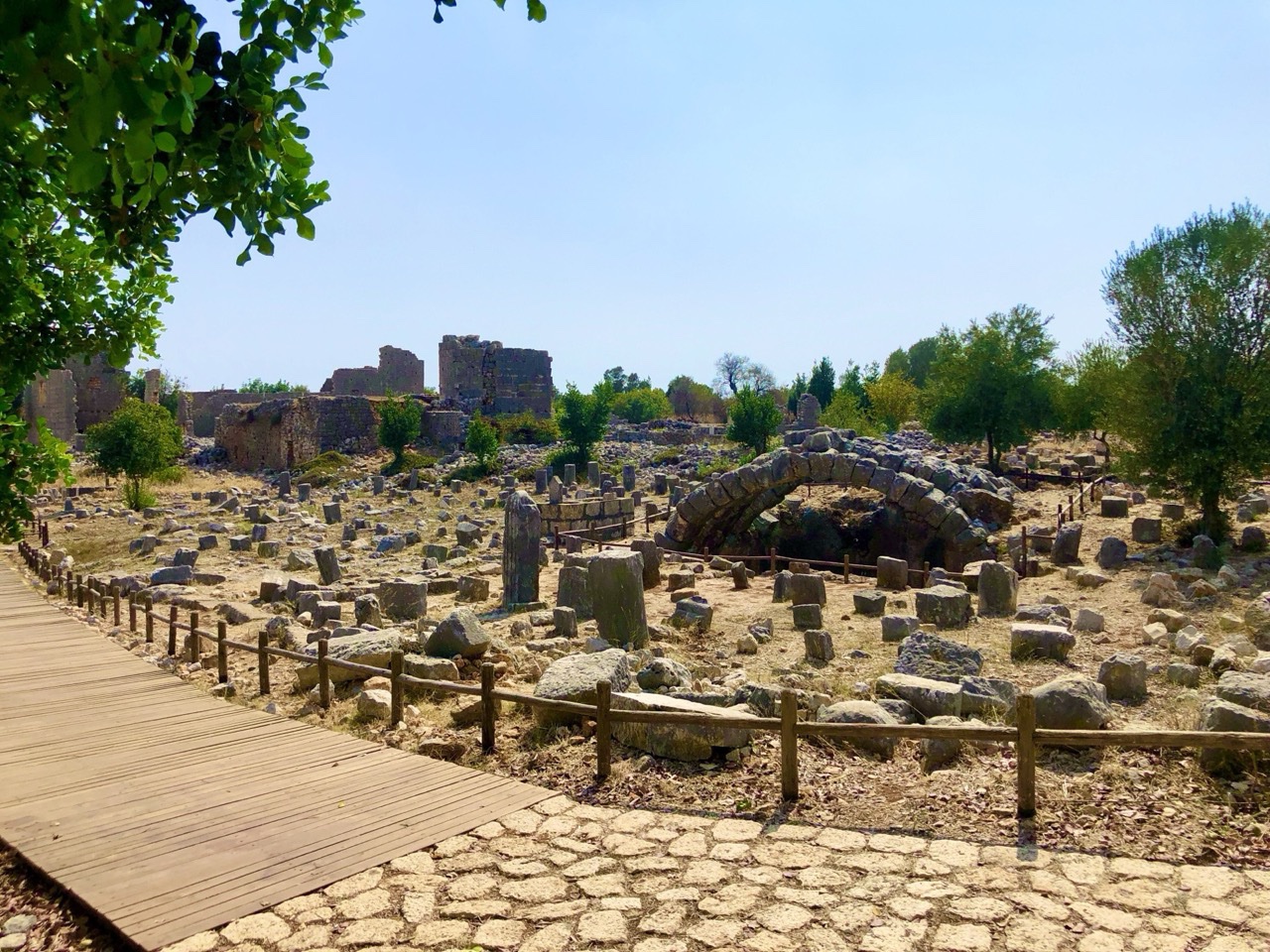
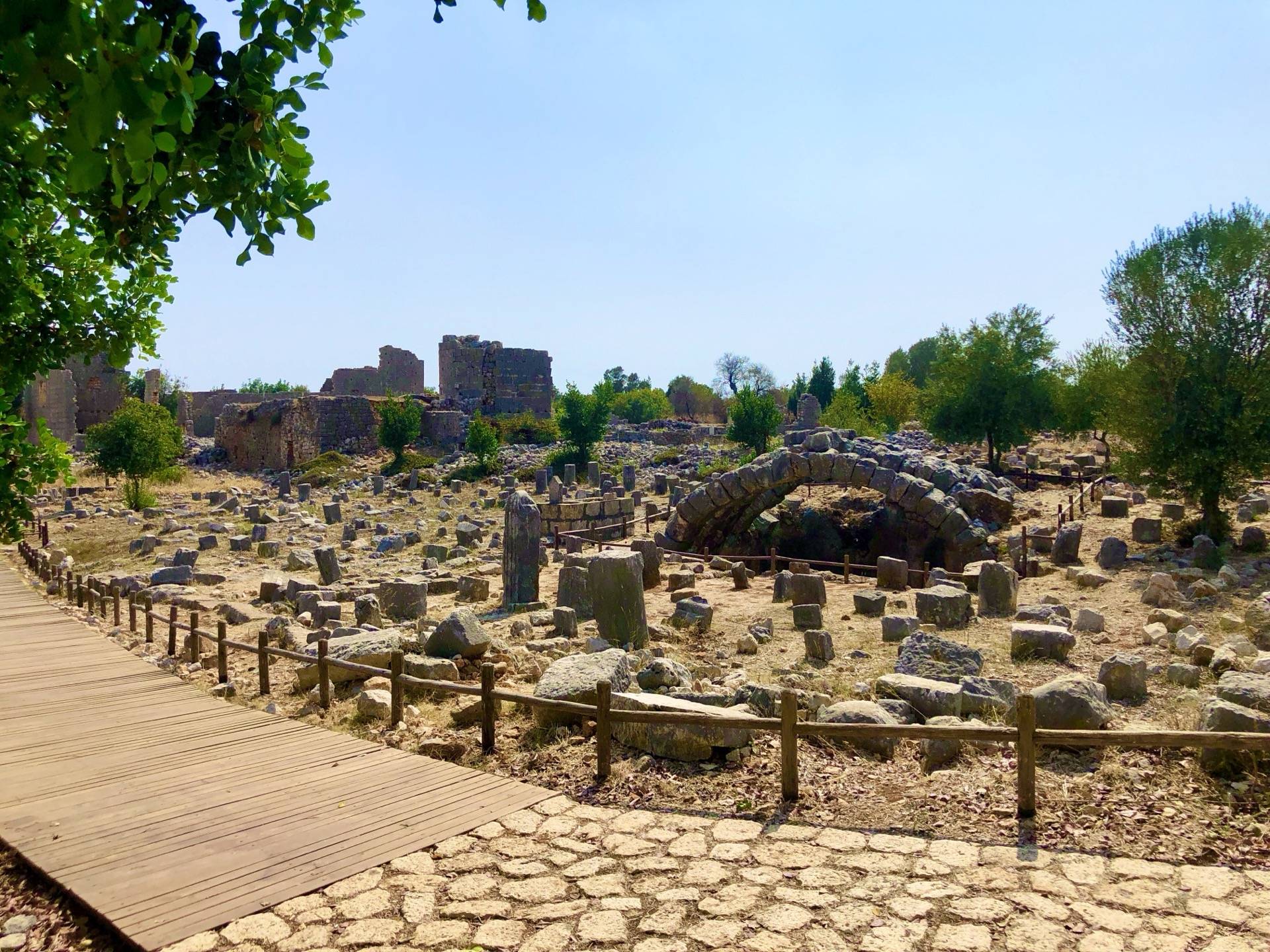
In addition to the small ones, two main cisterns supplied Kanitellis with water. The covered cistern, 14.5 m wide by 10 m, supported by seven arches, is located behind the second basilica. The second rock-cut underground cistern, measuring 10 m by 8 m, has five arches and is located in the Turkish cemetery.
Monumental Tomb ABA
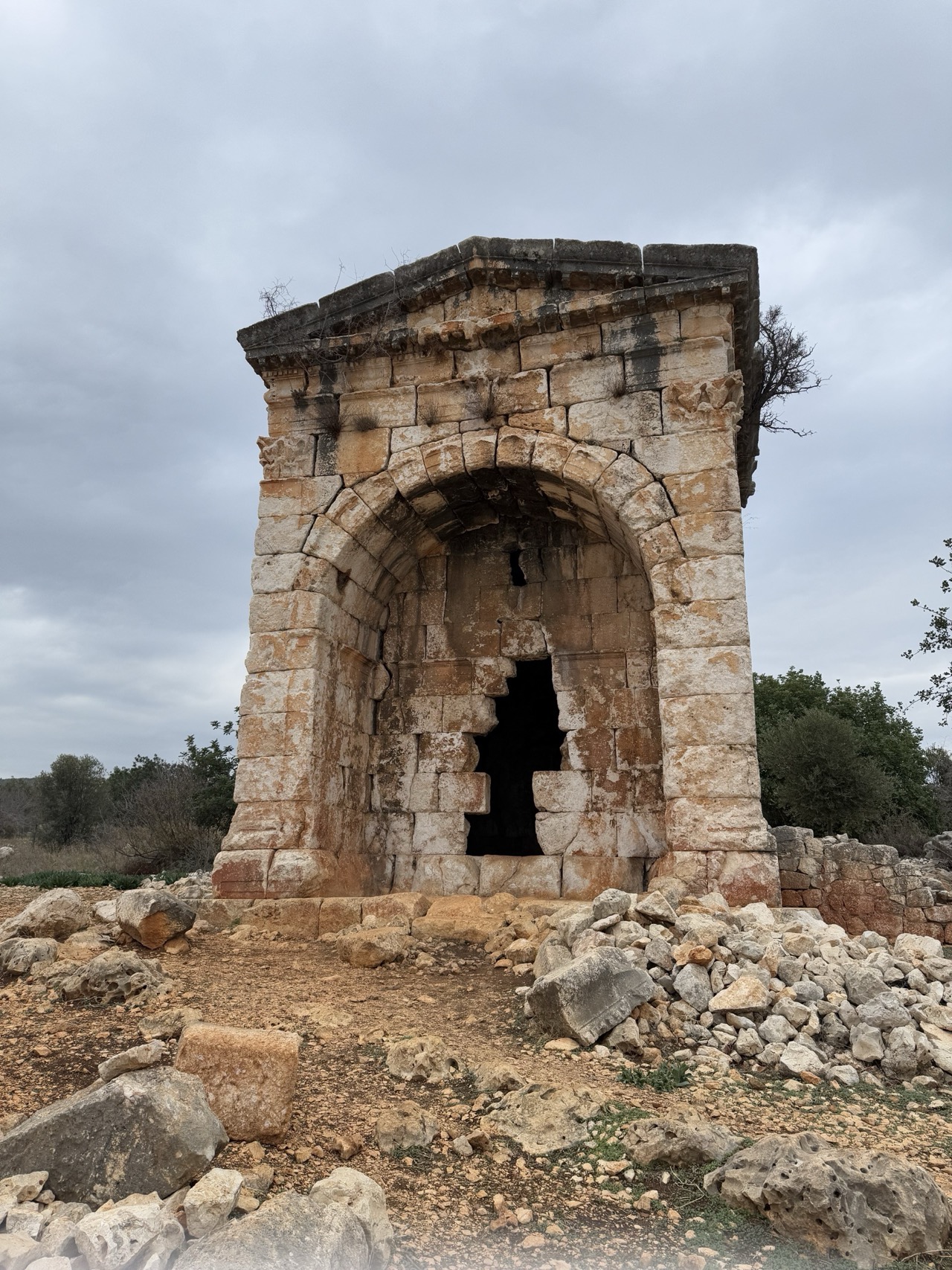
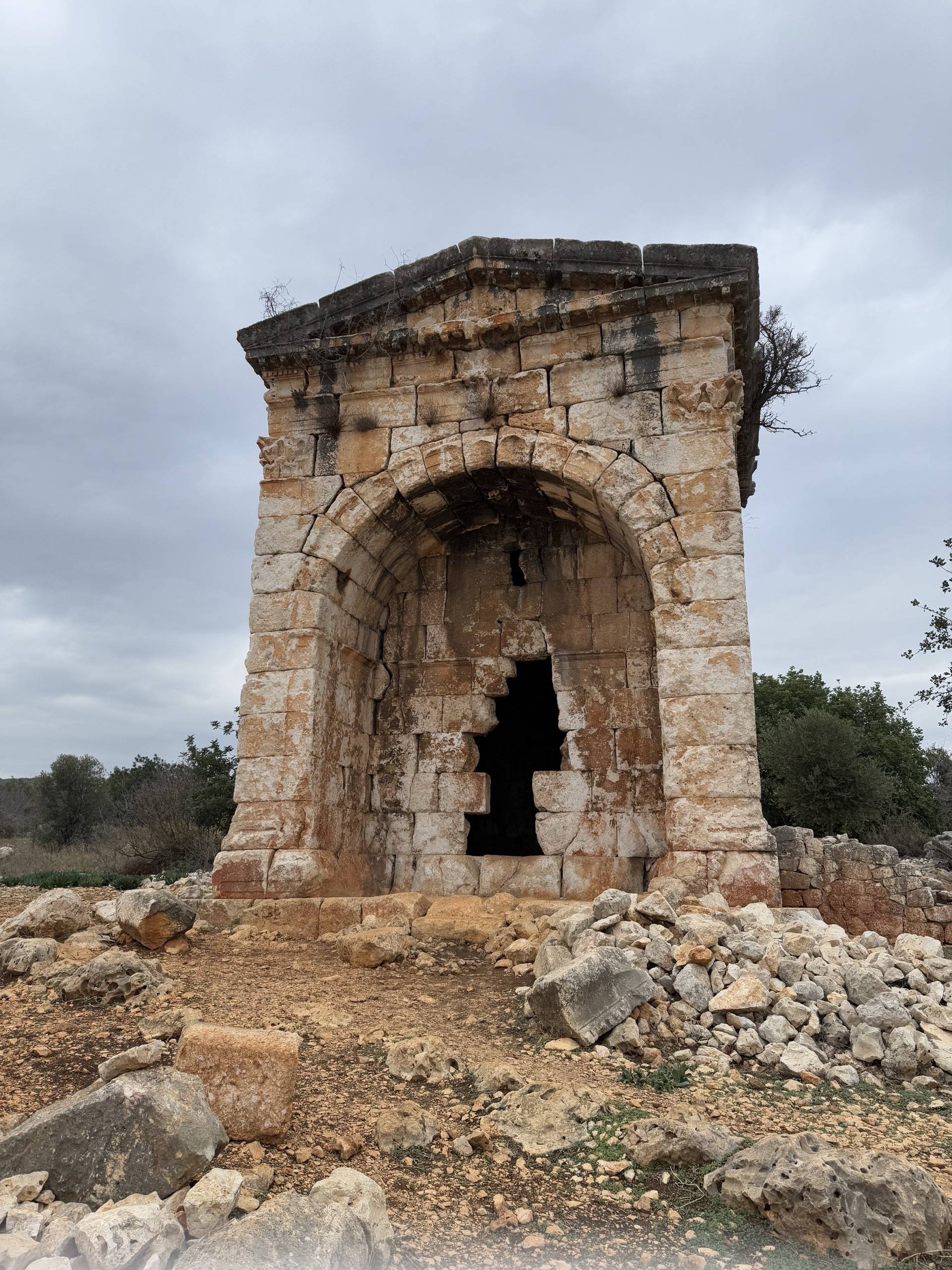
This is the most significant monumental tomb of Kanitellis, built in the style of Roman temples. According to the inscription above the entrance, it was built by a woman named Aba for herself and her husband Arius. The tomb is located above a low podium. In front of the entrance was a vaulted room. Between the vault and the sloping roof there is a rubble backfill.
The dimensions are 7 meters by 8.63 meters and its height is 7.70 meters. At each corner of the building, there are Corinthian capitals. Inside the building, stone beds are built into the stone walls. The building dates back to the 2nd year AD according to the inscription on the building, as well as according to comparisons with other buildings in the region.
Inscription
As the daughter of Calligonos and Katrayos, I, Aba, in the name of my husband Arios, grandson of Arius and son of Nicanor, and my children Nicanor and Arios. Request and order that no one be buried in the tomb of Arios, except me, Aba. Likewise, no one will be buried after my death. Those who act against this will would commit a sin against the Underworld Gods and he himself, and his people would disappear and also be punished 10,000 denarii to be paid to the treasury of our Lord Caesar, 8,000 denarii to the city of Augusta and 2,500 denarii to the local administration of the city of Kanitellis. I also wish that my husband's and my orders and instructions last forever, and no one will erase this inscription or be punished
Throughout the territory of the old city, information signs and pointers are installed, so you won't get lost!
The road to the old city is convenient, there is an organized parking lot for cars. This is a special difference between Kanlidivane and some other tourist sites.
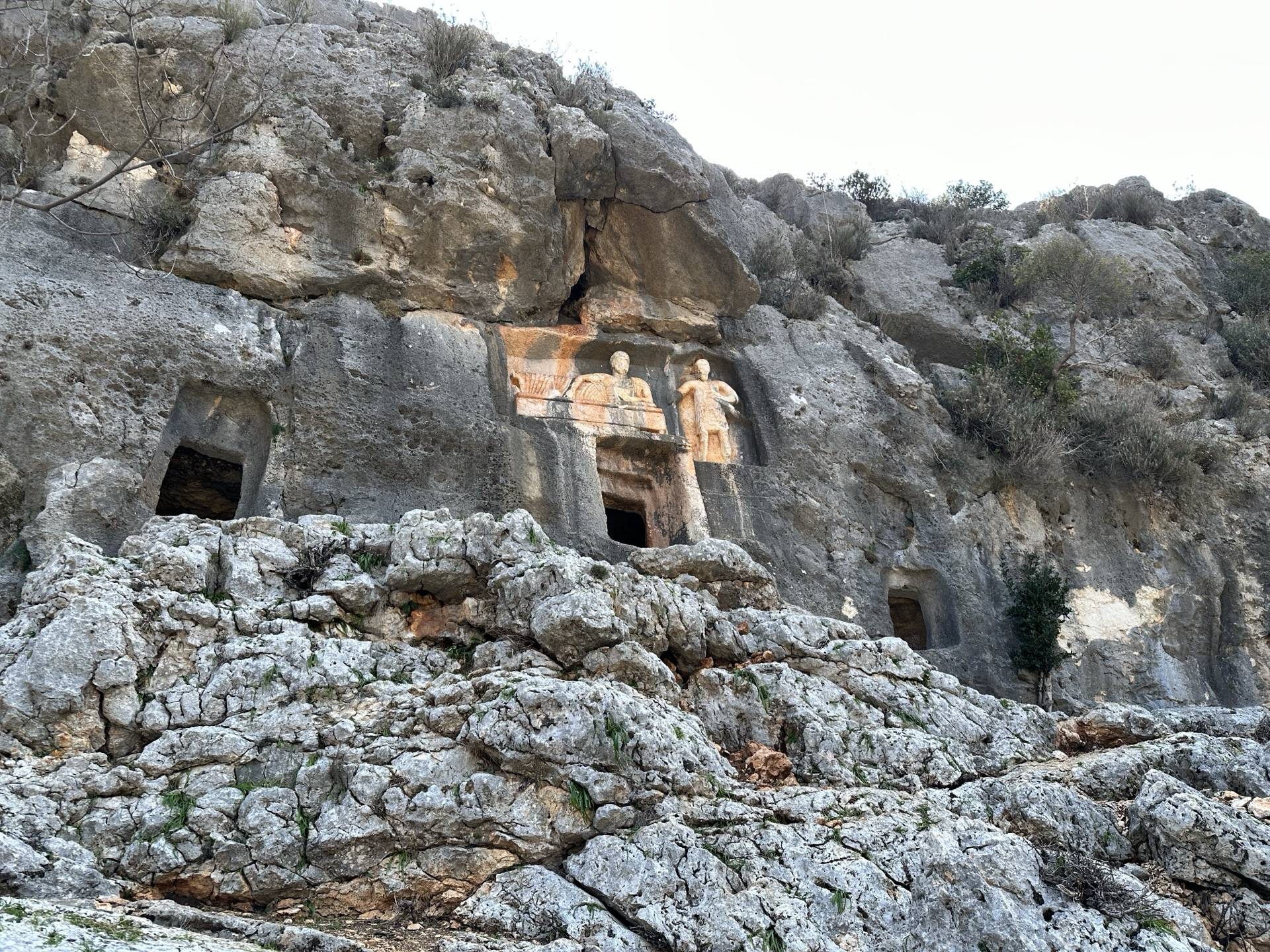
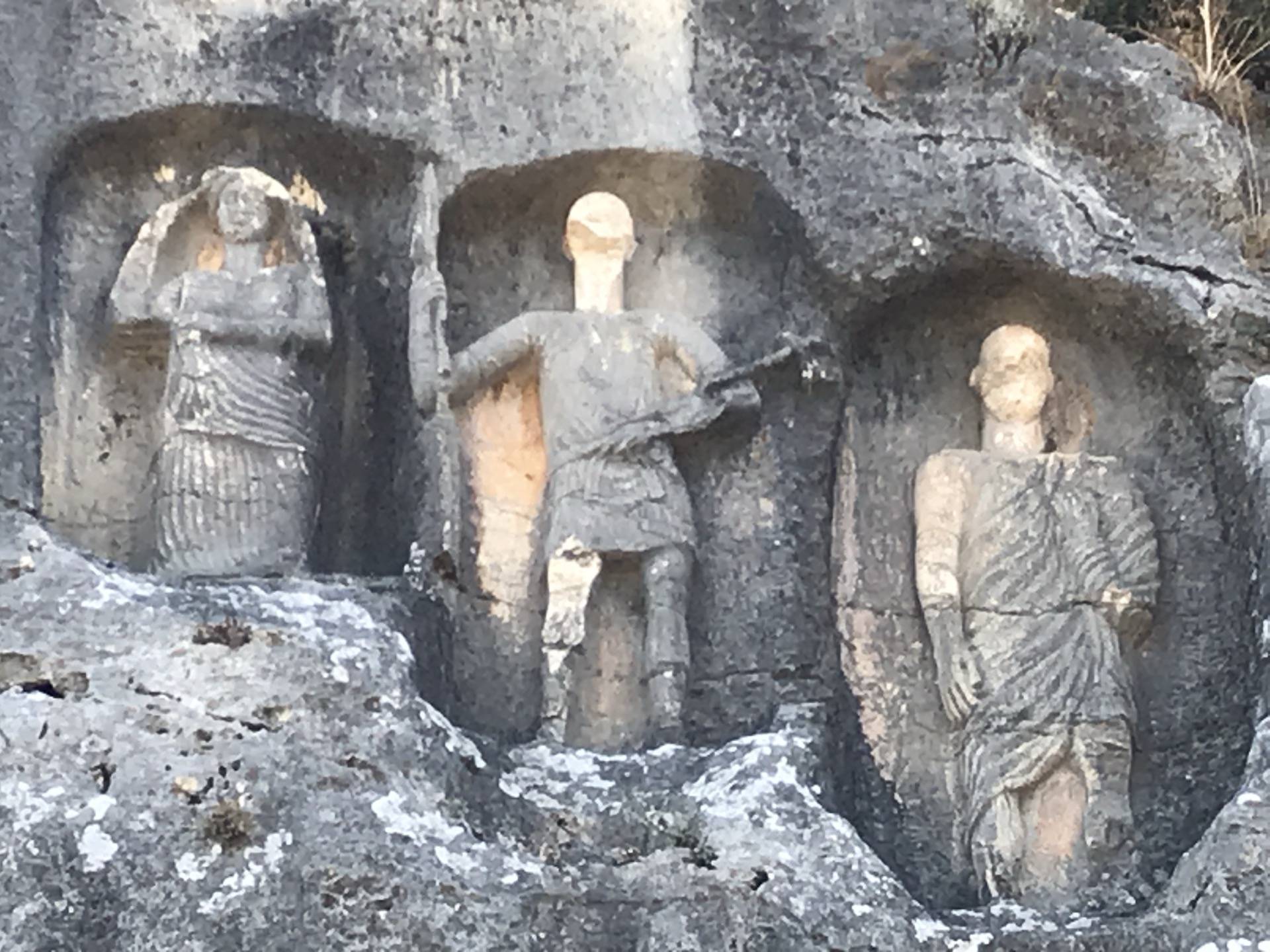
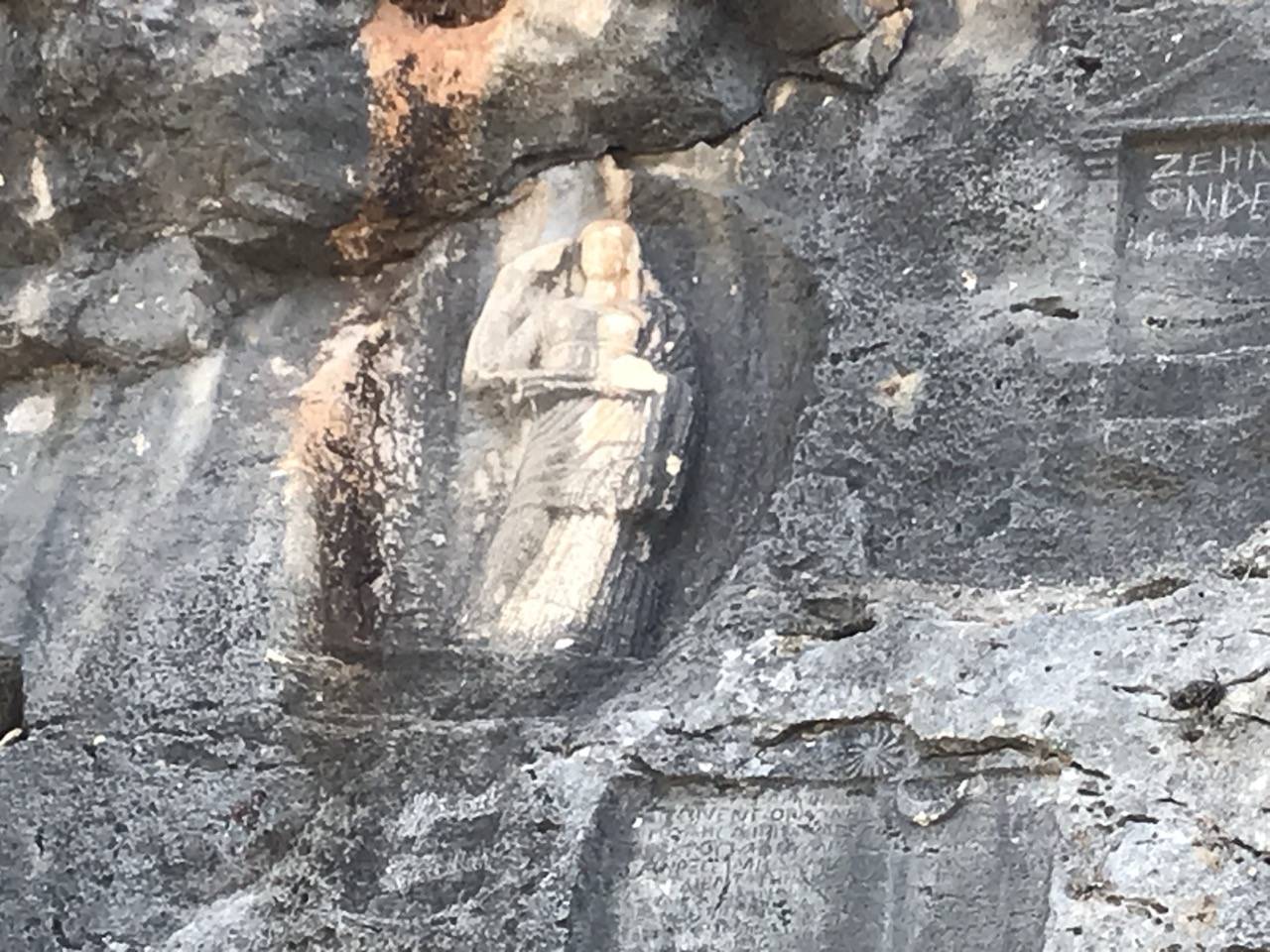
Chanakchi Necropolis – is an area of ancient tombs, located in a lowland, which is 400 meters west of the pit of Kanlidivane. On the facade of the rocky hill, located in the south, there are 13 rock-cut tombs and 6 reliefs. In addition to the rock-cut tombs, there is a tomb, a monumental tomb in the form of a temple, a sarcophagus, and homosoriums.
Relief of the first woman

The woman, depicted from the front at 1.90 meters in height, holds a himation above her head with her right hand, and covers her stomach with her left hand with a himation. She is in a pose that was a symbol of sorrow and mourning.
Second woman, Man with an axe, Man in clothes

The dress of the second woman consists of a chiton and a himation. It differs from the first female figure both in its standing position and in the rough form of clothing. It shows a simpler and earlier stylistic work. The pose was a symbol of sorrow and mourning, was represented on it. It is believed to date back to the First century BC as the earliest relief of the necropolis.
Reliefs of a man lying on a Kline and a soldier.
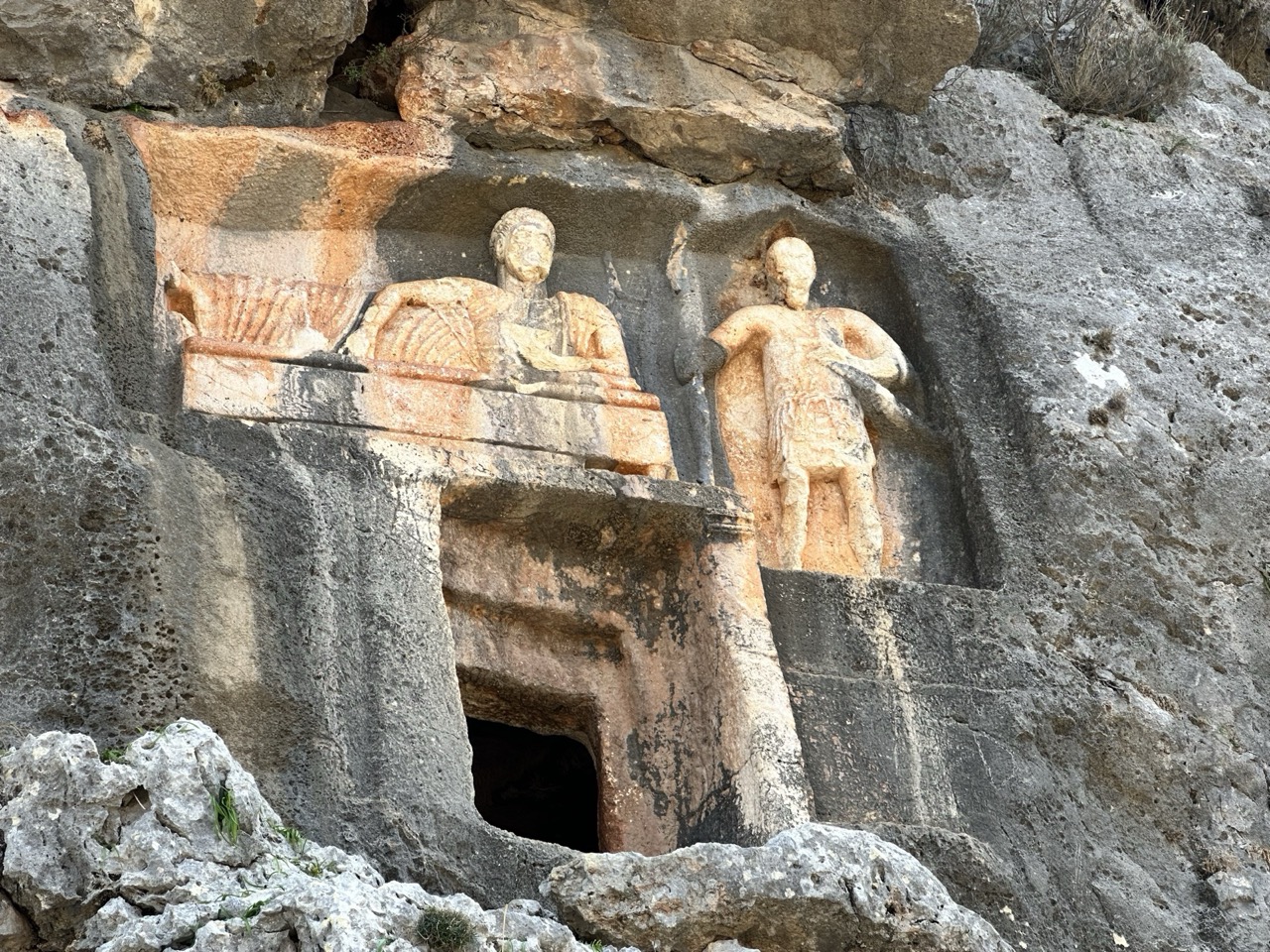
The man lying on the kline holds a cup in his hand. Figures lying on the kline iconographically depicted deceased people who continued their rest and peace in the afterlife. Ruling families consisted of priest-fathers and soldier-sons in accordance with the theocratic and military governance of the region. Similarly, the standing soldier on this relief could be the son of a priest-governor. The relief is dated to the First century AD.
Relief of Mother-Son and Father
This is a family relief. They are located on top of each other, forming two relief spaces. In the upper niche is a man with two hands under chemistry. In the lower niche are two figures. On the left is a boy, on the right is a woman holding chemistry above her head with her right hand. It dates back to the 1st century AD.
Most of the reliefs date back to the 1st century BC.
Be sure to visit Kanlidivane in Mersin.