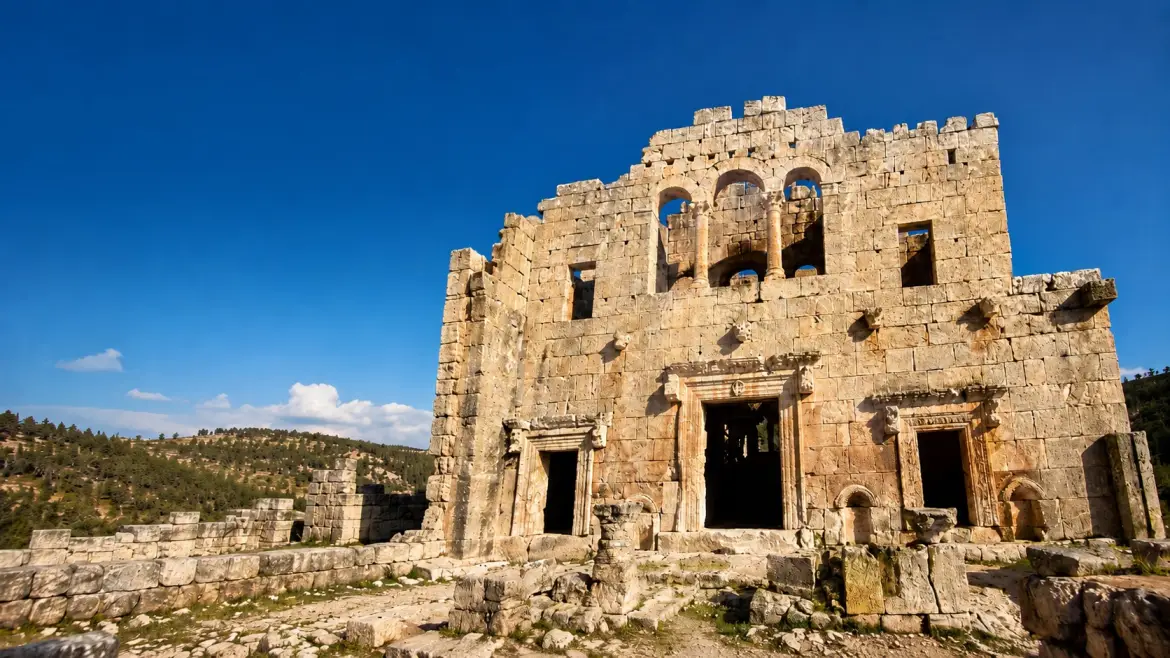
Alahan Monastery is a fifth-century complex of buildings located in the Isaurian Mountains, which
was part of the ancient Roman province of Cilicia. It is now located in southern Turkey, in the Mersin province, near
the town of Mut, in the village of Göçimli. It is about a two-hour drive from Mersin along a scenic road.
Although many sources refer to Alahan as a monastery, this attribution is disputed, and more
recent scholars consider it a pilgrimage site. The complex played a significant role in
the development of early Byzantine architecture, and virtually all that is known about it can be attributed to
Michael Gough's excavations.
Construction of Alahan Monastery took place over two periods. The first occurred in the mid-
fifth century under Emperor Leo I, and the second occurred in the last quarter of the fifth century under
Emperor Zeno. The complex includes two churches, rock-cut chambers, and
a baptistery—an extension to the church in the form of a separate building designed for
baptism. This special space was necessary, as parishioners
were admitted to the church only after baptism. Alahan also contained residential quarters and
numerous other spaces, such as a forecourt, a necropolis, a bathhouse, and a lower terrace. The latter
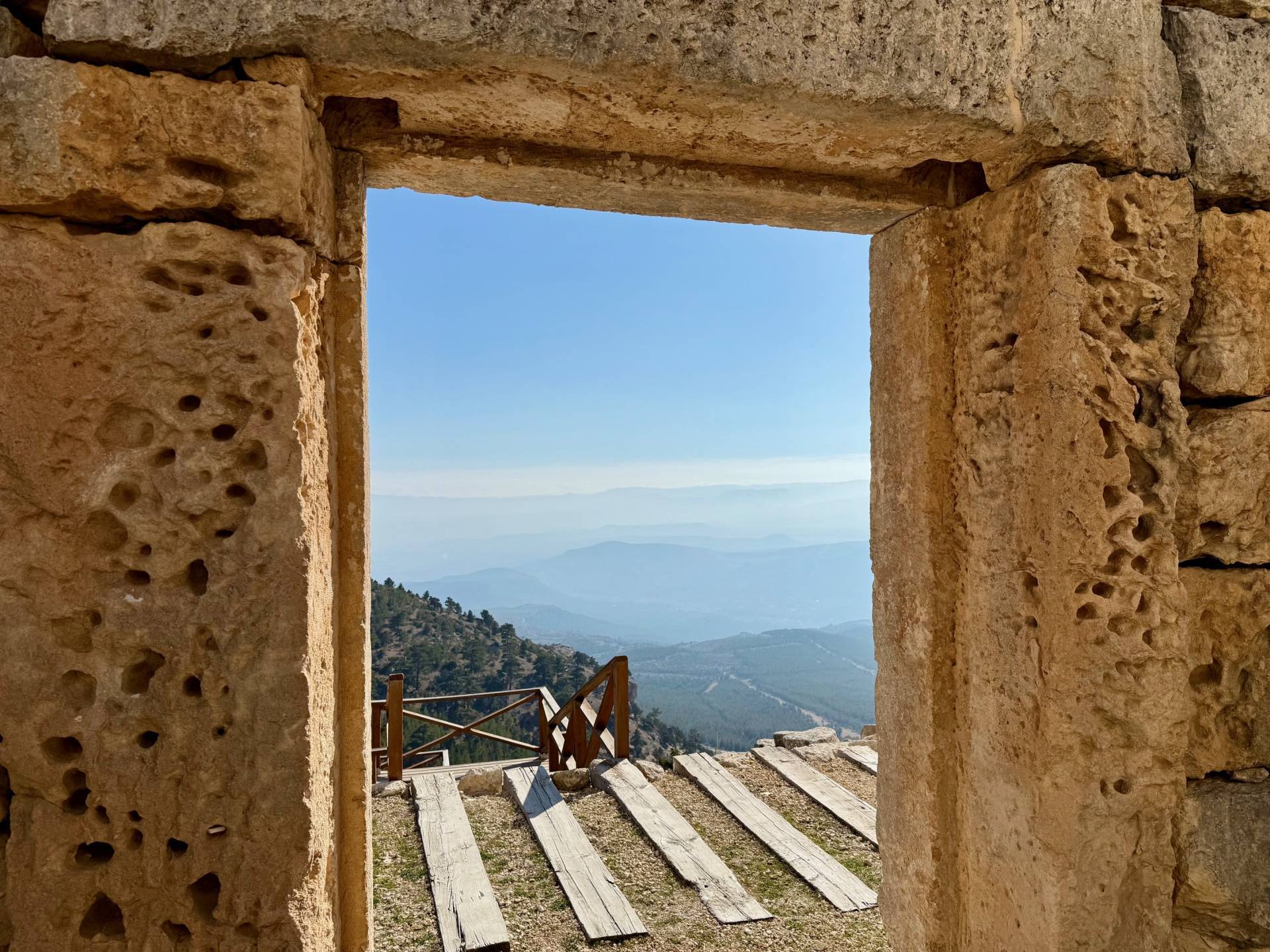
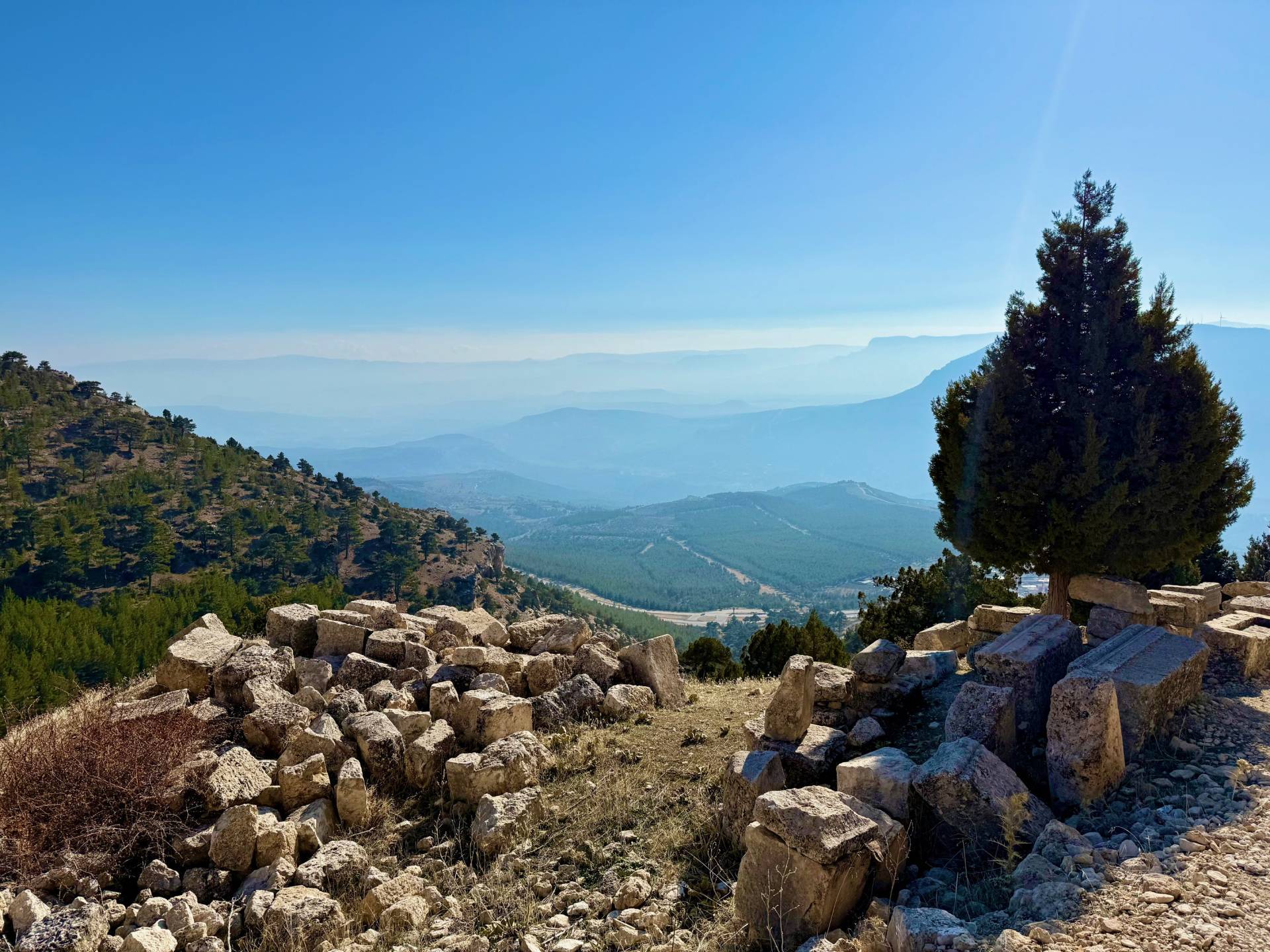
will amaze you with its panoramic views of the mountains. There is debate about the monastery's original
purpose, but it nonetheless served as a communal living space for
monks and pilgrims until the seventh century AD, after which it was
abandoned. Upon coming to power, Emperor Zeno took over the construction and likely financed
the project.
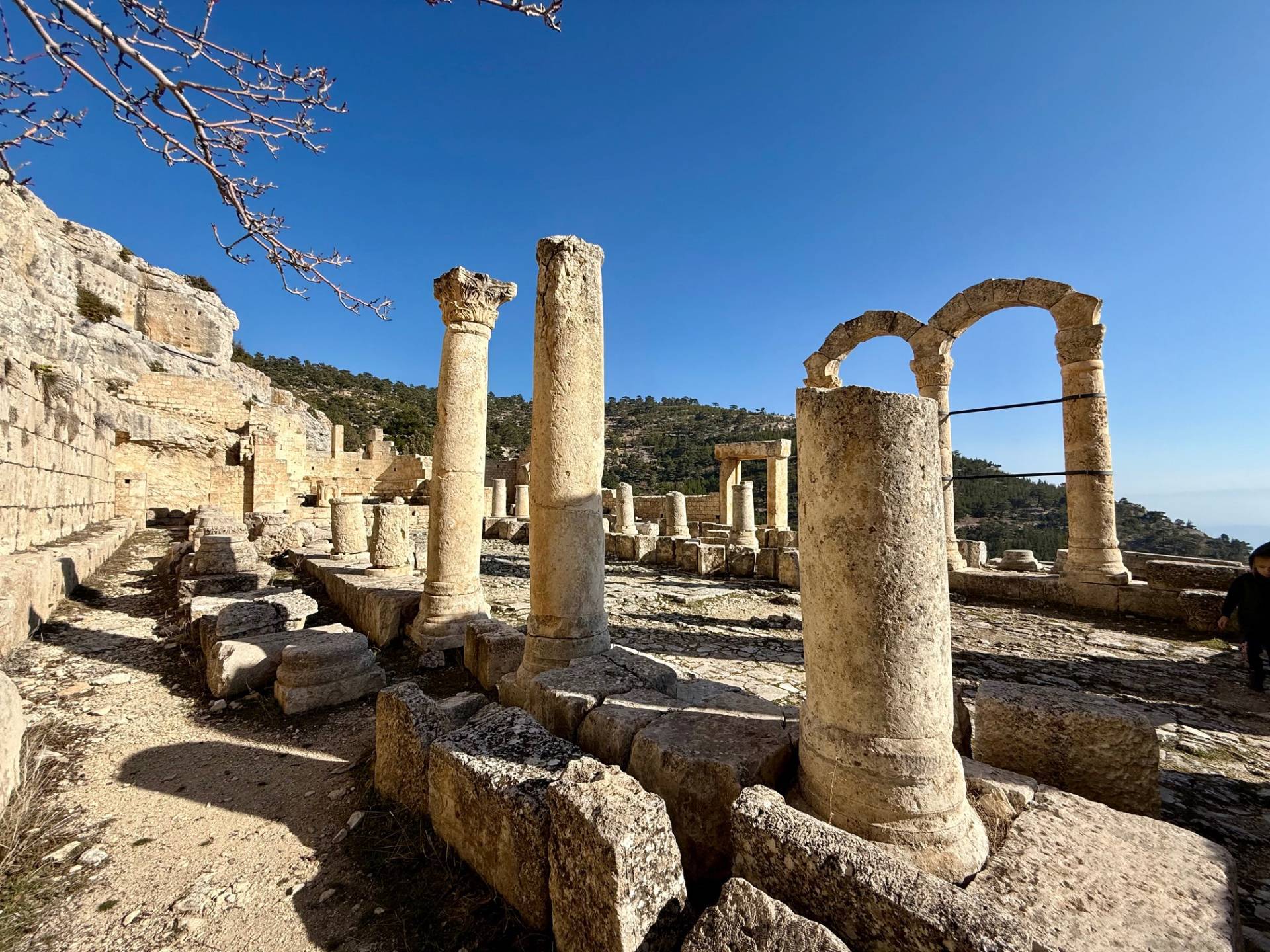
The complex is an example of skillful Isaurian stonemasonry. Take your time when visiting
this place; observe the details. You will discover true works of art in stone. Alahan
is a key site in the history of early Byzantine architecture, half a century before
Justinian's great achievements in Constantinople.
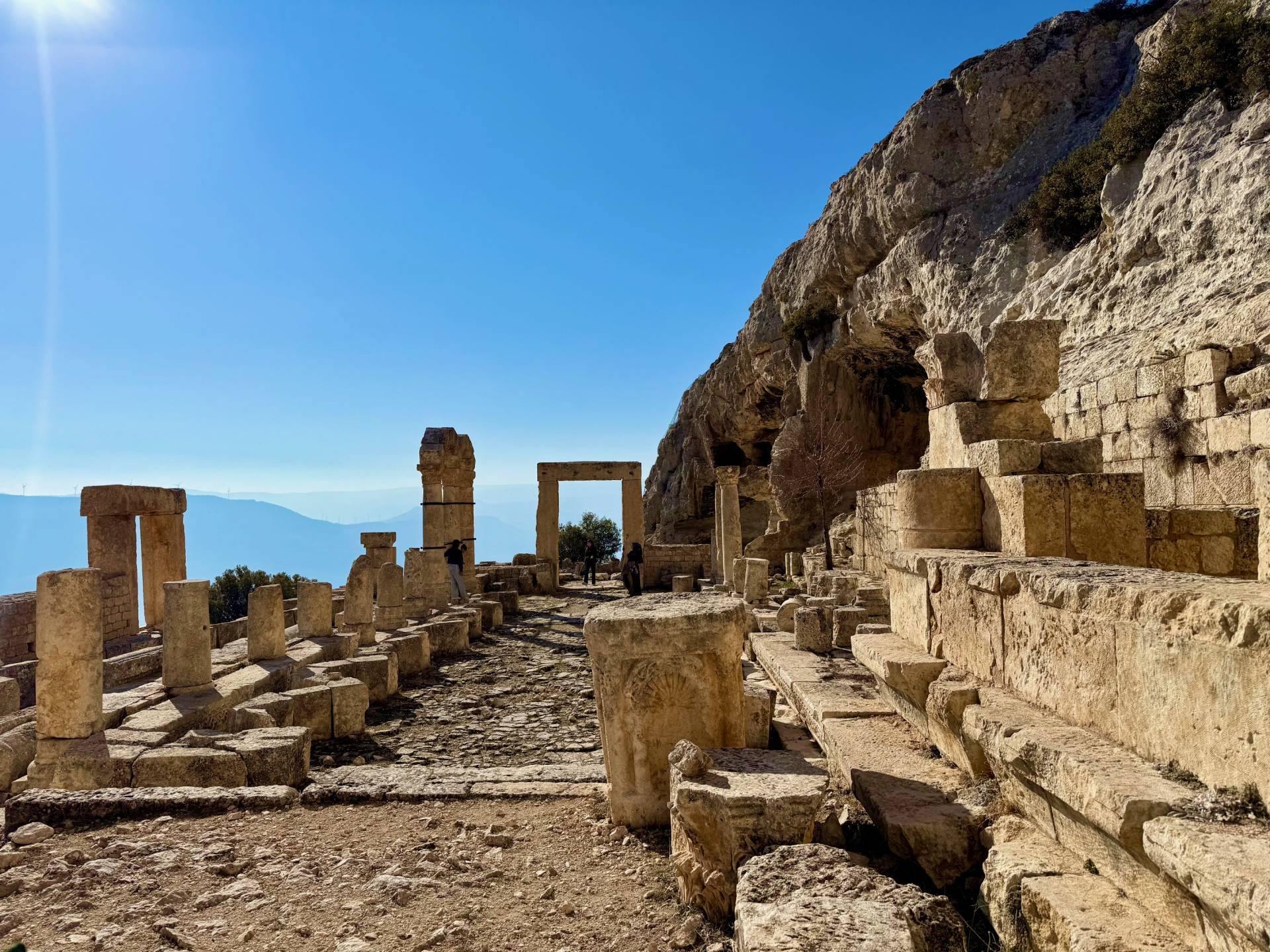
At the western end of the site is a large, naturally formed cave, approximately 10 meters high.
It once contained many large rooms spread over three floors, each just
over 2 meters high, although it is now almost entirely empty. Within the cave complex is a church
measuring approximately 7.5 by 7.7 meters. It is believed that the cave church was the first of the monastery's churches to be built
.
The Western Church, known as the "Church of the Evangelists," is the largest of all
the monastery churches, measuring 36 by 16 meters. It has a basilica plan with
three rows—a central nave and two side aisles. It was built after
the cave church but before the Eastern Church. It is the least preserved of the three churches, and
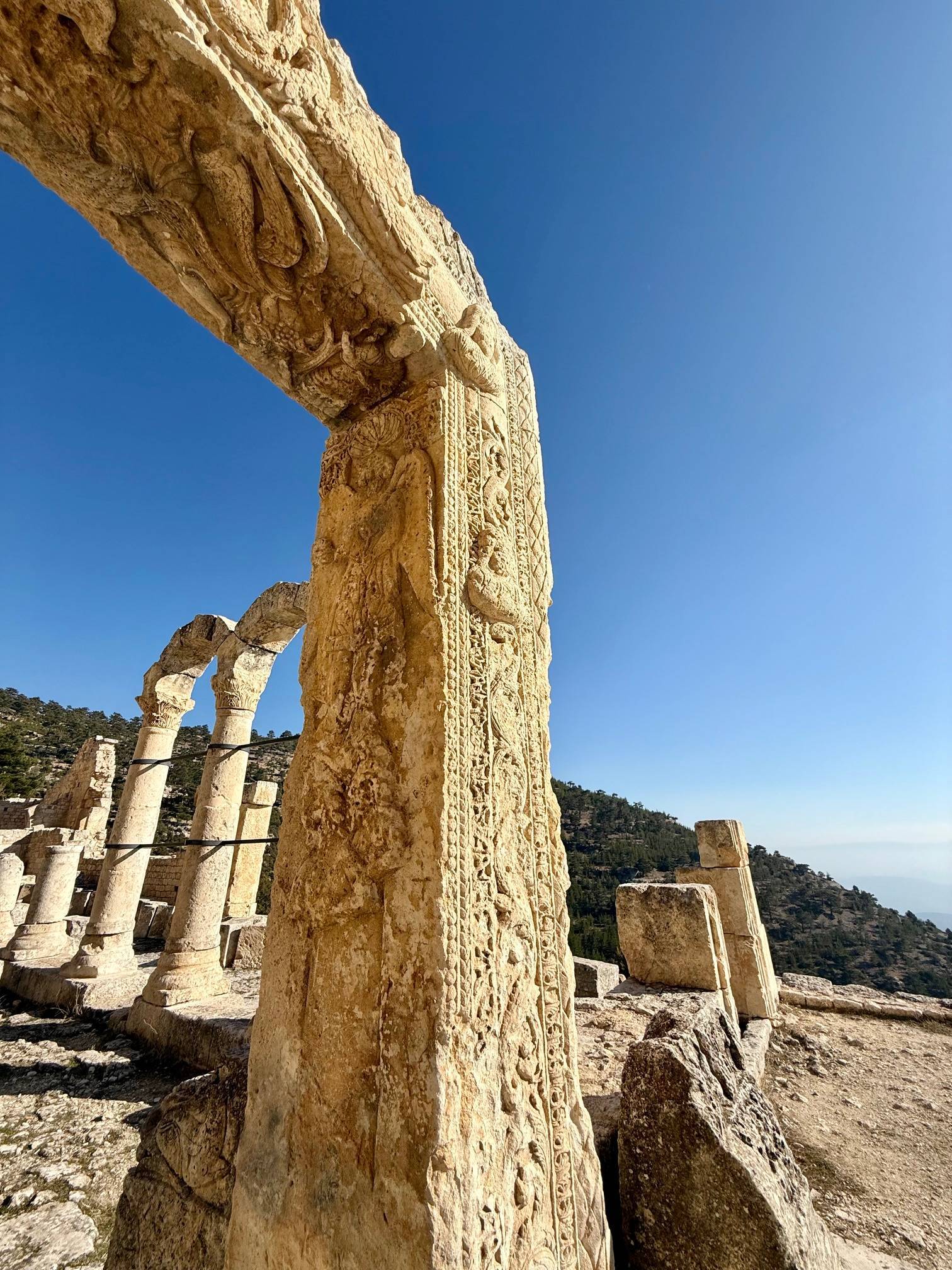
early visitors to the site did not identify it as a church, but as a gateway to the site. The presence of
two pastophoria proves that it was a church, and the decorations found on its decorated
gateways allude to evangelism. Be sure to examine these gateways carefully.
Excavations at Alahan have uncovered sculpted masonry and rich mosaic decorations, suggesting
that the church enjoyed wealthy patronage in its time.
The uneven mountain topography meant that much of the cliff face had to be removed during
construction. Even then, the church's plan was adapted to the terrain. As a result, it doesn't
resemble the ideal east/west orientation typical of churches of the time.
The East Church, located on the far eastern side of the monastery, is the best-
preserved of all the churches. It is significantly smaller than the West Church, measuring
23 by 15 meters. It has a basilica-style design with a tower superimposed on the eastern side of the nave.
It is believed that the roof was likely not made of stone, as virtually nothing was
found among the rubble during excavations. It was most likely constructed of lightweight wooden
shingles.
This church is less decorated than the other two, as it could only be approached from within
the monastery complex. It contains only minor decorations at the entrance.
A colonnaded walkway, originally covered, connects the West and East churches. The walkway also
provided access to other buildings in the complex, such as the baptistery and residential quarters. It
also restricted access to the site from the hillside below, thanks to a high retaining wall on
its southern side. There is no evidence to suggest the type of roof that
covered the walkway.
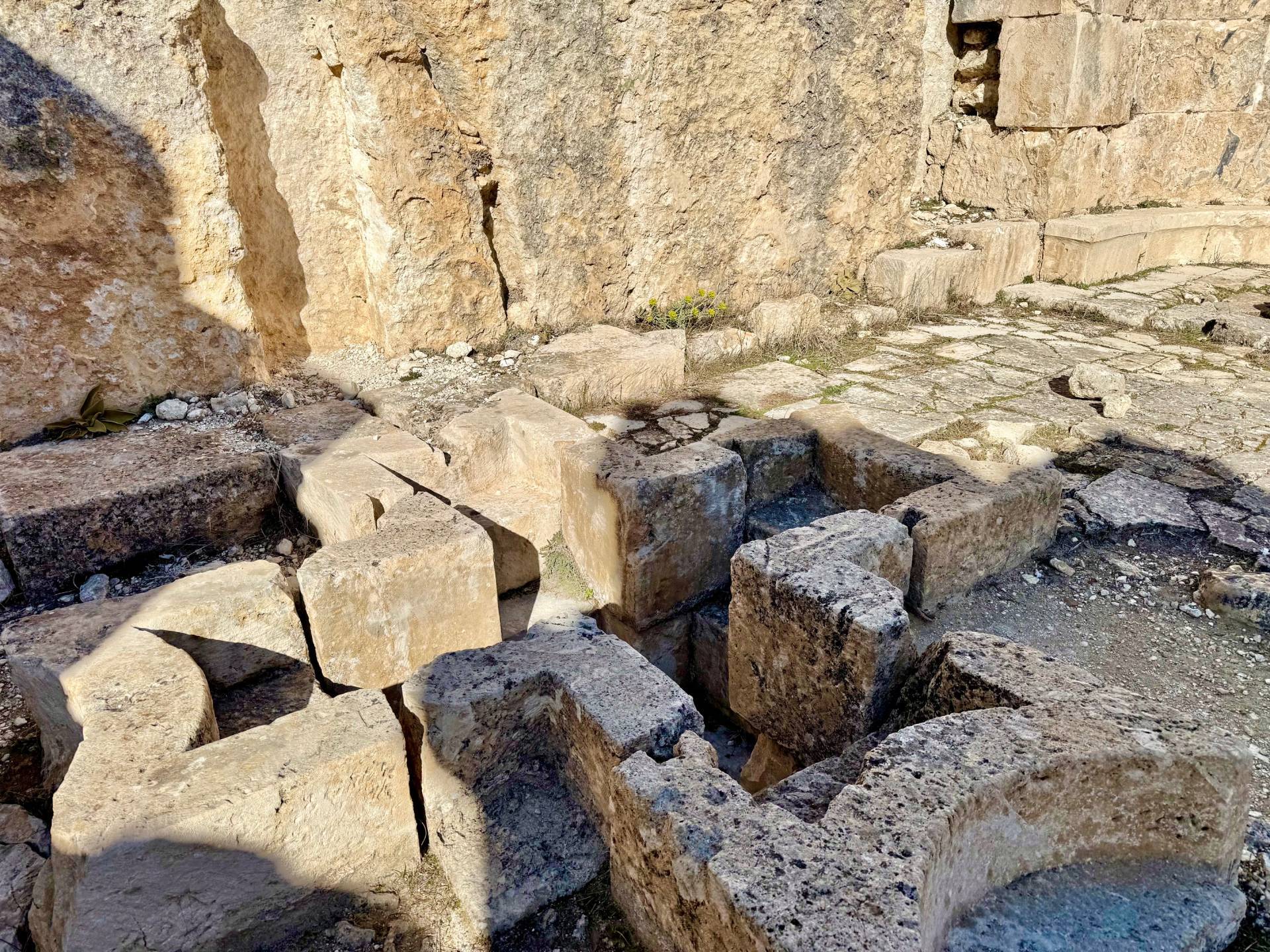
The double-apse baptistery, or more simply, the double-aisled baptistery, is oriented
east-west, with the entrance to the south. The discovery of a cruciform baptismal basin confirms
that the building was used as a baptistery. It is believed to have been built as the community in Alahan expanded
, as the baptistery, located in the cave church, likely served
as the original baptistery. The baptistery contains a painting inside, which is not found in the eastern church,
possibly because the artists were no longer present when the eastern church was completed.
This suggests that there was a significant gap between the construction of each building
. There is insufficient evidence to definitively determine what type of roof
covered the building.
As the community grew, the living quarters in the cave complex were no longer
large enough. Additional living quarters were built between the western church and
the baptistery, with four separate groups of rooms. These rooms were accessed through
the cave complex and a colonnaded passage.
The complex contains many other rooms. These include the forecourt, located
outside the eastern church and north of the colonnaded passage; the necropolis west of the
forecourt; the tombs of Tarasis the Elder and the Younger, carved into the rock next to the necropolis; a
spring complex that channeled water around and under the buildings, both to keep them dry
and to provide the community with a reliable water source; and a bathhouse located far away.
east, behind the eastern church; and the lower terrace in the valley, which was used for agriculture
.
The Ottoman traveler Evliya Çelebi visited the monastery in 1671–1672,
expressing his amazement in his report and recommending, "This is something worth visiting."
I echo his sentiments, expressing my deep admiration and a desire to visit this monastery
again. Admission is free for visitors. Photography and video are permitted. Drone flights
are prohibited, as is the case at all historical sites in Turkey.
If you're in Mersin, be sure to visit Alahan Monastery.