What's being built, when will it open, and is it safe to live in Mersin?
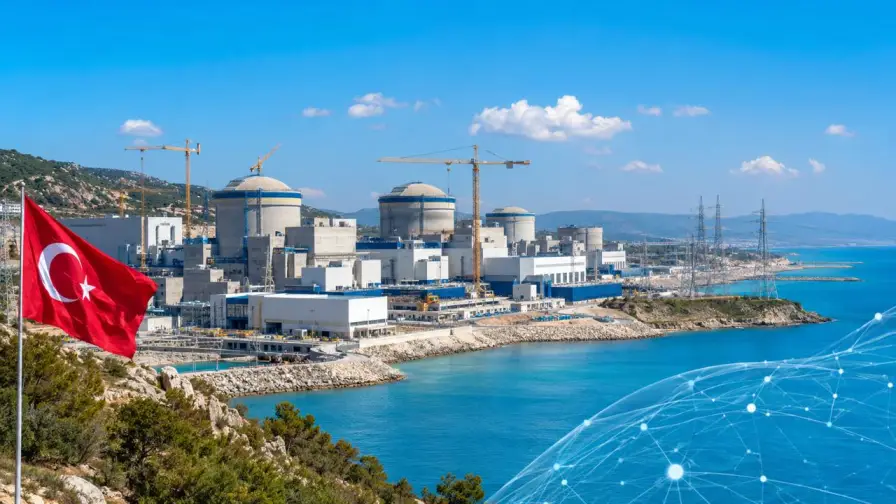
The Akkuyu Nuclear Power Plant is one of Turkey's largest energy projects and the largest in the history of Russian-Turkish cooperation. The plant is being built in the province of Mersin, on the Mediterranean coast, in the Büyükeceli district of Gülnar. This is not the city of Mersin, but a separate industrial site on the province's western coast.
For property buyers in Mersin, it's important to understand that the Akkuyu Nuclear Power Plant is not a "hazardous facility near residential areas," but a strategic energy complex being built on a specially selected site that has undergone years of geological, seismic, environmental, and international inspections. Official Turkish documents indicate that the Akkuyu site is located in one of the country's least seismic zones: according to the Turkish Ministry of Environment, the site belongs to seismic zone 5 and is considered one of the regions with the lowest earthquake risk in Turkey.
Where is the Akkuyu Nuclear Power Plant located and what is the distance to Mersin, Alanya, and Northern Cyprus?
The Akkuyu Nuclear Power Plant is being built in southern Turkey, in the province of Mersin, near the village of Buyukeceli.
Approximate distances:
That is, the station is not located within the city limits of Mersin, but on a remote section of the coast, chosen specifically for the placement of a large energy facility.
Who is building the Akkuyu Nuclear Power Plant?
The Akkuyu Nuclear Power Plant is being built by the Rosatom State Corporation through the design company AKKUYU NÜKLEER A.Ş., established by the Russian side in Turkey. The company's official website describes the project as the largest in the history of Russian-Turkish cooperation.
This is Turkey's first nuclear power plant and the first project in the global nuclear industry to be implemented using the Build-Own-Operate . This means that the Russian side not only builds the plant but also participates in its subsequent maintenance, operation, and decommissioning through a project company.
How the Akkuyu Nuclear Power Plant Works: A Simple Technical Explanation
The Akkuyu Nuclear Power Plant will consist of four power units. Each power unit is effectively a separate mini-power plant within the larger complex.
Official project parameters:
- reactor type — PWR / WWER-1200;generation III+;
- number of blocks - 4;
- the capacity of each unit is about 1,200 MW;
- total installed capacity - 4,800 MW;
- estimated service life - 60 years;
- expected production is about 35 billion kWh per year.
- Once at full capacity, the plant will be able to meet approximately 10% of Turkey's electricity needs.
To put it simply: heat is generated in the reactor, this heat converts water in the secondary circuit into steam, the steam turns a turbine, and the turbine drives a generator, which produces electricity. The reactor's radioactive zone is separated from the turbine equipment by several engineered safety barriers.
Each power unit includes a reactor building, turbine hall, steam generators, cooling systems, control systems, backup diesel generators, active and passive safety systems.
When is the Akkuyu Nuclear Power Plant scheduled to launch?
According to recent statements from the Turkish Ministry of Energy and Natural Resources, the first unit of the Akkuyu Nuclear Power Plant is scheduled to begin generating electricity in 2026.Energy Minister Alparslan Bayraktar emphasized that the first reactor is already in the final stages of construction, and 2026 is expected to mark the first generation of nuclear electricity in Turkey.
The remaining power units will be commissioned in stages. The exact dates may be adjusted depending on licensing, commissioning, technical inspections, and regulatory approvals.
How much does it cost to build the Akkuyu Nuclear Power Plant?
The project is officially valued at approximately $20 billion. The Turkish Ministry of Energy states that Russian capital is invested in the project, but the main project risks are borne by the Russian side.
For Turkey, this is not just a power plant, but a strategic energy project that should reduce dependence on imported gas, strengthen the country's energy security, and create a new high-tech industry.
Why Mersin was chosen for construction
One of the main questions for real estate buyers is: why is a nuclear power plant being built in Mersin?
The answer depends on several factors:
- Seismic safety of the site.
The Akkuyu region is considered one of the least seismic zones in Turkey. This is especially important for a nuclear power plant. Prior to project approval, geological, geophysical, seismological, and seismotectonic studies were conducted. Official documents from the Turkish Ministry of Environment indicate that hundreds of technical studies, including data from universities, government agencies, and international organizations, were considered during the site assessment. - Distance from major urban areas.
The nuclear power plant is not located in the city of Mersin, but on a separate stretch of coastline. - Proximity to the sea.
Seawater is used in industrial cooling systems, as is done at many nuclear and thermal power plants around the world. - The region's strategic location.
Mersin is a major port, industrial, and logistics region in Turkey. A port, a free economic zone, the Çukurova International Airport, and road and industrial projects are already under development here.
Akkuyu Nuclear Power Plant Safety: Earthquakes, Tsunamis, Storms, Aircraft, Fire
The primary goal of a nuclear power plant is not only to generate electricity but also to do so safely. Therefore, the Akkuyu NPP has been designed with multi-layered protection systems.
Earthquakes
Official Turkish materials emphasize that the Akkuyu region is one of the country's least seismic zones. Furthermore, the plant's design is designed to withstand severe external impacts. The Akkuyu NPP's official website states that the plant is designed to withstand earthquakes of up to magnitude 9, hurricanes, floods, tsunamis up to 10 meters high, and aircraft crashes.
It's important to understand that a "seismically safe region" doesn't mean earthquakes are completely impossible. It means the risk is lower than in many other regions of Turkey, and the site and the plant's design are designed with a large safety margin.
Tsunamis and storms
A separate tsunami risk assessment was conducted for the Akkuyu site. The Turkish Ministry of Environment stated in an official statement that the tsunami assessment was conducted using methods recommended by the International Atomic Energy Agency.
The design takes into account potential sea level fluctuations, storm surges, and extreme weather scenarios. This is especially important because the station is located on the Mediterranean coast.
Plane crash
Modern Generation III+ reactors are designed with external man-made impacts in mind. Akkuyu safety materials specifically address aircraft crash scenarios. Site analyses also consider flight routes, possible aircraft crash scenarios, and additional design conditions.
Fires, explosions and external man-made risks
Nuclear power plants are assessed against not only natural but also man-made hazards, including fires, explosive impacts, transport accidents, accidents at sea, fuel leaks, and forest fires. The Akkuyu site assessment documents consider roads, quarries, fuel stations, maritime transport, aviation, and forested areas in the vicinity of the plant. Engineering and organizational protective measures are provided for such scenarios.
Environmental safety
The Akkuyu project has undergone an environmental impact assessment. The Turkish Ministry of Environment reported that the final EIA report consisted of 3,730 pages and 22 appendices, and 56 institutions and organizations were involved in its review. The report addressed issues related to air, water, soil, waste, radioactive materials, environmental monitoring, and public comments.
Radioactive waste and spent fuel must be managed in accordance with Turkish law, the intergovernmental agreement between Russia and Turkey, and international standards. The project company is responsible for waste management on the site.
Who will operate the nuclear power plant after launch?
Following the launch of the Akkuyu Nuclear Power Plant, the project company AKKUYU NÜKLEER A.Ş. It is responsible for the construction, operation, maintenance, and subsequent decommissioning of the plant. The Turkish Ministry of Environment states that in the event of damage, the operator's liability will be governed by Turkish national law and international agreements to which Turkey is a party.
Can Russian citizens get a job at Akkuyu?
Yes, Russian citizens can consider working on the Akkuyu project through official channels of Rosatom, AKKUYU NÜKLEER A.Ş., contractors, and career sites. Akkuyu's official website states that current vacancies are posted in the "Vacancies" section and on HH.ru, while Rosatom's careers website also publishes offers related to Turkey and the Akkuyu project.
The correct wording in the documents is as follows: the employee is hired through the employer and receives a work permit/work visa, while family members typically obtain legal residency in Turkey through a family residence permit. According to Turkish Immigration Service regulations, a family residence permit can be issued to the spouse and children of a foreigner with legal status in Turkey; children under 18 with a family residence permit have the right to attend primary and secondary school without a separate student residence permit.
For specialists applying for jobs at Akkuyu, the project's official page also lists a benefits package, company-sponsored relocation, and a candidate onboarding program. Specific terms and conditions—housing, insurance, family relocation, and school placement for children—should always be confirmed in the individual offer and employment contract.
It's also important to note that a school for the children of Akkuyu NPP project employees was opened in Silifke. The project's official website reported on the opening of a school for the children of Akkuyu NPP employees in Mersin province.
What does the Akkuyu Nuclear Power Plant mean for Mersin and Turkey?
For Turkey, the launch of Akkuyu is of strategic importance for several reasons.
Firstly, this is the country's first nuclear energy project. Turkey has been planning the development of nuclear energy for decades: the first work began in the 1960s, and the Akkuyu site was selected and licensed back in the 1970s.
Secondly, the nuclear power plant should provide Turkey with a stable source of baseload electricity. Unlike solar and wind power plants, a nuclear power plant can operate 24/7 and is not dependent on weather conditions. According to the Turkish presidential administration, once operational, the Akkuyu plant should generate approximately 35 billion kWh of electricity, reduce natural gas imports by approximately 7 billion cubic meters per year , and prevent approximately 35 million tons of carbon emissions annually.
Thirdly, the project is of great importance to Mersin: it will create jobs, secure contracts for Turkish contractors, and develop engineering expertise, roads, port, and energy infrastructure. The Turkish Ministry of Energy also notes that work is underway to localize supplies and involve Turkish companies as part of the project.
The station must:
- provide about 10% of Turkey's electricity needs;
- reduce the country's dependence on imported natural gas;
- provide stable baseline electricity that is independent of sun, wind and season;
- create thousands of jobs;
- develop engineering, construction, transport and service industries;
- strengthen energy cooperation between Russia and Turkey.
Briefly: What is important to know about the Akkuyu Nuclear Power Plant
The Akkuyu Nuclear Power Plant (NPP) is Turkey's first nuclear power plant, located in the Büyükeceli district of Gülnar, Mersin Province. The plant will consist of four VVER-1200 power units with a total capacity of 4,800 MW. The first unit is scheduled to launch in 2026, and all four units are expected to reach full capacity by the end of 2028. The project is being implemented by Rosatom through Akkuyu Nuclear JSC using the build-own-operate model. The official project budget is estimated at approximately $20 billion.
For Mersin, this is a major infrastructure project that enhances the region's industrial and energy importance. For real estate buyers, the plant is located at a significant distance from the city of Mersin and its main residential areas, and its safety is assessed in accordance with Turkish law, international IAEA standards, and special engineering solutions for earthquakes, tsunamis, storms, and other external influences.