Kizkalesi Sea Fortress – Part of Erdemli's History
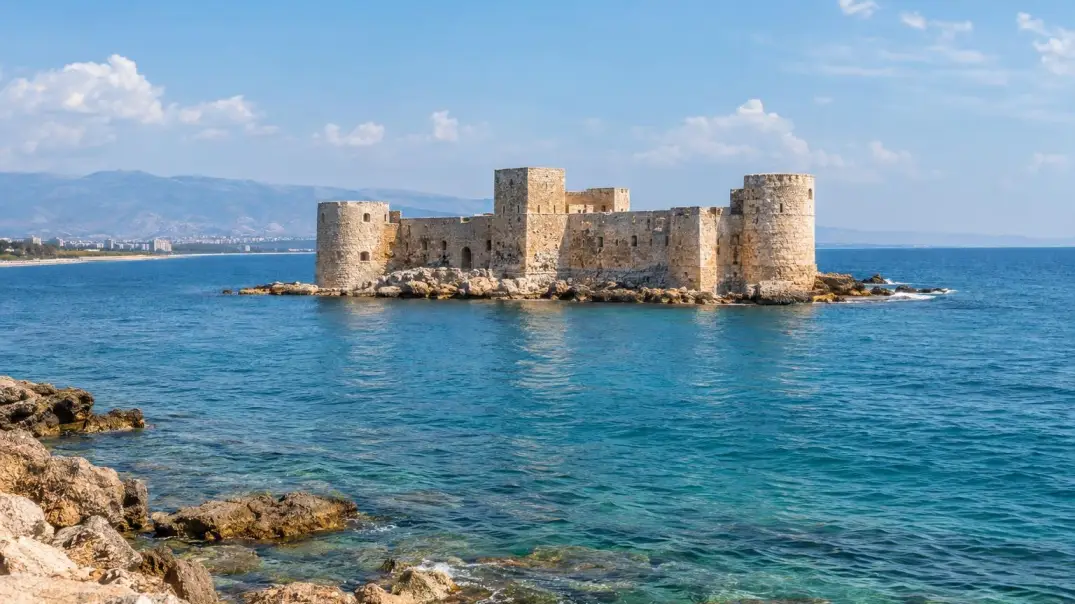
Kızkalesi is familiar to many as a stone castle on a small island off the coast of Erdemli. But it's more than just an isolated fortress against the backdrop of the sea: Turkey's official cultural portal describes it as a sea fortress of ancient Korikos. This clarification helps us see in the coastal landscape not only a popular image but also traces of the history associated with the city, trade, and power shifts in the Eastern Mediterranean.
For those considering Mersin as a place to live or vacation, this is another way to understand the province's character. Here, cultural heritage isn't limited to the museums in the city center; it's also present in the coastal districts of Erdemli. However, the fortress itself is a historical monument, not an indicator of the neighborhood's amenities, the condition of the housing, or the future value of real estate. These issues need to be assessed separately.
Kızkalesi and Korykos: Why the names shouldn't be confused
Korykos is the name of the ancient city, and Kızkalesi is the sea fortress that formed part of its defensive landscape. The monument's official website states that the fortress stands on a small island approximately 600 meters from the shore, near a settlement named after this historic site. Therefore, the common word "Kızkalesi" can refer to the fortress itself, the coastal area, or the region, depending on the context.
For historical understanding, it's also important not to confuse the island fortress with the coastal fortress. The official website of "Korykos Antik Kenti — Mersin" links the construction of the coastal fortress to 1099 and Emperor Alexios I. The sea fortress is a separate entity: the official website of "Kız Kalesi — Mersin" dates the construction of the sea fortress to 1199 and Levon I, based on an inscription found there. These dates refer to two different fortifications: 1099 to the coastal fortress, and 1199 to the island fortress.
This distinction is also useful when reading tourist descriptions: if the text refers to Korikos, it may be referring to the larger ancient settlement and its fortifications. If it refers specifically to Kızkalesi, it usually refers to the island sea fortress. This small clarification helps distinguish between the history of the city, the coastal citadel, and the castle visible from the coast.
What details of the fortress tell us about its past?
The official description notes a long fortified wall with loopholes and towers of varying shapes, as well as a well-preserved gallery along the western part of the fortification. Gates leading to the sea are also mentioned. These elements help to visualize the structure not only as a silhouette on the water, but also as a fortified space with passages, an inner courtyard, and several functional areas.
During excavation work in the central part of the fortress, a complex of rooms with a chapel was discovered. Its decoration combined mosaics and an inlaid stone floor made using the opus sectile technique. The description also mentions inscriptions on the floor and in the gallery, water storage cisterns, and workrooms in the courtyard. These findings suggest that the fortress's interior was more complex than a single defensive perimeter.
Not every detail of the monument is equally easy to read from the shore. Some information was obtained by archaeologists, while other fragments were described based on surviving walls and inscriptions. Therefore, it's useful to distinguish between what is confirmed by finds and official descriptions, and what only seems obvious from a distance. A photograph of the fortress is no substitute for historical information, and a popular story doesn't always mean verified fact.
The Legend of the Princess and Historical Information
Kızkalesi is associated with a legend about a ruler who built his daughter a shelter after a prophecy predicted her death from a snake bite. According to the story, the snake eventually found its way into a basket of grapes and reached the princess. Similar motifs are found in stories about other Turkish monuments. This is a well-known local story, but it should be regarded as a legend, not a confirmed explanation for the building's origin.
Historical information offers another reference point: the date 1199, associated with an inscription on the sea fortress and the name of Levon I. The distinction between legend and documented data does not invalidate folklore. On the contrary, it demonstrates how two cultural histories coexist at the monument: the material one—the walls, inscriptions, and archaeological finds—and the oral one, transmitted through the story of the princess and the snake.
How to look at the monument if you are visiting Erdemli
You can begin your exploration with a simple question: what exactly is before you—an island fortress or the coastal complex of Korikos? Then, examine the arrangement of the walls, towers, and galleries and compare the visible silhouette with the descriptions of the archaeological finds. This approach turns a stop by the sea into a brief historical introduction, not just a photo op.
Before your trip, check the current visiting hours and access to the monument itself through official museum channels. Official websites may contain different information about seasonal opening hours; don't rely on old publications, reviews, or assumptions about how access to the island is organized. If you only plan to explore the fortress from the shore, it's also best to consider this separately from visiting its interior.
- Please clarify which part of Korikos is described in your chosen guide: the sea fortress or the land fortification.
- Check opening hours immediately before your trip as schedules may vary seasonally.
- Do not plan access to the island or crossing method without current confirmation from an official source.
- Treat the story of the princess as a local legend, and check the dates and architectural details with the museum information.
Cultural heritage is part of everyday life in Mersin
Kızkalesi reminds us that Mersin is more than just a large, modern city and a long coastline. Throughout the province, historical monuments coexist with everyday spaces, and the Erdemli district offers a particularly vivid illustration of this connection: coastal recreation exists alongside the heritage of ancient Korikos. For those considering relocating or staying long-term, such places offer a more comprehensive understanding of the region, its landscape, and cultural environment.
But the impression of a monument shouldn't be translated into a conclusion about a specific home. A fortress doesn't confirm that a nearby apartment is suitable for permanent residence, and the cultural prominence of a location doesn't in itself indicate seasonality, access to shops, medical services, or the condition of the building. If you're considering real estate in Erdemli, consider your daily commute and the specific address separately from your interest in the landmark.
Date of information verification: October 12, 2026.
If you're choosing between Mersin neighborhoods to live in, the INCOME MERSIN team can help you discuss their everyday characteristics and help you research the location yourself. The historical information in this article has been verified with materials from the Turkish Ministry of Culture and Tourism: the pages of the cultural portal "Kız Kalesi — Mersin" and "Korykos Antik Kenti — Mersin.".
Sources and date of verification of information
Information last verified on October 12, 2026. Official sources: Kız Kalesi - Mersin — added on January 22, 2013, updated on November 19, 2025; Korykos Antik Kenti - Mersin — added and updated on November 20, 2025.